

Published on: 12/28/2025
This news was posted by Oregon Today News


Description
It happens every year: apples fall to the ground, squash overripens, and backyard trees shed more fruit than families can use.
In Lane County, a nonprofit organization aims to step in before that food becomes compost.
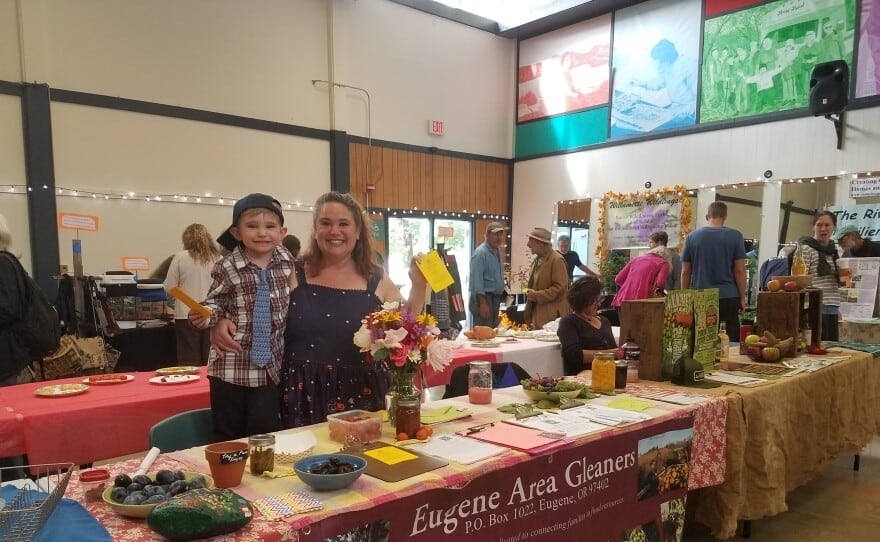
The Eugene Area Gleaners began in 2009, after founder Brandy Collier learned from a friend about gleaning the simple way: knocking on a neighbor’s door and asking for some fruit.
“The two of us started talking to other moms and [the Gleaners] just grew and grew,” Collier said.
The organization now has more than 1,200 members and remains entirely volunteer-run.
“Eugene Area Gleaners is a 501(c)(3) nonprofit. It’s all volunteer, from top to bottom. There are no paid positions, there’s no dues, and no fees,” she said.

Unlike a traditional food pantry, the gleaners focus on harvesting food that would otherwise go to waste. That includes backyard fruit, surplus crops on local farms, and even donations from Oregon’s Department of Fish and Wildlife.
“There’s a lot of places that call themselves Gleaners, but what they actually are is food pantries. We are gleaners in the truest sense of the word,” she said. “We’re trying to connect people who need food with the food that is growing all around us and going to waste.”
The work is communal. Some volunteers harvest in the field or drive to pick up donations, and others sort or weigh produce. There are a few homebound seniors who contribute by teaching canning or by making soups and fruit leather.
Collier said the group tries to make space for everyone who wants to participate.
“We have a trained glean leader, who knows the rules, gets the gleaners out, sets them up, and makes sure that everybody is being safe. They also make sure that everybody who comes has something that they can do,” she said.
“Somebody who’s in a wheelchair, maybe they can record weights; somebody with limited mobility, maybe they can sit and help sort the good produce from the things that would be animal feed. So we try to make sure there is participation if somebody wants to participate.”
After the harvest season, gleaning slows down. The group shifts to gathering the few available seasonal nuts and fruit, and other food that could go to waste.
“It is real sparse,” Collier said. ”There’s persimmons, walnuts. Oregon Department of Fish and Wildlife will sometimes call us if they have a nuisance bear they euthanize, and give us ground bear.”

The gleaners once organized holiday food boxes, but the demand grew beyond what the group could handle.
“There’s 1,200 members, there’s just so much need,” she said. “We have a lot of people realizing, ‘Oh, maybe I should learn to can, maybe I should learn to preserve, maybe I should get connected.’”
Collier said the holidays tend to inspire more people to get involved in their communities, though the need for food and connection continues well beyond December.
“It comes to a head in November and December when our culture starts thinking about holidays and gift giving, but really it’s year-round. People seem really eager to help and get out there and to put themselves out there, because it’s easier and there’s less stigma,” she said. “But January, February through June are the months when it’s really the toughest.”
A Portland nonprofit finds a solution to save fresh food from going to waste
For Collier, gleaning has always been about people as much as produce. She said its long history of community care is what keeps the practice relevant today.
“There’s a history of gleaners. It’s very important, taking care of each other and foraging those connections,” she said. “Just because you have something today doesn’t mean you’re going to have it tomorrow. So if you share what you have, later on down the road, that will come back to you.”
A typical glean might bring together a handful of volunteers who climb ladders, sort fruit on tarps, then divide the harvest among members. Collier said those shared tasks give people a chance to contribute in whatever way they can, and that makes a noticeable difference in how participants experience food support.
“It feels a lot better to be an agent and a recipient, instead of an object of charity,” she said. “It feels so much better to be contributing and to be a part of the charity than having charity done to you.”
While the harvest season may be brief, Collier said the gleaners’ purpose reaches well beyond those months, centering on reducing food waste, sharing skills, and strengthening community connection.
Kendra Schertell is a reporter with KLCC. This story comes to you from the Northwest News Network, a collaboration between public media organizations in Oregon and Washington.
It is part of OPB’s broader effort to ensure that everyone in our region has access to quality journalism that informs, entertains and enriches their lives. To learn more, visit our journalism partnerships page.
News Source : https://www.opb.org/article/2025/12/28/eugene-gleaners-after-holidays/
Other Related News
12/28/2025
A year on the boards Even costumed characters protesting in front of an ICE facility could...
12/28/2025
When a familys company went up for sale they made sure employees got a cut of the profits
12/28/2025
Its been a painful year for Oregon workers
12/28/2025
At the beginning of the year we wrote that 2025 had to be the year when elected leaders pr...

12/28/2025
Dear Liz In response to a reader who asked about creating a will you suggested options for...

Follow

Download Our App


Copyright 2022 © EPUERTO. All Rights Reserved