

Published on: 09/24/2026
This news was posted by Oregon Today News


Description
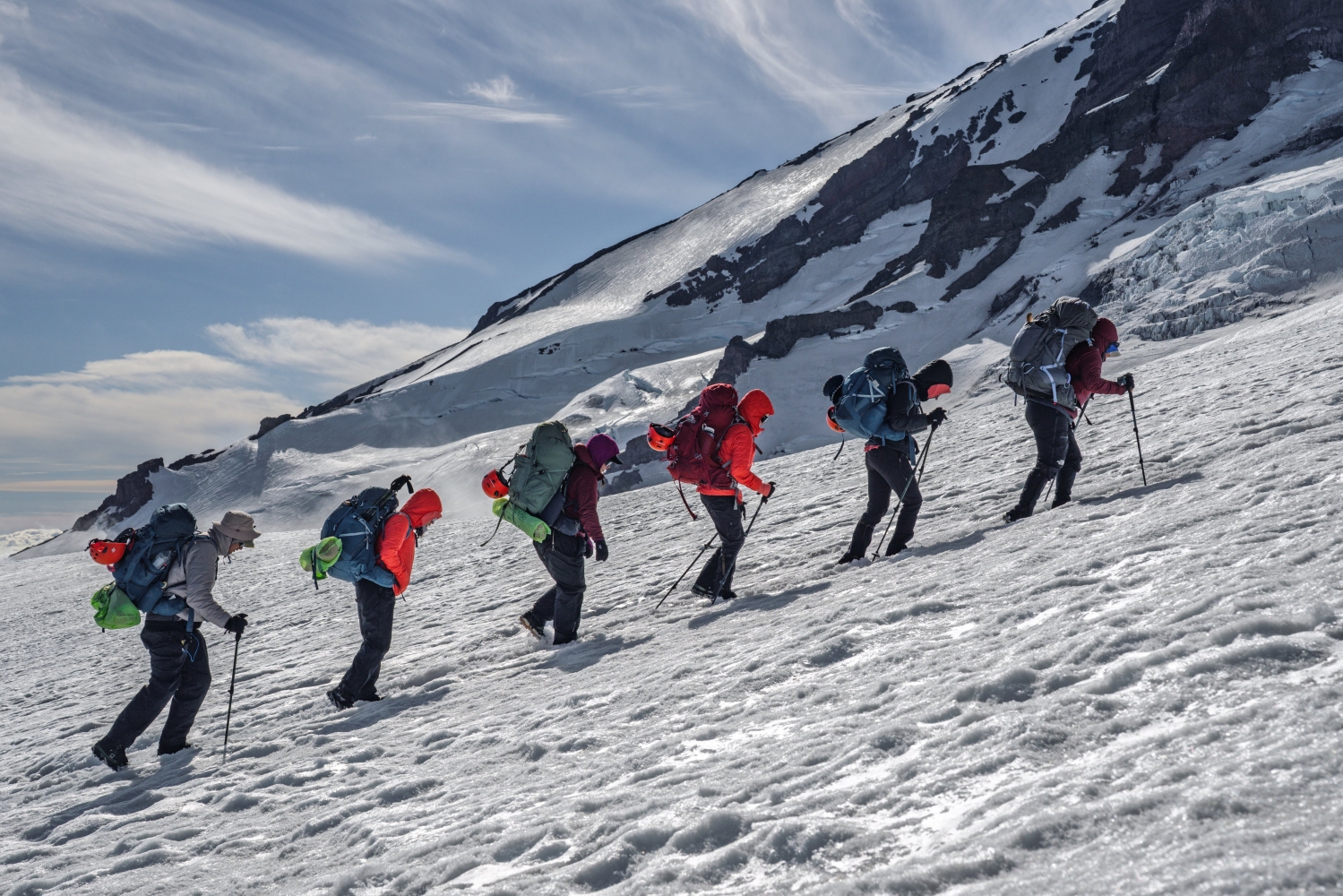
Hidden in a thick whiteout on Mount Tahoma, a group of six Indigenous climbers pushed through cold temperatures and low visibility with heavy backpacks in order to make it up to about 10,000 feet before sundown in June.
The clock was ticking, and the group’s leader, Rachel Heaton, continued to check the map to ensure they were on the right path. One wrong step and they could find themselves swallowed up by deep crevasses.
Known worldwide as Mount Rainier, Mount Tahoma stands at 14,410 feet in Washington State, making it the highest mountain in the Pacific Northwest. It is often a stepping stone for mountaineers who wish to summit bigger global peaks like Denali or Kilimanjaro.
Having climbed Tahoma almost ten times, as well as Kilimanjaro, Heaton aims to inspire the younger generation to connect with the mountain as she and their ancestors did.

“I want visibility of Native people back on the mountain,” Heaton said. “But I believe that in order for that to start happening, we have to get our younger generation out on the mountain.”
For the six Indigenous tribes living along the mountain’s base, the volcano has a much deeper meaning. The tribes in the area are the Muckleshoot, Yakama, Cowlitz, Nisqually, Puyallup and the Squaxin.
Each tribe has its own name and relationship to the mountain, including Tahoma, Taquoma, taqʷuʔmaʔ, and more than a dozen other names. Many of those names translate to “mother of all waters,” a reflection of the rivers flowing from the mountain. The many waterways provide water, food and life to the tribes in the area.
In 1792, it became Mount Rainier after British explorer Captain George Vancouver named it after his friend Peter Rainier, who never saw the mountain in person.
“We’ve done a lot of work to continuously say Tahoma, said Heaton, a Muckleshoot tribal member and outdoor educator. “Even though it’s different for every tribe, at least it’s closer to the traditional name of the mountain.”
Heaton’s journey to outdoor leadership began during the COVID-19 pandemic. She found herself trying to find ways to exercise. With a newborn and no access to gyms, she hit the trails in the area, discovering that you don’t need fancy, expensive facilities to get a good workout.
What started as a personal fitness journey grew into a business called The Earth Gym, which she created in 2021 to take youth out into nature and use uneven ground, rocks and fallen trees to get good exercise. She uses her Indigenous knowledge to guide the courses, with the goal of helping younger generations connect with themselves, nature and wellness.
Through these experiences, she reinforced a larger vision: creating opportunities for Indigenous people to reconnect with the mountain.
While getting to know the trails around Tahoma, she noticed something that fueled her next mission.
“What I noticed was that we weren’t up there,” she said. “I would see all of these visitors and people up there, but I didn’t see any Natives up there.”
In 2023, she led what she called an “All-Native Climb” where a group of Indigenous adults attempted to summit Mount Tahoma. Weather conditions kept them from summiting, but Heaton knows that the summit was never the point.
“I think we’ve turned nature into a sport,” Heaton said. “It’s who can get the fastest through this, who can get to the tallest peak? My journey is not the summit. My journey is introducing people to the mountain in a sacred way.”
In June, she led five young Indigenous climbers up to Camp Muir, at just around 10,000 feet of elevation.

For Heaton, the lack of Indigenous presence on the mountain is not accidental.
It follows generations of displacement and national parks being established with no regard for the tribes originally from the area. Plus, the high cost of mountain climbing creates an additional barrier for Indigenous communities.
Hilary Penfield, 18, from the Blackfeet Nation, explains she wouldn’t have been able to do this without Heaton, whose company receives donations so it can provide all the equipment needed to do the climb.
“Now, I’ll be able to have all the gear and not have limitations in hiking,” Penfield said.
The group making the June climb ranged in age from 16 to 25 and represented the Muckleshoot, Blackfeet, Hunkpapa Lakota and Paiute Nations. They trained for months to make it up to the historic Camp Muir.
Heaton said she worried the summit would be too overwhelming for the young beginners, and she thought a shorter, overnight climb would be enough of a challenge and positive experience to possibly ignite something in them: a love for the mountain and the confidence to get through life’s challenges.

The mountain delivered the test as they faced freezing temperatures, high winds and a blinding blizzard. The months of training prepared them for moments like this; they hiked similar inclines in brutal weather conditions beforehand.
Alongside their rigorous training, the deeper meaning behind the climb kept the group going.
Tayla LaClair, a 25-year-old Muckleshoot tribal member who also did the 2023 All-Native Climb, said on this trip she realized she could help the younger climbers by sharing what she’s learned from experience
“The first time I went up, it was about bringing Natives into this sacred space, and I got a lot of knowledge from it,” she said. “And I didn’t do anything with that knowledge. So this is my way to give back.”
For the group, the climb was never about how far they could go or how fast they could make it to camp. It was about getting the next generation of climbers out on the land and in places they belong.
“Our stories need to be in those spaces,” Heaton said. “Our cultural teachings need to be in those spaces. We need to be visible in those spaces.”
News Source : https://www.opb.org/article/2026/09/24/an-indigenous-journey-up-mount-tahoma-the-tallest-mountain-in-the-cascades/
Other Related News

09/24/2026
NASCAR Hall of Fame driver Darrell Waltrip will step away from public life after he was re...
09/24/2026
The Las Vegas Raiders are undefeated after two games But if you only watched national spor...
09/24/2026
People who were at a school in Battle Ground last week may have been exposed to measles Cl...
09/24/2026
Read about Nebraska Fire News Off-duty North Platte fire official honored for Oregon incid...
09/24/2026
Stackercom compiled a list of the cheapest gas stations in Oregon using data from Gas Budd...

Follow

Download Our App


Copyright 2022 © EPUERTO. All Rights Reserved