

Published on: 01/15/2026
This news was posted by Oregon Today News


Description
The Dalles is trying to expand its water reservoir — and it’s turning to Congress in a quest to acquire part of the Mount Hood National Forest to do so.
That’s prompting concerns from environmental groups and local residents. They’re worried both about the ecological cost to fish and wildlife, and about whether the extra water will really go to local homes and businesses — or if The Dalles wants to draw water from the Mount Hood forest to slake the tech industry’s growing thirst for data centers.
“The notion that this water is somehow for drinking water for residents of the city, it’s just a fallacy,” said John DeVoe, senior advisor at WaterWatch of Oregon, an environmental nonprofit. “Obviously, the great driver of demand for water in The Dalles is Google.”
The city’s elected officials have repeatedly denied that they are seeking more water to serve Google. They say they need to expand The Dalles’ reservoir because the city in north-central Oregon is growing.
But The Dalles’ population hasn’t grown much this past decade. It has added about 1,700 people over the last 15 years, bringing its population up to about 16,200 people, according to Portland State University estimates.
What has grown: Google’s size and water use.

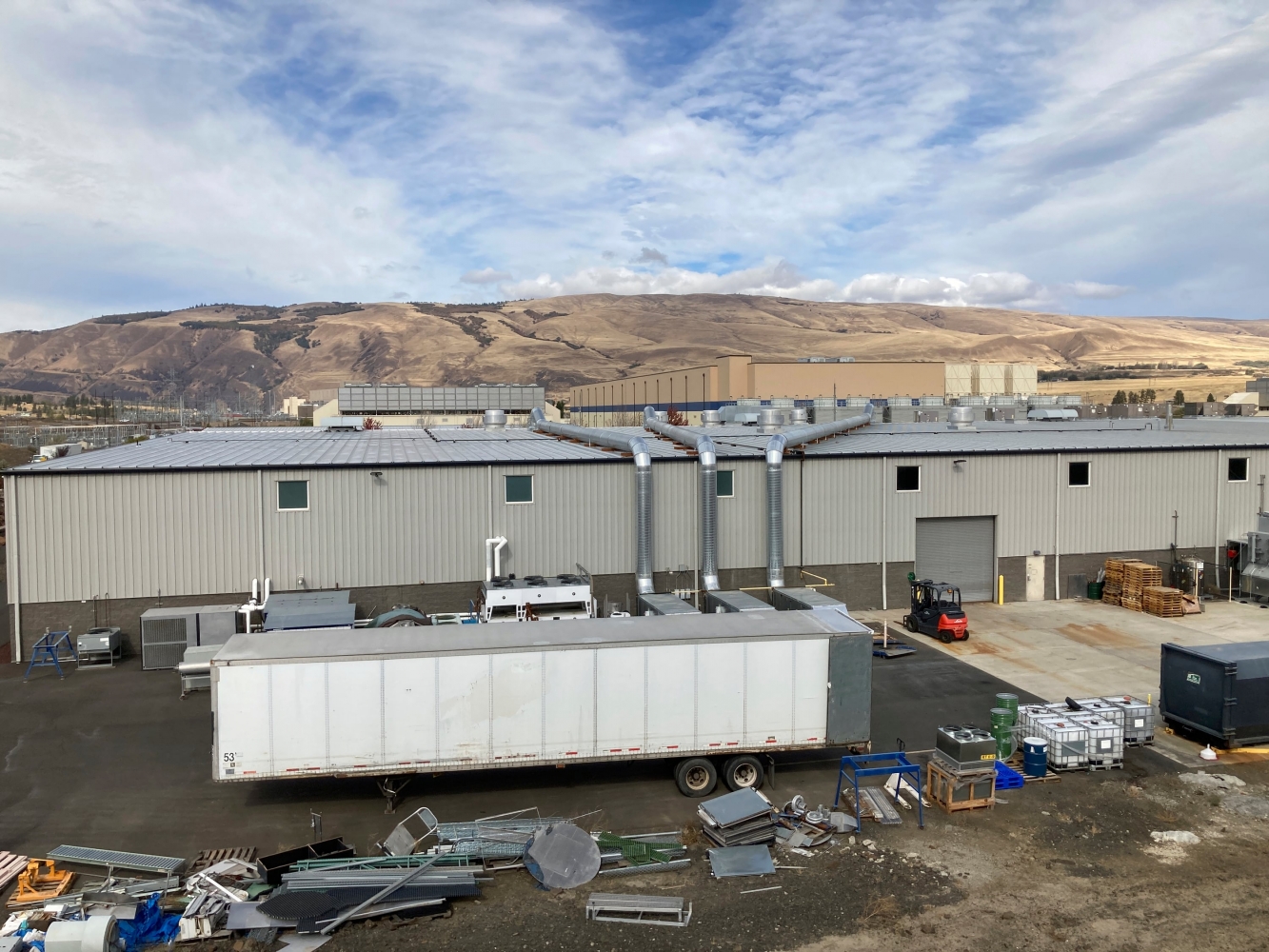
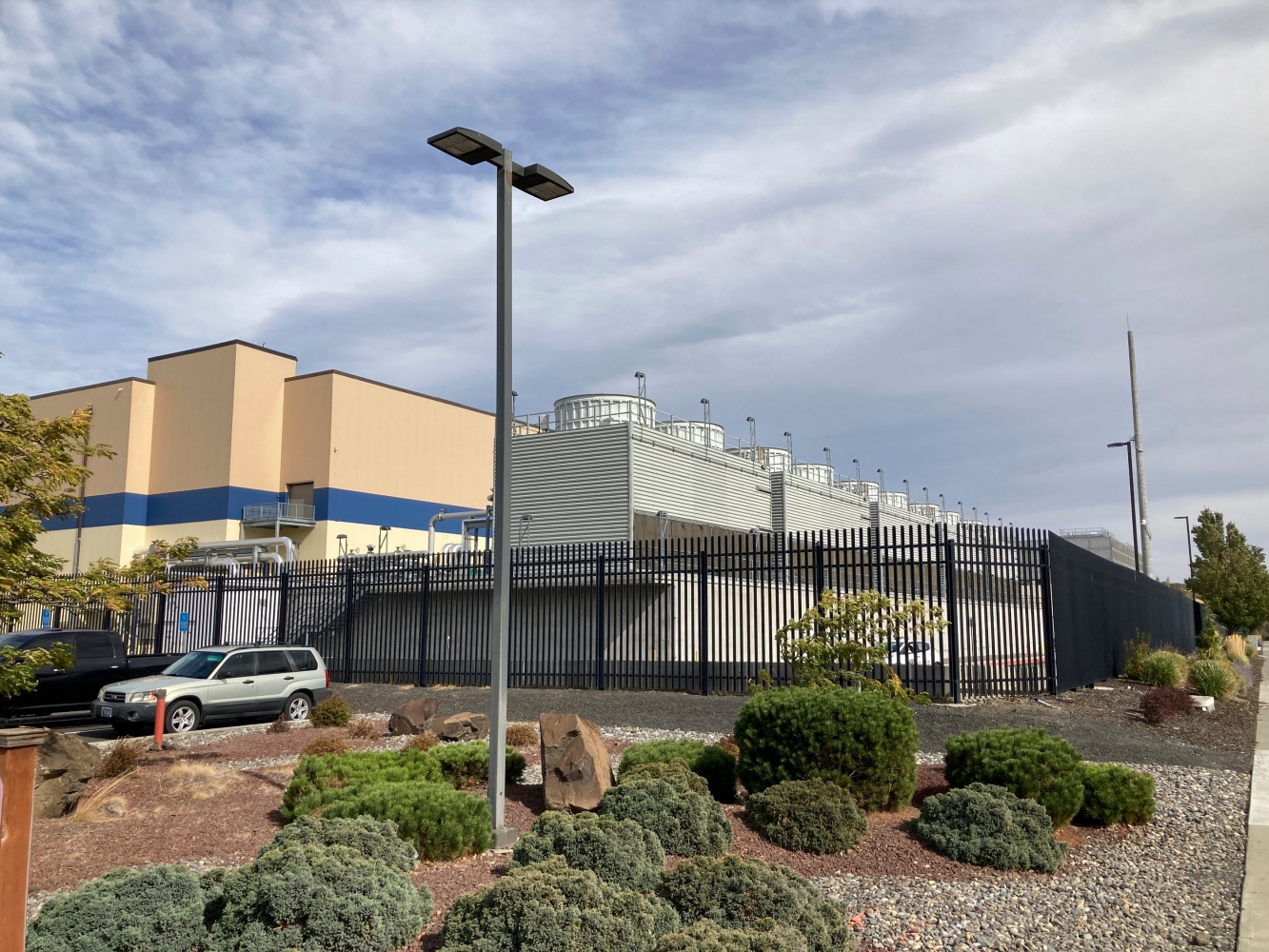
Google built its first data center in The Dalles in 2006. In 2012, the tech giant used 12% of The Dalles water supply. By 2024, a third of The Dalles’ water went to Google’s three local data center sites. The multitrillion-dollar tech company just built a data center building in 2025, and plans to complete another one this year.
Officials with Google say they are not behind the push to transfer federal land to The Dalles so the city can expand its reservoir. And The Dalles city officials insist the city isn’t expanding its reservoir to meet Google’s growing need for water.
“Google is really not a factor in this at all,” said The Dalles Mayor Richard Mays. “We were planning on doing this without Google.”
Yet The Dalles’ 2024 master water plan projects the city will need at least a million gallons per day specifically for an unnamed industrial user. That’s the same amount Google is using in The Dalles.
The Dalles’ request to use more water from the Hood River Basin comes as tech companies like Google, Amazon and Microsoft increasingly draw scrutiny for consuming massive amounts of water to cool servers in their data centers.
Data centers are a backbone of the technology that underpins much of modern life. They host websites, business applications, social media platforms and streaming media. While these centers have existed for decades, companies are rapidly constructing more to accommodate the nation’s growing demand for artificial intelligence.
Data centers have proliferated in rural areas like The Dalles, where land is vast and cheap. These systems come with some economic benefits: Google has invested almost $29 million into updating The Dalles’ water system, albeit in exchange for tax breaks.
Google’s property taxes for its data centers are discounted by 92% through its agreements with The Dalles and Wasco County. In 2025, it paid $7.3 million in property taxes, including a community service fee.
Tech companies like Google can bring promises of jobs and expanded industry in areas that feel forgotten by modern urbanization. Google employs about 200 people in The Dalles.
But the benefits data centers might bring to rural areas can come at a cost to the environment, the electrical grid, and water resources. It’s up to local leaders of small cities and counties to decide which they value most: an economic boost and funds for public services like health departments and water infrastructure, or natural resources that people and wildlife need to live.

The Dalles seeks a piece of Mount Hood National Forest
The Dalles gets almost 85% of its water from the Dog River, a low-flowing river that drains down the eastern Mount Hood foothills. The city has a pipeline that diverts water from the river into a stream that empties into the city’s reservoir.
The forests surrounding The Dalles’ reservoir are owned and managed by the U.S. Forest Service. If the city pursues a project that could affect that land — like by expanding the reservoir — it needs to get a federal permit. As part of that process, federal agencies would analyze whether the project could harm the environment and sensitive species. That analysis would likely take multiple years.
“When it’s owned by someone else other than us, we can’t control it,” Mays said. “We have to go through all sorts of red tape and special use permits with the Forest Service in order to be able to expand that reservoir.”
To cut through that red tape, including environmental reviews, The Dalles hopes to acquire the federal land immediately surrounding its reservoir, so it can raise its dam — necessary to expand the reservoir so it can hold more water — by roughly 2040.
The city is trying to acquire the federal land through a bill sponsored by U.S. Rep. Cliff Bentz, a Republican representing most of Eastern and Southern Oregon. If the bill makes it through Congress, The Dalles will take ownership of the land. That will allow it to raise its dam and to expand its reservoir’s capacity from 900 acre-feet to about 3,000 acre-feet, more than triple its current size, without Forest Service oversight. For context, an Olympic-size swimming pool holds about 2 acre-feet of water. The city expects raising the dam and expanding the reservoir to cost about $70 million.
Bentz said he does not know if The Dalles’ reservoir expansion is needed specifically to fulfill Google’s water needs.
“Did I ask them how they were going to use the water and who was going to get it? No,” Bentz told OPB. “The focus here is on how can we do things more efficiently at the governmental level to make it more likely that we can offer services and utilities to business so that we can get better jobs for higher pay to people.”

Bentz’s bill has passed through the House, and is now in the hands of a Senate committee on which U.S. Sen. Ron Wyden, an Oregon Democrat, sits.
In a statement to OPB, Wyden remained noncommittal.
“I am listening to the interests and concerns of all parties as the Senate considers the bill,” Wyden said in a statement to OPB.
In addition to its reservoir, The Dalles gets water from groundwater wells. Those wells pull from an aquifer, an underground layer of porous rock and water. Other people and businesses with their own wells in the area, including ranchers, farmers and residents, also draw water from the same source.
Because aquifers have a limited amount of water at any given time, Oregon law limits how much people can pull by allocating water rights.
When Google purchased a defunct aluminum smelter in The Dalles, it also acquired the right to pump massive amounts of water from underground — up to 3.88 million gallons a day. That’s almost as much water as the entire city averaged per day in 2024.
The corporation transferred those water rights to the city in 2021, Bentz noted, allowing The Dalles to pump more water from underground.
But groundwater is limited — there is only so much available before it’s replenished by rain or snowmelt. Oregon is one of many states that have allocated more water rights than the earth can provide at once, causing groundwater wells for residents, farmers and other businesses to run dry — particularly in Eastern and Central Oregon.
When the smelter was in operation, it pumped so much water that it strained groundwater resources, which helped put The Dalles on state regulators’ map of “critical groundwater areas.” It wasn’t until the early 2000s, when the water-intensive smelter closed, that groundwater levels began to stabilize.
Now, The Dalles has the right to pump the same amount of water, potentially straining The Dalles’ groundwater resources again. And it can provide a large portion of that water to Google.

In an interview with OPB, Google representatives said the company has made up for its heavy water consumption by investing in watershed projects, including planting trees in burned areas and rebuilding a canal.
“We’ve made a lot of investments in the watershed in Oregon that we think ultimately has improved that watershed significantly to the benefit of the entire community,” said Ben Townsend, global head of infrastructure strategy and sustainability at Google.
In the end, Townsend said, Google is all about transparency.
“We want to tell a community why we’re using water,” Townsend said. “They deserve to know. We want to tell a community how much water we’re using.”
Google’s track record in The Dalles tells a different story. In 2021, the company tried to prevent the public from knowing how much water it was using in the city, arguing its water use was a “trade secret,” according to reporting by The Oregonian/OregonLive. The newspaper sued The Dalles for public records, arguing that information must be made public. The Dalles eventually settled with The Oregonian/Oregnive and released the records.
Google paid the city’s attorneys fees in that lawsuit.
OPB pressed Townsend about the lawsuit and how it relates to his goal of transparency. He said the company was trying to protect “physical security of assets that are critical to operations.”
“It’s a little hurtful to hear it implied that there is any attempt by myself or others on the team to obfuscate or hide what would be meaningful environmental footprint data to the community,” Townsend said, adding later, “It hurt my feelings a little bit.”
Diverting river water from Mount Hood
Environmental groups worry that enlarging The Dalles’ reservoir would divert too much water from the Dog River and ultimately harm fish and wildlife.
The Dog River is filled with snowmelt. It flows into the Hood River and, from there, into the Columbia River. As climate change increases global temperatures, river systems like these need all the cool mountain water they can get.
The Dog River has run dry before. When that happens, Hood River, and subsequently the Columbia River, get less cold mountain runoff that might otherwise cool their waters.
Warm water holds less oxygen, making it difficult for fish and other aquatic life to breathe. Harmful bacteria and other microbes also thrive in warmer temperatures, potentially leading to algal and bacterial blooms, and degrading overall water quality.
The Hood River Basin is already stressed by drought. It’s historically been an important cold-water refuge for migrating salmon, providing the cool water they need to move between freshwater rivers and the ocean. The coho salmon, Chinook salmon and steelhead that swim through this basin are listed as threatened under the Endangered Species Act.
“Every unit of water you take out of the system over time eventually results in probably higher water temperatures, less spawning and rearing habitat for fish,” said DeVoe, the advisor with WaterWatch of Oregon. “Many of these rivers just have nothing left to give.”
The Dalles is limited by how much water it can pull from the Dog River between August and November, when streamflows are usually lowest and most threatening to fish survival. The city needs to leave a minimum flow of 0.5 cubic feet per second — usually about 3 to 6 inches of water.
That’s generally too low for salmon and steelhead to survive. But city leaders say even when the river is too low for these species to reach some areas, it is deep enough for them to survive farther downstream.
“Dog River’s never going to be dry because you have contributing factors and tributary spring springs that are flowing into Dog River downstream from our diversion point,” said The Dalles public works director Dale McCabe.
It’ll be difficult to determine what environmental harms might come from expanding The Dalles’ reservoir. If the federal land around the reservoir is transferred to the city, The Dalles won’t need to undergo a federal environmental assessment.
“There may never be a proper analysis because it won’t be required, and that in itself is concerning,” said Jade Hagan, a spokesperson for Bark, a grassroots environmental group focused on Mount Hood.

Google’s long history in The Dalles
Around 2012, The Dalles started rebuilding its pipeline that diverts water from Dog River, a $14 million project. The old pipe was nearly a century old, made of wood, and leaked.
The new pipe would be made of plastic. It would also be much larger, with enough capacity to draw twice as much water from the river.
Multiple people and environmental groups, as well as the Confederated Tribes of Warm Springs, voiced concerns that the larger pipe wouldn’t leave enough water in the river for fish.
“The upstream reaches of the Dog River are entirely dewatered by the City of The Dalles on federal lands administered by your agency,” the tribes wrote to the Forest Service in 2016. “This is despite the trust responsibility the federal government has to the Tribes to maintain fish and wildlife populations.”
After a yearslong environmental assessment, the U.S. Forest Service assured those groups in 2020 that the city of The Dalles didn’t have immediate plans to take more water from the Dog River for at least another decade, because the city’s reservoir was at capacity. The Dalles public works staff told federal regulators that its current water capacity met the city’s needs.
“Therefore, the Forest Service considers any such plans to increase the reservoir’s capacity as an unforeseeable action at this time,” the agency told critics in 2020.
A year later, in 2021, Google announced its plans to build two new data centers.
That’s when Google, through a subsidiary called Design LLC, offered a deal to the city: it would spend $28.5 million to cover the cost of some water infrastructure, including two new groundwater wells, two storage tanks, and multiple pump stations. In exchange, The Dalles would provide Google deep tax cuts for the data centers’ first 15 years, and it would commit to providing a certain amount of water to the company annually.
Suddenly, The Dalles needed more water.

The Dalles public works staff solicited multiple studies and reports illustrating the city’s current water capacity and what it needed to “meet future demands,” according to staff reports presented to councilors.
Subsequent studies and water reports don’t explicitly name Google as a primary water consumer, though the city’s 2024 water master plan specifically mentions a “large industrial user” in projecting how much water The Dalles will need in the future.
That large industrial user, it says, needs about 1 million gallons a day, the same amount that Google currently consumes in The Dalles.
In addition to expanding the reservoir into federal land, the city’s water plan recommends a series of infrastructure improvements to meet future water demands, including replacing and expanding the city’s water treatment plant, and increasing aquifer storage. Altogether, these improvements are expected to cost about $260 million over the next 20 years — including the $70 million that would pay for the reservoir expansion
Revenues from Google, including property taxes, should cover almost a quarter of those upgrades. The rest will come from loans and higher water rates for customers. Those rates are expected to increase by 7% by 2036.
News Source : https://www.opb.org/article/2026/01/15/as-googles-water-demands-grow-the-dalles-aims-to-pull-more-from-mount-hood-forest/
Other Related News

01/15/2026
We did not meet the standard of excellence our customers expect Verizon said after the mor...

01/15/2026
The crew returned Thursday ending their space station mission more than a month early in N...

01/15/2026
South Coast Humane Society - the real oneWe are in need of medium thickness blankets if an...

01/15/2026
The salaries for Oregon State assistant football coaches are significantly lower in 2026 t...
01/15/2026
Subscribe to OPBs First Look to receive Northwest news in your inbox six days a weekGood m...

Follow

Download Our App


Copyright 2022 © EPUERTO. All Rights Reserved