

Published on: 10/19/2026
This news was posted by Oregon Today News


Description

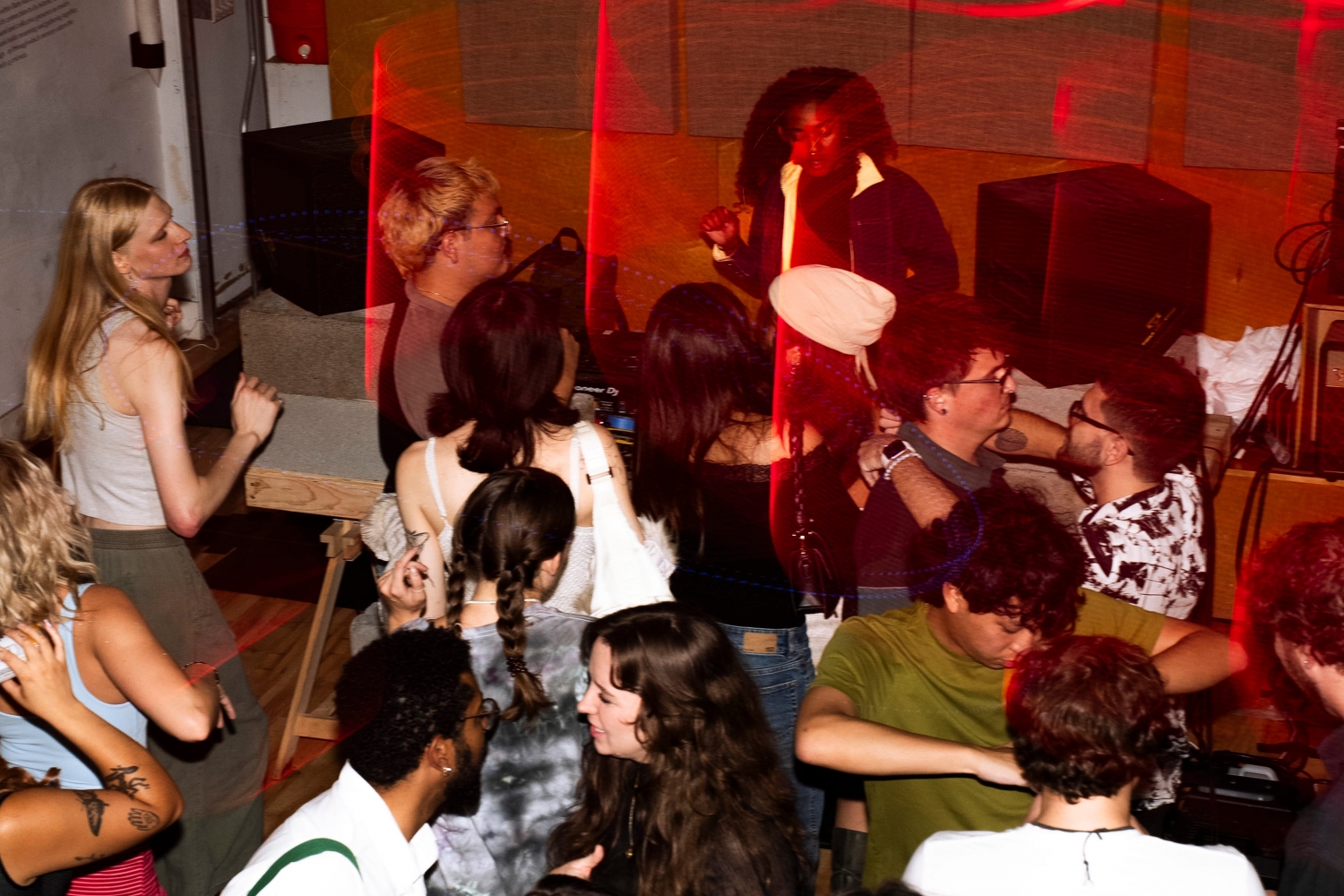
Inside the fog-filled room, there were no phones out or flashing cameras. Just the faint shadows of figures in dim lighting as sweaty limbs pulsed to a punchy bass line. Green lasers flickered overhead as a DJ stood before a custom IKEA-made booth with speakers balanced atop cinder blocks.
“A lot of Portlanders still may not know that Barn Radio exists,” said Jared Dancler, who arrived with an entourage of friends to the music venue on a Saturday night in September. “To the electronic music scene, it feels very relevant online and in person, but if you walk by First Avenue, you don’t know it’s here unless somebody puts you on.”
Black-managed-and-owned music venues in the United States remain rare. But along this row of nondescript storefronts, away from the fanfare of the main strip of nightlife in Old Town, an international underground electronic music scene has made its home in the heart of Portland. Every weekend, music lovers are transported on a sonic journey across genres and borders — from the frenetic drum loops of Tanzania’s singeli to the soulful house of Chicago.

“For me there is real significance in the fact that a Black-led space in Portland can participate in that global conversation,” said Jasmine Beach, 38, who steers Barn Radio’s operations as one of its co-directors. “Black and queer communities in particular did not simply contribute to electronic music. They authored much of its musical and social language.”
It’s easy to mistake Barn Radio as just another nightclub in Portland’s dance scene. Beach instead describes Barn Radio as a “werk in progress” platform, a physical space that functions as a sandbox for artists to archive and explore music through residencies, workshops and exhibitions.
Mylun Jackson, a frequent attendee and occasional door person, said Barn Radio is an inclusive alternative in Portland’s local nightlife. At times, the venue offers a sliding scale in tickets for queer and trans people of color, and the space isn’t centered around free-wheeling libations because Barn Radio is restricted from selling hard liquor.
“It attracts a very diverse array of Portlanders,” Jackson said. “It is an accessible space in which creative people can get together.”

Performing at Barn Radio helped Sasha Thrower, aka DJ mintwhisper, find community when she moved to Portland in 2024 and struggled to see Black and queer representation in nightlife.
“Barn is kind of an anomaly for that,” said Thrower, who serves nostalgia in her warm disco and funk sets. “It’s really special to be able to play music that I grew up with or play music that people that look just like me have created. It makes me feel connected to my identity.”
At Barn Radio, you won’t hear the aggressive dubstep with explosive drops that one might associate with the big music festivals and neon-clad attendees carrying glow sticks.
“We don’t brand ourselves as an EDM venue,” said Cole Johnson, a co-director of Barn Radio, who curates the DJs and designs their event flyers with blocky typefaces.
Instead, Barn Radio’s ethos is grounded in the DIY origins of electronic dance from the Chicago house and Detroit techno that was popularized by Black DJs in the Midwest after the death of disco in the ‘70s and ‘80s.
“We like to play more underground things that are a little bit less commercially motivated and more experimental,” Johnson said.

Barn Radio’s current space has a maximum capacity of 75 people. But despite its limited size and lack of institutional funding, it has made room for over 300 artists from over 30 countries across over 170 events it has hosted since 2023. The venue’s vaulted white walls have become an essential stop on the West Coast for many internationally touring artists.
Ugandan-born and London-based DJ Tayo Alemi, who performs under the alias Authentically Plastic, said she was pleasantly surprised to find a welcoming audience on the West Coast when she was building out her North American tour last year.
Her musical influences are informed by the traditional kadodi drum patterns of Uganda and incorporate the darker breakbeats of gqom from South Africa. These subgenres of African electronic music aren’t as recognized in the West as the log drums of Afrobeats, she said.
“I could hear audible gasps and screams in the crowd,” Alemi said, remembering her set. “It was nice to see that people were very exhilarated by this music in Portland of all places.”

Barn Radio’s advertising on Instagram subverts the type of status-driven consumption that partygoers might be accustomed to seeing in nightlife. There are no crowd shots showing the who’s who pulling up to a scene, relying on people’s FOMO to drive foot traffic.
Beach and Johnson intentionally avoid the spotlight, opting not to post widely about themselves to their 18,000 followers. The singular focus of Barn Radio’s online presence is the music pedagogy. Each caption introducing the DJs on an upcoming lineup is written with an attention to the cultural influences and lived experiences that inform each artist’s unique sound selection.
“Everything is just so optimized right now, and it feels impossible to escape the panopticon,” said Alemi, who had co-founded an underground party series with friends to build safe spaces for queer people and femmes in Uganda’s nightlife.
“You don’t need all of this fuss,” she said of the pressure to photograph and record everything on the dance floor. “The magic is going to be at the event.”
DJ Sliink, one of the pioneers of Jersey Club, said that DJing at Barn Radio this past April took him back to his days as an emerging artist in the early 2000s. At the time, he was a teenager, pirating songs to slap together edits as a global dance movement was surfacing from the basements of Newark homes in New Jersey.
He describes the added effects of bed squeaks and whipcracks in Jersey Club remixes like “your favorite record on a Red Bull.”
“They used to be going so hard…you’ll see jean marks on a white wall ‘cause everybody is getting dances and things like that,” Sliink recalled. “I like more intimate kind of parties.”

Today, Sliink has toured for global audiences and collaborated with the likes of Skrillex. His work advancing equity and diversity in dance music earned him the title of Billboard Change Agent in 2020.
The internet has changed DJing, Sliink said. On TikTok, a viral 15-second clip of a transition can make a DJ an overnight sensation. Sliink is worried that our shrinking attention spans on social media can flatten a music genre’s context and social history.
“When you want something fast, there’s no room to make memories at all,” Sliink said, thinking back to a time when people engaged with parties and DJs offline.
“I want to come back and DJ for four hours,” said Sliink, who enjoyed visiting Portland. “Maybe we could put some holes in the wall,” he laughed.
Barn Radio thrives in its unconstrained expression, but with that freedom comes a level of financial instability. Since 2020, music venues all across the world have struggled to find their footing after the onset of the COVID-19 pandemic.
Beach added that there’s a lack of financial investment and grant funding for nightlife. Since taking up residence on First Avenue in 2024, Barn Radio has operated its bar out of coolers. Speakers and lights have failed. There were cracks in the storefront window that needed repair. They had no rainy-day fund for emergencies.

In February, Beach and Johnson launched a GoFundMe to ask for community help to fund basic investments in Barn Radio’s infrastructure. They managed to raise $30,000 out of the $50,000 they needed to sustain operations. All of that money has gone toward investing in new hardware. A pair of club CDJs that DJs use to mix songs can cost upward of $6,000.
Jared Dancler said he can see Barn Radio staking a legacy at the frontier of Portland’s music scene with grassroots support.
“Things became more refined,” Dancler said. “When you walk in, it just has that aura of, this is a space that we’re respecting, and we take care of this together.”
Beach said the venue’s sustainability is still tenuous even as they dream bigger about Barn Radio’s reach and impact.
“I want enough infrastructure that artists can do more ambitious work here (so) audiences can encounter music they might otherwise have to leave Portland to experience,” Beach said.
News Source : https://www.opb.org/article/2026/10/19/barn-radio-uplifts-the-black-roots-of-electronic-music-in-the-heart-of-portland/
Other Related News
10/19/2026
A service member died from injuries sustained during a pregame demonstration at a UTSA foo...

10/19/2026
I have lived in the Richmond neighborhood for 30 years and have worked leading churches an...
10/19/2026
Vivid colors creative patterns and nonstop excitement will be on display during the Westsi...
10/19/2026
As the season winds down The OregonianOregonLive is highlighting some of 2026s top high sc...
10/19/2026
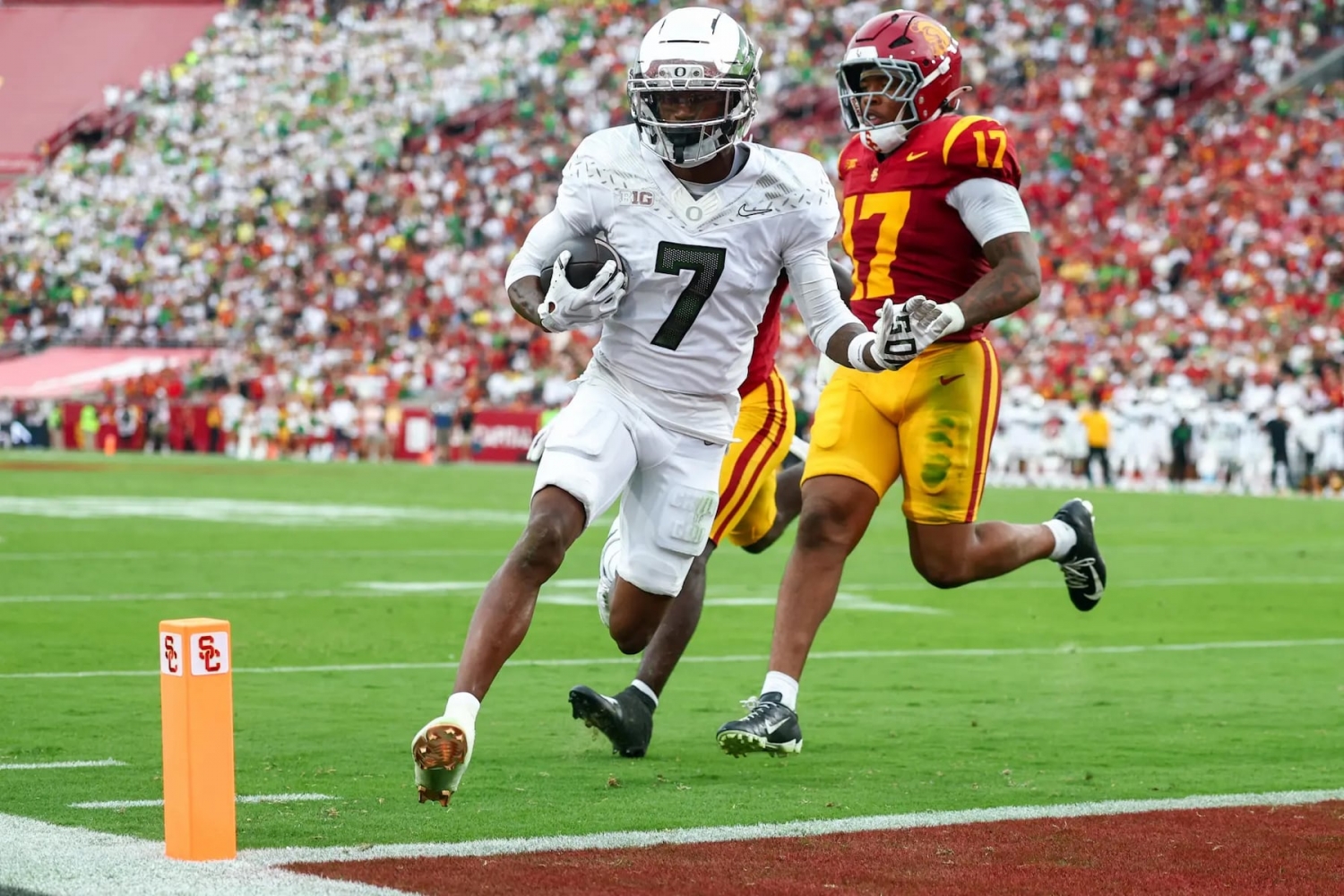
Oregon Ducks wide receiver Evan Stewart was booked into Springfield Municipal Jail Sunday ...

Follow

Download Our App


Copyright 2022 © EPUERTO. All Rights Reserved