

Published on: 08/07/2026
This news was posted by Oregon Today News


Description

Whenever residents of the besieged city of el-Obeid look up at the sky, it is filled with drones — sometimes as many as 40 at a time.
The hum of the unmanned aircraft, which have been conducting deadly strikes on the city for months, has become the soundtrack to their days.
And the drones are indiscriminate.
“You might get hit and killed by a drone while you’re asleep at home, or while on the way to school. You could also get hit by a drone in the market,” says one 25-year-old resident.
The local aid worker doesn’t want to be named because of the risk to her safety, but she says they even hit funerals.
Her uncle was killed in a drone strike while going to bury his neighbor — who’d been killed in a drone strike.
Sudan has been mired in a brutal civil between government forces and the paramilitary Rapid Support Forces (RSF) for more than three years. The war has caused the world’s largest humanitarian crisis and displaced millions of people.
El-Obeid, the capital of North Kordofan state, sits along a strategic corridor in central Sudan, south of the capital, Khartoum, and on the route to the country’s western Darfur region. Its location has made it a critical battleground in the war.
According to data from the International NGO Safety Organisation, North Kordofan has recorded the highest number of drone attacks in Sudan in 2026. Drones have been used by both sides to the conflict.
United Nations experts are now warning of a new risk of large-scale atrocities in el-Obeid, which they say could see a repeat of what happened in the Darfur city of el-Fasher last year, when the RSF slaughtered some 6,000 civilians. U.N. investigators later declared those crimes bore “the hallmarks of genocide.”


‘Red alert’
Volker Türk, the U.N. high commissioner for human rights, has stressed the need for urgent action.
“This is not a drill. It is a red alert that needs to land on the desks of heads of state and government around the world,” he said last month. “Their phones should be running hot in the coming days and weeks, with ideas on how to prevent atrocity crimes in el-Obeid and in other places in Kordofan.”
Already in el-Obeid, a city of about 500,000 people, the RSF is replicating tactics it used in el-Fasher, attacking critical infrastructure, including water distribution points, and causing severe water shortages.
That has left women facing a “deadly gamble” as they go out to collect water, according to U.N. Women East Africa Director Anna Mutavati.
“Under the perception that darkness offers protection from aerial attacks, these women and girls have been harassed, raped and subjected to other forms of sexual violence — all while trying to access water,” she said.
Meanwhile, a deadly cholera outbreak is spreading in parts of the city, with children the worst affected.
“Cholera is tearing through certain communities in the city, with the outbreak being compounded by incessant rains and recent drone strikes that have crippled critical medical facilities and left thousands without access to urgent treatment and life-saving medications,” Plan International Sudan Director Mohamed Kamal said this week.
“The situation facing children is particularly dangerous,” he said. “They are far more susceptible to disease, some face the prospect of recruitment by armed groups, and they are experiencing lasting psychological trauma.”

U.S. senators urge action
Since the war broke out in 2023, at least 59,000 people have been killed, according to the Armed Conflict Location & Event Data Project, a conflict-monitoring group. But the true toll could be much higher.
Sudan’s government forces have been buoyed by recent gains against the RSF. Last week, they celebrated retaking a major highway in North Kordofan and several other key positions.
But despite those military advances, Sudan researcher Eric Reeves told NPR this week: “There is no likelihood of a military rescue of el-Obeid.”
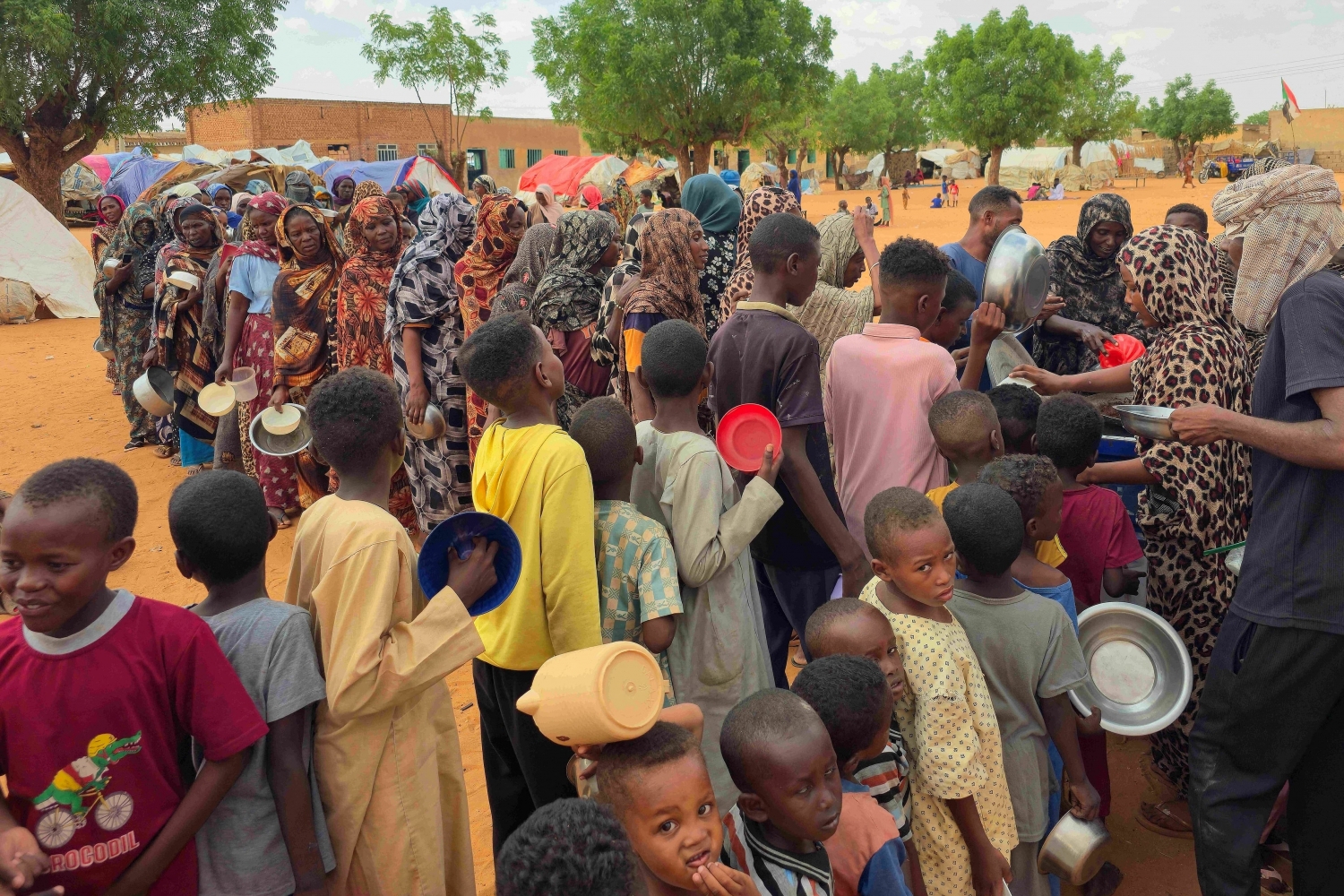
More than 100,000 displaced people there are now sheltering in camps, and some are facing extreme hunger.
“Many families are struggling to meet their basic needs in IDP camps,” Esperanza Santos, Sudan emergency coordinator for Doctors Without Borders, told NPR.
Aid funding cuts and rising diesel and fertilizer costs linked to the broader disruption caused by the war in Iran are also worsening the situation, according to the World Food Programme, which is distributing food in the city.
“At a time when needs continue to grow, humanitarian resources are shrinking,” Derk Segaar, special Sudan envoy for the International Federation of Red Cross and Red Crescent Societies, told a U.N. briefing in Geneva this week.
Pressure is mounting on the international community to act. On Tuesday, a group of more than 20 U.S. senators wrote to Secretary of State Marco Rubio urging him to take steps to prevent mass atrocities in el-Obeid.
“While we welcome the State Department’s expression of concern about the escalating situation in el-Obeid, words are not enough,” the letter, signed by Democratic Sens. Tim Kaine, Bernie Sanders and Adam Schiff, said.
“The encirclement and systematic crippling of resources in el-Obeid increasingly parallels el-Fasher,” the letter continued.
The senators also urged the administration to stop selling arms to the United Arab Emirates, which has been accused of supporting the RSF.
Reeves agreed that such action from the U.S. is critical.
“Until the United Arab Emirates is called out and dissuaded from pursuing its grotesquely destructive policy in Sudan,” he told NPR, “we’re going to see this war continue.”
News Source : https://www.opb.org/article/2026/08/07/warnings-of-new-wave-of-atrocities-in-besieged-sudanese-city/
Other Related News

08/07/2026
Water levels on the Danube River the second longest in Europe have dropped so low because ...
08/07/2026
An Ohio community has raised thousands of dollars to support a small convenience store tar...
08/07/2026
ESPN personality Stephen A Smith is not a believer in Alabama head coach Kalen DeBoer who ...
08/07/2026
Over 1300 baby walkers have been recalled
08/07/2026
EUGENE Inside each Oregon football players locker this season a 9x9 grid with key words i...

Follow

Download Our App


Copyright 2022 © EPUERTO. All Rights Reserved