

Published on: 10/27/2026
This news was posted by Oregon Today News


Description
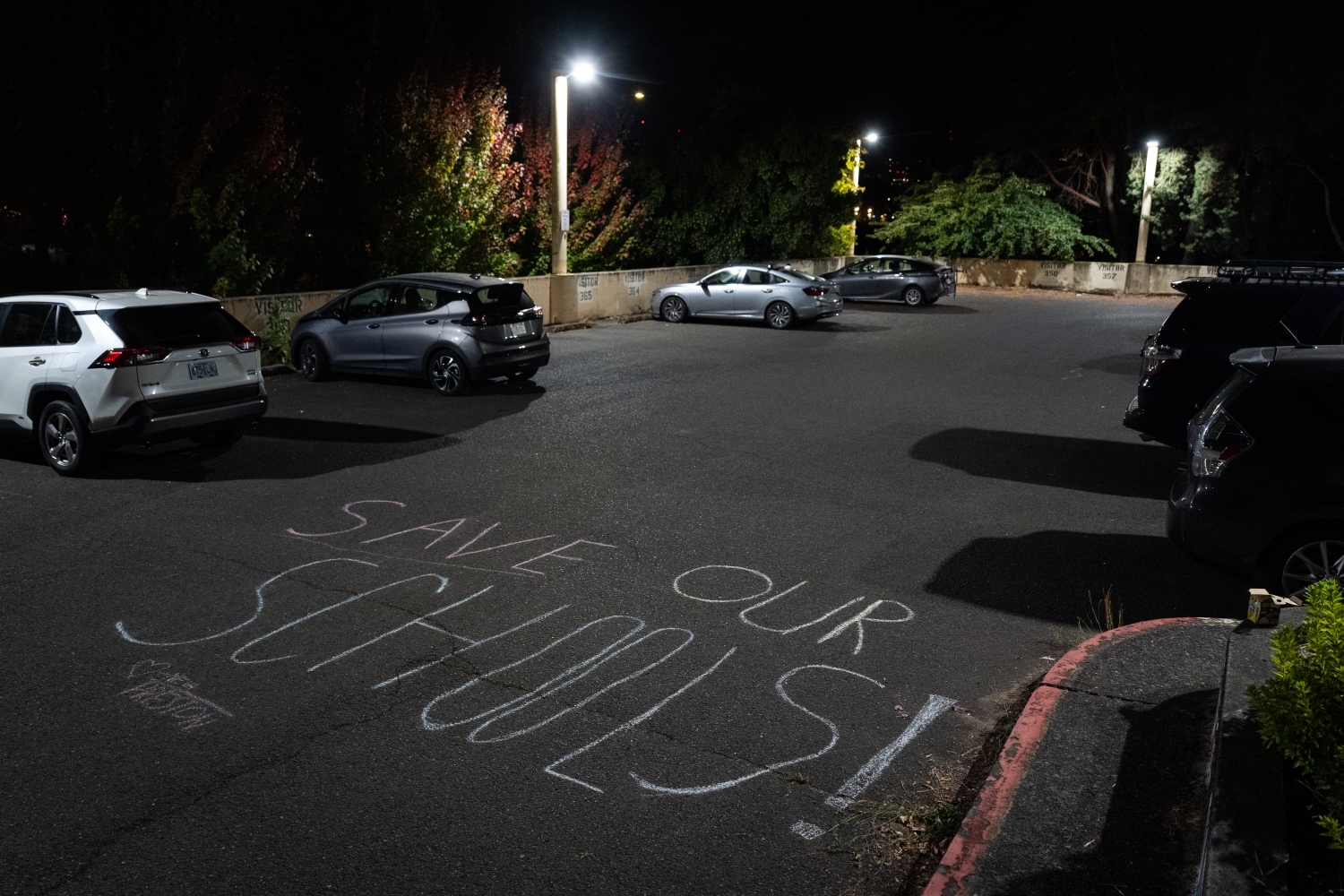
It’s been about three weeks since Oregon’s two largest school districts announced plans to close up to 20 schools, combined. Portland Public Schools has outlined two scenarios, one with 14 closures and another with 11, mostly elementary schools with one middle school. The Salem-Keizer Public Schools has proposed closing six elementary schools.
Both district plans would affect more than just the schools up for closure. Between boundary changes and program moves, dozens of campuses and thousands of students would be affected. But there are more similarities than that; school communities are frustrated, the Governor has issued a statement, and both districts will have to have financial conversations in the year ahead. But each district — and in Portland, an individual school board member — is approaching closures differently.

Portland and Salem-Keizer are far from the only districts dealing with school closures; across the country, districts from Oklahoma to New Hampshire are announcing closures. Conversations have been stalled or postponed in Buffalo, Minneapolis, and Miami. Public school enrollment is declining everywhere, and districts are faced with complicated, emotionally fraught decisions.
What’s similar between Salem and Portland?
No one is happy.
You’d be hard-pressed to find anyone excited about closing a school, especially in a state like Oregon, with such strong support for public education. In Portland and Salem-Keizer, schools are critical to their neighborhoods and the communities they serve. Families in both districts are raising concerns about these proposals.
Portland’s Special Education Parent Teacher Student Association released a report last week, finding that schools receiving students with disabilities may not have enough classroom space to support them, and may be more crowded than other schools. They’re also concerned about the staffing impacts of school closures.
“There already is this underlying status quo of inequity,” for students with disabilities, said Gina Berce Lipor, a North Portland parent. She cited the disparities in outcomes, discipline and resources.
“There’s concerns among families and staff that … as it stands, that this could make things worse for disabled kids.”
Berce Lipor said the district has received the report. The PTSA has asked for more information by Oct. 29, so that the group has time to review the plan.
“We’re very concerned about the impact on disabled kids,” she said. “We need some new scenarios that feel like disabled kids are really visible and centered as one of the focal groups,” she said.
Both districts are being bombarded by parents and students voicing opposition and asking probing questions. Salem-Keizer has started its last two board meetings early, at 4 p.m., to allow more time for public comment.
“Why close a school that no matter what grade level you are at, they boost you above and beyond?” asked Jilian Getchell, a third grader at Candalaria Elementary, one of the schools proposed to close. “Everybody should get to feel the love and connection that everybody feels at this school.”
District officials say they want to hear from families. They’re hosting listening sessions across the district. In Portland, Superintendent Kimberlee Armstrong and board members have shown up at school pick-up. But some parents say they’re getting the sense that their feedback won’t be seriously considered.
Lindsay Boyd is the parent of a second grader at Lewis Elementary, a school set to close under one PPS scenario. On Monday, she and other parents gathered after school to hear from board chair Eddie Wang and board member Michelle DePass. By the end of the 30-minute conversation, Boyd felt frustrated, concluding that Wang and DePass’ visit was “performative.” She said DePass’ comments felt dismissive. At one point, Boyd said she asked what evidence would change DePass’ mind about a school on the closure list.
“She said, ‘Well, I can tell you what it won’t be — a school visit,’” Boyd recalled.
Boyd isn’t against closing schools. But she said the pace and number of students affected seems like too much right now.
“If we have to close schools, let’s be really methodical, and let’s make sure we’ve thought of everything, we’ve shown a clear picture for what students will gain,” Boyd said, adding that she’s against trying to move at “breakneck” speed.

Later in the week, on Thursday, Supt. Armstrong visited Lewis with two other school board members. She said it was a little better than the Monday session, but parents didn’t get enough time to share their thoughts.
Leaders in both districts are also facing claims that their membership in an organization called Chiefs for Change is connected to a national agenda to close public schools.
The governor is stepping in, kind of.
Earlier this month, Oregon Gov. Tina Kotek sent a letter to PPS Supt. Armstrong and chair Wang, asking them to “take the time” to get school building closures right. No letter went out to Salem-Keizer leaders, but in a statement, Hazel Tylinski with the governor’s office said Kotek is “concerned whenever local school districts contemplate decisions that could impact the success of students.”
“She is evaluating information from districts considering school building closures and is exploring ways to address this growing statewide situation,” Tylinski wrote.
State Sen. Christine Drazan, Kotek’s opponent in next month’s election, said that districts should try to keep schools open.
“I want to keep our small grade schools,” Drazan told OPB. “I want to keep our small schools across our state and I want to figure out a way to get more money into the system, period, from all areas if we can.”
Both districts have big budget gaps that will be mostly unaffected by closures.
Portland Public Schools is projecting a $65 million deficit for the upcoming school year. In Salem-Keizer, the deficit is $46 million. That’s assuming the same level of state funding for next year, though that won’t be finalized until the next legislative session. During Tuesday’s board meeting, Armstrong began her superintendent’s report with a single slide that had two sentences: “Closing school buildings is not about reducing the deficit. It is about concentrating resources to strengthen educational opportunities for students with fewer available dollars.”
Officials in both districts say they’ve been subsidizing small schools with their limited resources. With these budget gaps, things are only going to get worse. Salem-Keizer Superintendent Andrea Castañeda offered more specifics: if the district delays school closures, she said an elementary school under 300 students might lose one to two teachers, adopt more blended classrooms, and reduce counselors, music teachers, and PE teachers, resulting in those specialized educators more often splitting their time across different sites.

But that hasn’t stopped teachers, families, and students from pledging to advocate for more funding and an updated school funding formula during next year’s legislative session.
“We do need to take some issues to the Capitol,” said Castañeda.
“But if our call is to ask our state to pay for students we are no longer educating, I must tell you that that is not something that they are going to do. They may do things for us, and they may do things for us because we organize, but paying Oregon’s public schools for students that we no longer teach — that is not one of them.”
Where are the differences?
Salem-Keizer is working with an outside consultant.
Salem-Keizer leaders worked with an outside company, FLO Analytics, to work with “data related to boundary adjustments” and on enrollment forecasting. District staff say the company did not play a role in the closure scenario process.
Portland worked with FLO Analytics in the past for its Southeast Enrollment Guiding Coalition, an advisory group the district formed for boundary and program changes across 20 schools. It is not working with FLO Analytics on the closure process.
Instead, PPS used a mix of internal data as well as information from the Portland State University Research Population Center and a contracted equity audit of the SEGC experience.
“Multiple central office teams have provided staff time to support this current process from both operations and academics,” said PPS spokesperson Valerie Feder in a statement to OPB.
“PSU has supported the enrollment projections as well as reviewing our methodology. The Equity Audit provided actionable lessons learned, many of which we have been able to put into practice.”
Portland superintendent: ‘Leaning into Scenario B’ on school closure plans
If the board chooses scenario A or B, this closure process would affect more than 50 of Portland’s 81 schools and programs between boundary changes, grade level changes, closures, and program moves.
McKay Larrabee is a PPS parent and data analyst who has worked on scenario modeling for school districts around the country, including the Austin Independent School District. She said PPS doesn’t have the internal capacity to pull off this many changes at once.
“In my seven years leading school redistricting and consolidation projects across the country, I’ve learned that scenario modeling is far more complex than simply moving students between schools,” Larrabee told OPB.
Larrabee says the district needs to consider not only where students live and where enrollment is likely to grow, but officials also need to anticipate the decisions families will make in response to changed boundaries, relocated programs and shuttered buildings.
“My concern is that PPS assumes families will make the same choices despite fundamentally changing their options,” Larrabee said. “At this scale, PPS needs to slow down, bring in the right expertise, and prioritize minimizing unnecessary disruption to students.”
A Portland school board member is coming up with a new alternative.
In Portland, school board member Christy Splitt has come up with her own “Scenario D.” She called it an alternative to the district’s proposals.
“I felt pretty uncomfortable just being a ‘no’ on Scenarios A and B,” Splitt said. But she said no action is not an option either.

“Scenario D” proposes five “mergers,” resulting in the closure of five schools:
- Creston with Arleta
- Woodmere merges with Whitman and Lewis
- Peninsula and Cesar Chavez’ neighborhood program merger with Rosa Parks
- Irvington with Beverly Cleary
- Buckman with Sunnyside Environmental and Abernethy
An earlier version of Splitt’s proposal would have merged Sabin into King but it’s no longer part of her plan.
The plan also includes several policy proposals, including one to make sure board policy states “closed schools cannot become charter or private schools.”
Splitt wants the district to vet her plan for errors, but it hasn’t happened yet. She said her scenario can maybe take a more long term approach, with smaller changes moving forward. She’s concerned that the district is “biting off more than we can chew” with the proposed scenarios.
“I can’t sleep,” Splitt said.
“I’m just thinking about how we land this, how we do the best things we can for our kids and our families and our community, and just really trying to find that sweet spot, that feels doable and that brings people together for the long haul in a big project.”
The districts are working under slightly different timelines.
In Salem-Keizer, the list of schools proposed for closure was announced Oct. 13. The next big decision date is Dec. 8, when the board is set to vote on the plan. If the plan is approved, the district would move forward with boundary adjustments in February.
In Portland, there are a few more steps. On Nov. 17, Armstrong plans to present a recommendation to the school board. And on Dec. 15, the board is scheduled to vote on that recommendation.
But both districts have a long road ahead of them. Shortly after this process concludes, Oregon’s legislative session and school budget seasons will begin. And if both districts move forward with closures, the transition process will likely last into 2028.
News Source : https://www.opb.org/article/2026/10/27/oregon-portland-public-schools-salem-keizer/
Other Related News

10/27/2026
Villanova University where Pope Leo went to school will get a chance to connect with him a...
10/27/2026
A 57-year-old German climber died in a nearly 5000-foot fall on Nepals Ama Dablam mountain...
10/27/2026
The cast of Team Moms Baseball shares what fans can expect in the first season of the real...
10/27/2026
The word of the year per Dictionarycom is maxxingFor the uninitiated the word means maximi...
10/27/2026
ADVOCATE SPOTLIGHT Meet Jessica Jessica serves as our Housing Advocate at The SAFE Projec...

Follow

Download Our App


Copyright 2022 © EPUERTO. All Rights Reserved