

Published on: 01/11/2026
This news was posted by Oregon Today News


Description
Editor’s note: This story is part of NWPB’s efforts to report not just on problems, but on how our communities are seeking solutions. Want to see more stories like this? Let us know at [email protected].

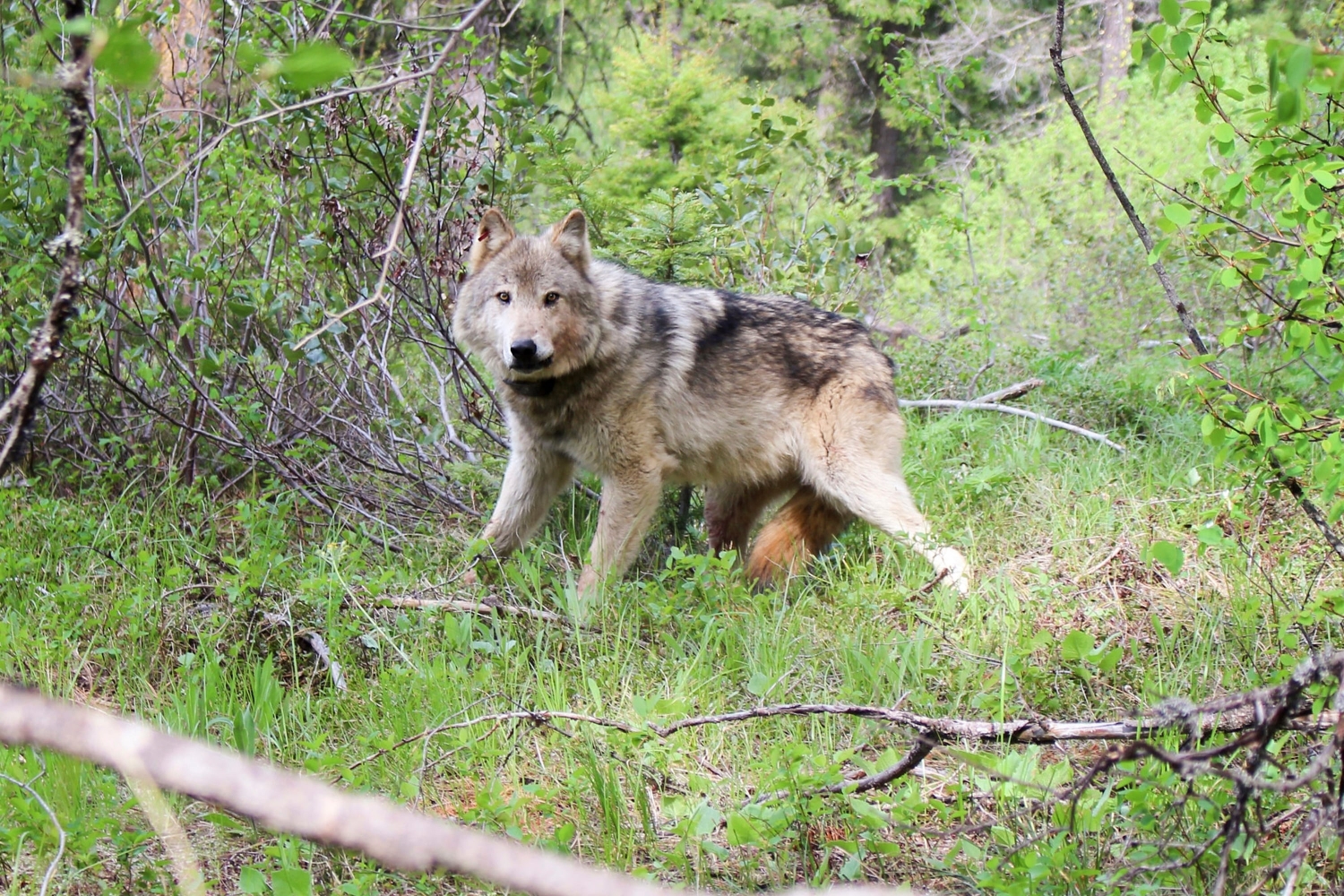
Artificial intelligence could one day help deter wolves from preying on livestock in Washington state. That’s the hope of the nonprofit Wildlife Protection Solutions.
The idea is to place remote cameras, sensors and trackers where livestock and wolves roam. The system constantly transmits data. AI filters through all the data to look for specific things, like wolves getting too close to livestock or fences.
It would remotely activate deterrents to scare off wolves, said Eric Schmidt, the nonprofit’s executive director. Schmidt presented the technology to Washington’s Wolf Advisory Group during its Wednesday meeting.
“This can be different types of sirens; flashing lights; randomized playback of MP3 sounds at loud volume; scent dispensing; and lightning simulators,” Schmidt said.
The system can also launch a drone to specific coordinates to help haze wolves, he said.
The key is transmitting information in real time and rigging ways to do that in areas that don’t have cell service.
In those cases, the company designed private radio networks and “long-range multipoint Wi-Fi connectivity,” Schmidt said.
If something out of the ordinary happens, the information is immediately sent to people on the ground who need to know — often transmitted by text, WhatsApp or email, Schmidt said. In the case of wolf deterrence, that could be ranchers, range riders or wildlife managers.
Court ruling could lead to more gray wolf protections in eastern Oregon, Washington
Data-sharing can be specific to each installation to protect privacy, he said.
The state’s most recent gray wolf population estimates from 2024 show at least 230 wolves in Washington. That includes 43 known wolf packs and at least 18 breeding pairs. This year, wolves killed and injured calves in northeastern Washington’s Ferry County and southeastern Washington’s Columbia County in several documented depredations.
Schmidt said the AI technology seems to have slowed these sorts of depredations elsewhere. It was first put to use in parts of Africa, South America and Asia.
“Much of our work (in those areas) has been done in the context of anti-poaching and creating awareness,” Schmidt said.
For wolf conflicts, it’s been tested in Germany, where the technology has helped guard sheep and cattle. In Lower Saxony, Germany, five systems were originally tested.
“ On the back of the success that they saw with that, they’ve increased it to 20 this past year and then have actually ordered an additional 20,” Schmidt said.
In those cases, the automatic triggers scared off wolves before livestock owners knew wolves were present, according to André Klussmann, with 4Dignity, a German nonprofit working to reduce wolf conflicts.
Wildlife Protection Solutions is now teaching its AI models about the differences between wolves and coyotes, Schmidt said. It’s an issue the tech didn’t face in Germany.
Washington isn’t ready to send wolves to Colorado — yet
The system has also been tested with a livestock producer in Colorado that had wolves living on his property, Schmidt said. Now, producers in Colorado have asked to try out ultrasonic deterrents in addition to randomized sounds so that wolves don’t become habituated to the hazing.
The system only activates when wolves are detected, Schmidt said, which is different from other deterrence protocols, like blinking foxlights or fladry flags that are on the landscape providing constant stimuli.
Wildlife Protection Solutions charges what it pays for equipment costs, including cameras and solar panels. People pay for their own data plans if they connect to a cellular network. Remote alert devices can cost up to $600 for pricier options, like scent dispensers. Installation, training and consultation are free.
The technology — and others like it — isn’t foolproof. Batteries have to be monitored. Sensors have to be placed correctly.
“ We learned very early on that if you just put tech out and leave it alone, it will absolutely fail,” Schmidt said.
Instead, he said, it’s important to train people and create a “collaborative environment” so that the technology is built into people’s day-to-day practices.
Oregon wolf population surpasses 200 for first time in 8 decades
Plans have to be developed and practiced for when “severe” alerts come through.
And dealing with public grazing allotments on public land could be hard. That was a concern of some of the ranchers at the Wolf Advisory Group meeting.
“There’s no single silver bullet to any of this tech, right?” Schmidt said. “But I think let’s try it all, and most importantly, have an underlying data system so that we can get insight into everything and tune it over time based on the success.”
Conflict managers with the Washington Department of Fish and Wildlife said they’re currently experimenting with cameras funded by The Colossal Foundation, another nonprofit, in the northeastern part of the state. The AI and bioacoustic camera have been used in Yellowstone to help identify wolf calls.
Courtney Flatt is a reporter with Northwest Public Broadcasting. This story comes to you from the Northwest News Network, a collaboration between public media organizations in Oregon and Washington.
It is part of OPB’s broader effort to ensure that everyone in our region has access to quality journalism that informs, entertains and enriches their lives. To learn more, visit our journalism partnerships page.
News Source : https://www.opb.org/article/2026/01/11/washington-wolves-articial-intelligence/
Other Related News

01/11/2026
The 49ers vs Eagles game may be the highlight of NFL Wild Card Weekend and if you want to ...
01/11/2026
The afternoon NFL Wild Card game features Christian McCaffrey and the San Francisco 49ers ...

01/11/2026
In a weight class that included two reigning state champions it was Newbergs Paisley Conwa...

01/11/2026
Dear Eric I love my mother dearly but at 84 she has reached the point of rambling She is s...

01/11/2026
Democratic leaders in the Washington state Legislature said Friday they have no plans to h...

Follow

Download Our App


Copyright 2022 © EPUERTO. All Rights Reserved