

Published on: 09/15/2026
This news was posted by Oregon Today News


Description
Farmers who already often find themselves at the whim of Mother Nature are now facing what could be the strongest El Niño weather system on record.
That’s bringing continued uncertainty to Pacific Northwest growers on the heels of an already challenging season.
In the Willamette Valley, a wetter, warmer winter could make it more challenging for farmers to deal with pests. In northern Oregon’s Hood River Valley, warmer temperatures could cause orchards to bloom earlier than usual and put fruit at risk of spring freeze damage. In Central Oregon, less snow in the Cascades could bring yet another water scarce growing season.

In short, the warmer, wetter weather forecasters predict for Oregon could disrupt agriculture in different ways across the state, but right now it’s hard to say how.
“When we’re looking at how this El Niño is shaping up, we’re kind of an uncharted territory,” said Larry O’Neill, Oregon’s state climatologist.
Oregon has seen at least three strong El Niños since 1980.
This cyclical weather pattern pushes warmer water from the Pacific Ocean east, toward the west coast of the Americas, according to the National Oceanic and Atmospheric Administration, which is forecasting a 90% chance of a strong El Niño.
During the previous strong El Niño years, Oregon got either average or above average snowpack in the mountains even though winters were warmer than normal.
This coming winter is still likely to see more mountain snow than last year, when an unusually warm, dry winter brought with it a record-low snowpack across much of the Pacific Northwest, O’Neill said.
“With this upcoming winter, it won’t take much for us to have a better snowpack than we had last winter,” O’Neill said.
But climate change is making the world warmer, and that could mean less snow accumulation than Oregon has seen in previous strong El Niño years, he said.
“Whether it will be a good snowpack or not remains to be seen, and we’re not at all confident about any sort of projection for that,” O’Neill said.
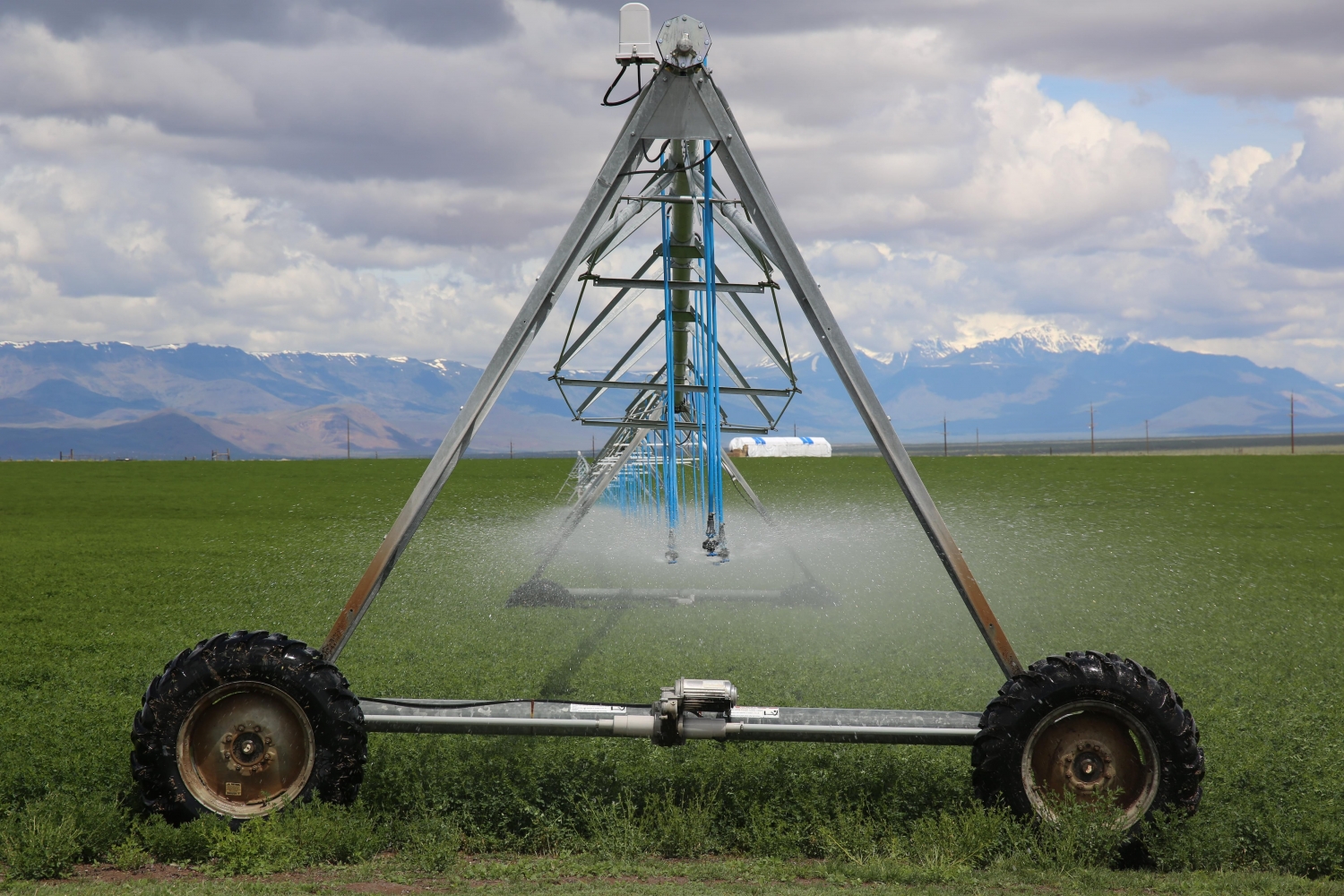
If snow levels are poor, that could spell trouble for growers dependent on snowmelt for irrigation.
Water managers remain optimistic they could see a good snowpack this winter, but it may not be enough to make up for current drought conditions.
Josh Bailey, the general manager of Central Oregon’s North Unit Irrigation District, said next year might be reminiscent of 2022, when irrigators received about a quarter of the water they average when conditions are good.
“It’s brutal, absolutely brutal. I mean, think about how long you could survive on half to a quarter of your paycheck,” Bailey said. “That’s the reality here. The water is the most important input for crop growing, and yet it’s the scarcest.”
In a good year, the natural flow of the Deschutes River can meet the demands of all the irrigation districts in the region until early June, Bailey said. But this year, the river’s flows were low.
The North Unit district began pulling water from the Deschutes River system in early April, and it switched to stored water from the Wickiup Reservoir by the latter half of May.
That reservoir was only about 19% full as of early September. It will take substantial mountain snow to refill that reservoir. Without that, water managers may need to ration the water that gets distributed.
The North Unit district distributes water across nearly 60,000 acres of farmland, where farmers grow much of the world’s supply of hybrid carrot seeds.
With less water, growers will likely be forced to leave fields fallow or switch to less water intensive crops.
Forecasters will get a better idea of what water availability will look like next year come mid-January, O’Neill said.
News Source : https://www.opb.org/article/2026/09/15/weather-oregon-agriculture-farmers-hood-river/
Other Related News

09/15/2026
CORVALLIS Mitch Dahlen acknowledges numbers dont lie But the statistics dont tell the who...
09/15/2026
So were two weekdays into the five-week-long Interstate 5 southbound closure as the state ...
09/15/2026
EUGENE Oregon quarterback Dante Moore on Tuesday spoke publicly for the first time since ...
09/15/2026
Antarctic krill are the lifeblood of the South PoleThese shrimp-like crustaceans serve as ...
09/15/2026
US officials and a person familiar with the plan spoke on Tuesday on condition of anonymit...

Follow

Download Our App


Copyright 2022 © EPUERTO. All Rights Reserved