

Published on: 02/23/2026
This news was posted by Oregon Today News


Description

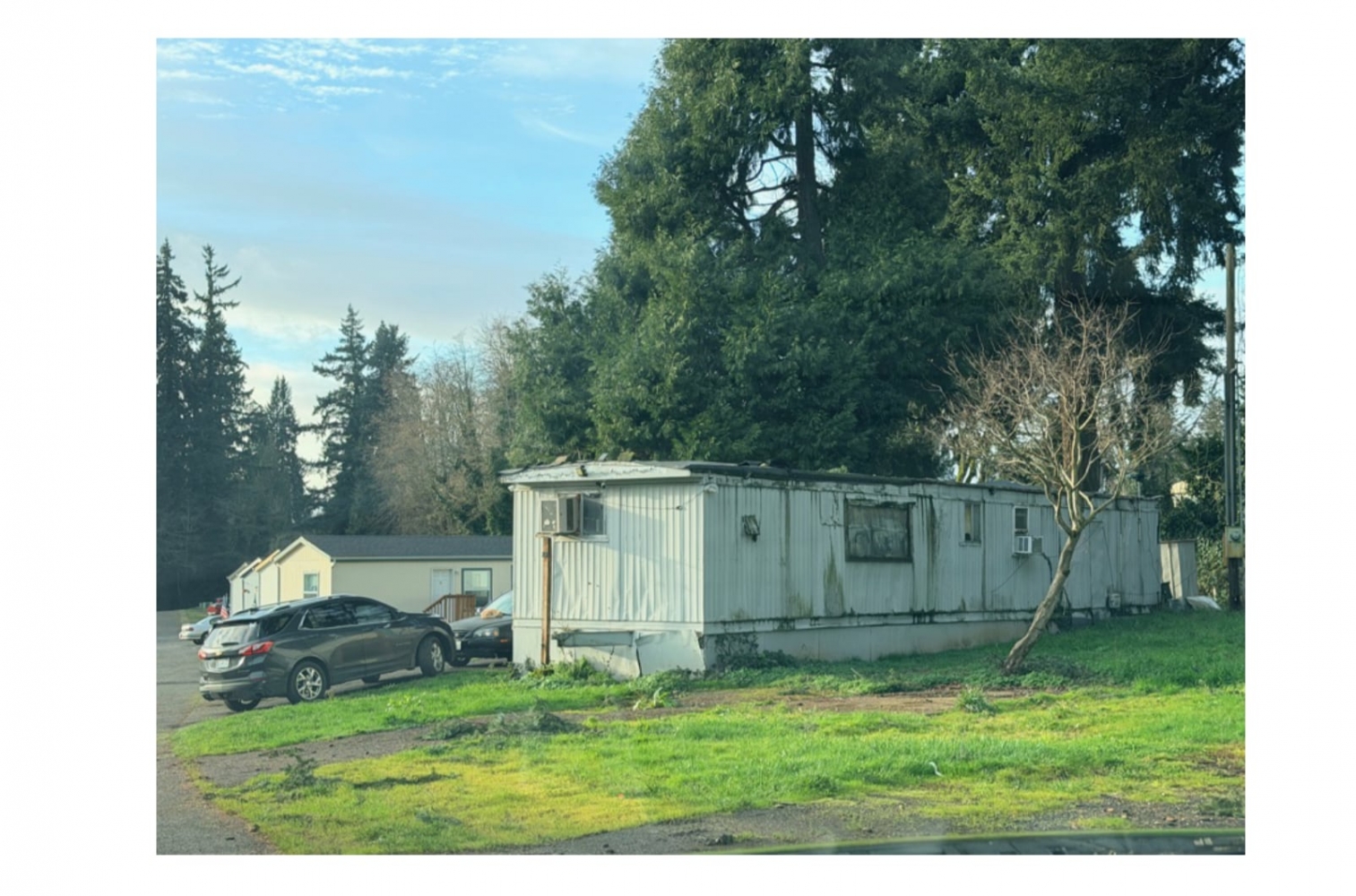
Evergreen Habitat for Humanity is seeking $4 million in Washington state funds as part of a novel approach to expanding affordable housing at two Vancouver mobile home parks. The proposal could add up to 280 affordable units just outside city limits in the Hazel Dell neighborhood.
The idea was born two years ago, when the Vancouver Housing Authority approached Evergreen Habitat for Humanity to buy two adjacent mobile home parks, Hidden Village 1 and 2.
Together the parks have 105 mobile home pads, a little over half of which are occupied. The properties, on nearly 19 acres of land sandwiched between Highway 99 and Interstate 5, are for sale for $12 million.
“None of our current projects are anything of this scale,” said Heather Cochrun, the director of community engagement and impact at Evergreen Habitat for Humanity. “This would be a massive shift for us in what we’re able to accomplish.”
The plan would involve repairing mobile homes and replacing “severely substandard units” in the parks, according to Cochrun, then developing other affordable housing types on the property, like townhomes or apartments.
Why Vancouver is swapping excess parking for affordable housing
Evergreen Habitat has so far raised $6 million from the Washington State Department of Commerce’s Housing Trust Fund program and private commitments. The nonprofit is seeking an additional $4 million from the state Legislature in a budget appropriation through the commerce department to get closer to closing the financial gap.
“Because this project represents such a strong opportunity to preserve existing housing, expand affordable homeownership, and support long-term affordability in a transit-accessible corridor, the City supports Habitat’s capital budget request,” Vancouver Mayor Anne McEnerny-Ogle wrote in a letter of support to state lawmakers.
Mobile home parks represent a shrinking category of affordable housing in the region and nationally. That’s thanks in part to a national trend of hedge funds and real estate investors purchasing mobile home parks and then raising the rent residents pay for the lots their homes sit on.
Many residents living in this type of housing are uniquely vulnerable, since parks are often tailored to people who are 55 and older living on Social Security.
“It’s really pretty awful,” said Dan Rosensweig, president and CEO of Habitat for Humanity of Greater Charlottesville and Central Virginia, which noticed the trend in its region and decided to act around 2004.
Rosensweig’s Habitat chapter, which isn’t involved in the Vancouver project, first stepped in to buy a Virginia park that was slated to become luxury condos. The nonprofit converted the 16-unit mobile home park to a 70-unit mixed income community with housing for the existing residents.
That Habitat chapter is now onto its third park.
“We’re living proof that it can be done,” Rosensweig said.
Clark County point-in-time count shows homelessness increased in 2025
Property ownership models at mobile home parks can take a variety of shapes. In the Charlottesville case, Rosensweig said, that Habitat chapter eventually sells homes and the land they sit on to residents in order for them to build equity.
A different national nonprofit with Northwest chapters is Resident Owned Communities, or ROC, which focuses on transitioning parks to a resident-owned cooperative model. In those cases, residents must help raise the millions of dollars usually needed to buy their parks.
Evergreen Habitat’s approach in Vancouver is still being determined but would likely use a land-trust model similar to its other affordable housing developments, Cochrun said. In those developments, residents own their homes, but the nonprofit owns the property they’re built on in order to keep the housing affordable in perpetuity.
She said homeowners would pay around $30-$40 per month for lot leases, to cover administrative fees. Residents at some parks in Vancouver today pay $1,350 per month for lot rent, even though they fully own their homes.
The success of the Evergreen Habitat for Humanity proposal will be contingent on funding from the state Legislature, Cochrun said.
While Washington’s supplemental budget outlook has improved some this year, lawmakers are still trying to fill a multibillion-dollar gap. The state Legislature runs until March 12, when the budget will be finalized.
News Source : https://www.opb.org/article/2026/02/23/evergreen-habitat-vancouver-mobile-homes/
Other Related News

02/23/2026
GUADALAJARA Mexico School was canceled in several Mexican states and local and foreign go...
02/23/2026
As President Trump is set to deliver his first official State of the Union address of his ...
02/23/2026
Subscribe to OPBs First Look to receive Northwest news in your inbox six days a weekGood m...
02/23/2026
The long-term effect on Mexicos security landscape remains unclear Heres what we know so f...
02/23/2026
The number of confirmed cases so far this year are already nearing the total number of cas...

Follow

Download Our App


Copyright 2022 © EPUERTO. All Rights Reserved