

Published on: 08/16/2026
This news was posted by Oregon Today News


Description

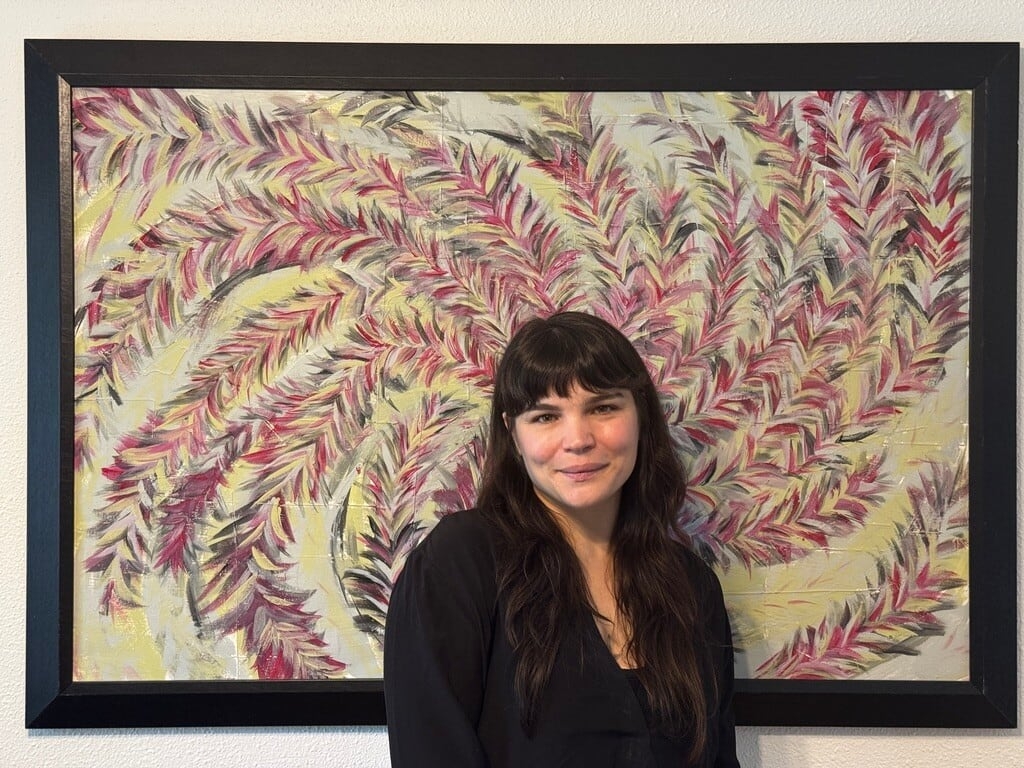
For expectant parents, having additional support during labor is important — whether it’s from a doctor, a nurse, even your mom … or someone like Lyndsey Petrino.
Petrino is a doula based in Vancouver, Washington. She’s been a postpartum doula for years and became a birth doula in 2024.
A postpartum doula supports parents after birth, while a birth doula provides prenatal support and is present in labor. A doula isn’t a medical professional — they can’t deliver babies — but they can provide support and advocate for birthing parents.
“I offer support for women emotionally, physically… spiritually during birth and then in the postpartum period,” Petrino said.
What made you want to become a doula?
“I became a postpartum doula probably before I even knew what a doula was,” Petrino said.
According to Petrino, her parents would lend their guest house to the midwives at their church. She would “jump out of the bushes” as new parents walked back to their car, and offered to help them with their babies, starting as young as 12.
Petrino saw her first birth when she was 16 years old, and said that “something cracked inside” of her. That was when she knew that she wanted to do this kind of work.
Within a few years, Petrino got formal training and began working professionally as a postpartum doula, helping new parents after birth. Later, she took a pause in that career path.
“I walked away from doula work for a while, because life had taken me in a different direction,” she said.
But after some time away, a new opportunity drew her back in.
“I met a doctor in Vancouver, she’s the lead over at the Bloom Clinic.” Petrino said. That clinic works with families in active addiction or recovery. “She was looking for doulas. I told her when I met her that I’m not a birth doula, and she said she’d sponsor me and help move me into that role.”
Petrino said she felt very aligned with birth work, especially with supporting parents like the ones served by the clinic, who she felt “need as much care as anyone else.” She was inspired to start back up with birth doula training.
”It was a very full-circle moment,” she said.
Today, Petrino provides prenatal, birth and postpartum services through her own business, LlaMamma Mothercare.
What new or unexpected things come up each day in your work?
“I love this work because I have to be adaptable,” Petrino said. “Every birth is different. Every postpartum is different.”
There’s no typical day in the life of a doula, according to Petrino. She said that some parents might need their floors mopped, while others need time to catch up on sleep, or help breastfeeding their baby.
“I think a lot of people complicate things,” Petrino said. “There’s so much information. If we just slow down and stop stressing, we usually just need to listen to ourselves and our babies.”
According to Petrino, sensitivity and empathy are important skills for a doula.
“They have to be able to stand up for their clients,” Petrino said. “Not creating controversy, but also being like ‘Oh, no, that’s not something she planned’ or ‘are you sure that’s what you want?’”
Do you have any tools?
Petrino has two bags: One is for postpartum visits, the other is for births. The postpartum bag includes supplies like tea, epsom salts for foot baths, plus brown rice and vegetables in case there’s no food at home.
At her home, where she often works when she’s not supporting a birth or visiting a client, she dug through her bag to pull out a measuring tool used to calculate the correct size for a breast pump piece called a flange.
“Most people have the wrong flange size,” Petrino explained, holding up two unused flanges. “If we can’t find the correct size, and they don’t have the correct insert, then I’ll usually leave [a flange] with them.”
She brought her birthing bag in from her car, where it stays at all times, in case she needs to drop what she’s doing to help one of her clients. This bag holds a variety of items — a scarf to “heat up the ligaments,” massage tools, hair ties, disposable toothbrushes and more.
Petrino also brings Vicks and rubbing alcohol pads with her to every birth. According to Petrino, sometimes a birthing parent needs to smell something fragrant in order to fight off nausea.
How do you build a relationship with your client’s partner?
Petrino said that there are times when she won’t meet their partner until the person is already in labor.
“How close I get with them depends on how often I see them,” Petrino said. “I do my best to try and support them the same way I’m supporting mom. Give them something to research, or show them how to do a hip squeeze.”
What do you wish more people knew about pregnancy and labor?
“I wish women and birthing people just knew that our bodies were built to do this, and they can trust their bodies,” Petrino said. “Our culture tends to collect. ‘Oh, we need this bassinet and this and this.’ In reality we don’t need most of that stuff. What we do need is support, care and knowledge.”
Is there something you want to say to people you’ve worked with, or others embarking on parenthood?
“If I’ve worked with you, then I am just so grateful for the experience,” Petrino said. “And if you’re going through it, I know it’s hard. There is support out there if you need it.”
Are there services you would like to see become accessible to people who give birth?
Oregon was the first state to offer birth and postpartum doula benefits through Medicaid, beginning in 2011. Medicaid began covering doula care in Washington in 2025.
“That was when I was like, ‘Oh, I can help a broader range of people, I can actually make a change in my community,’” Petrino said.
Washington’s coverage includes 20 hours of postpartum care for new parents.
“A lot of the moms who have done it before, they save those postpartum hours,” Petrino said. “They know how hard it is.”
She said she wishes that doula care was covered like this nationally, rather than state-by-state.
“When a mother is nourished, she nourishes her baby,” Petrino said. “It’s very important that mothers are cared for.”
What is your favorite part of your job?
Petrino said she loves it all.
“Every single time I leave the hospital after a birth, I cry,” Petrino said. “It’s so amazing. Watching women birth themselves and turn into mothers is… it’s probably the most beautiful thing you could witness.”
She said it’s a gradual change, but sometimes she’ll hear someone’s voice drop an octave during labor, or something changes in their eyes.
“Once you become a mother, you walk around and you look at mothers [and think] ‘Wow, what a badass,’” Petrino said.
“I say it all the time when I have a mom who’s scared, and I’m like ‘No, you’re going to walk away from this and… you are going to find out why moms are badass right now.’ And then they do.”
News Source : https://www.opb.org/article/2026/08/16/at-work-with-vancouver-doula/
Other Related News


08/16/2026
I wasnt surprised by Gov Tina Koteks first television ad for the 2026 general election Kot...
08/16/2026
Q Ive been on daily baby aspirin for 45 years after a heart scan spotted small amounts of ...

08/16/2026
DEAR MAYO CLINIC My aunt was recently diagnosed with cancer and since then shes felt overw...
08/16/2026
Ospreys flew overhead as the sun beat down gently on the open wetland of Mary S Young park...

Follow

Download Our App


Copyright 2022 © EPUERTO. All Rights Reserved