

Published on: 04/19/2026
This news was posted by Oregon Today News


Description

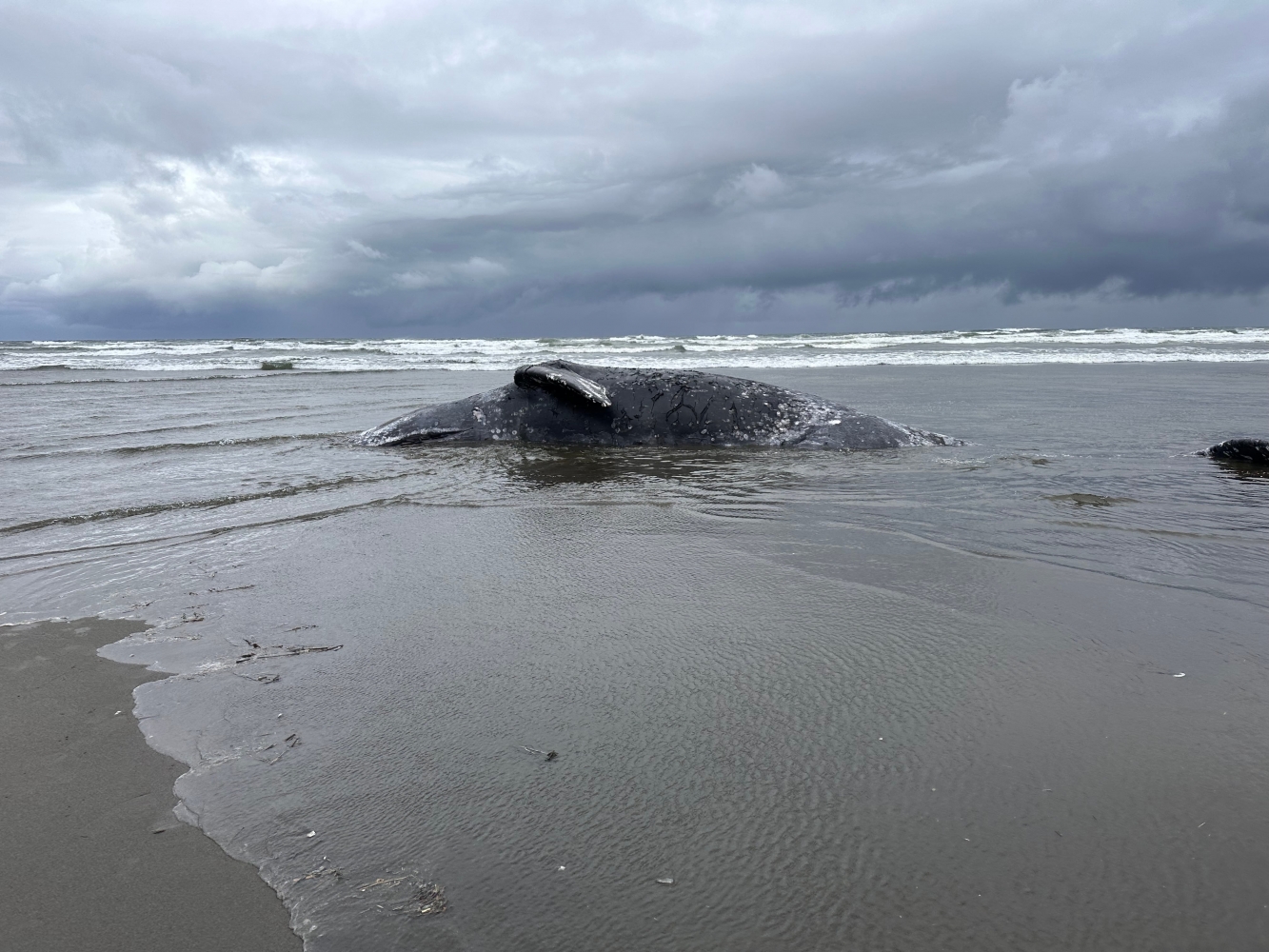
Last Tuesday, a 40-foot gray whale floated ashore on Seaside Beach, its long tail bobbing in the ocean waves.
A necropsy on Friday revealed the whale was emaciated, indicating it may have been starving. It was the third dead whale to beach off the Oregon Coast so far this year, among at least 19 that have appeared off the entire West Coast.
These strandings reflect the growing strain whale populations face as a warming planet affects their access to food, and more could follow in the coming weeks.
Gray whales are still early in their northward migration from Mexico to their feeding grounds in the Bering Sea north of Alaska. Whatever they ate last summer needs to last them through the 12,000-mile journey.
These strandings indicate those summer 2025 meals were not enough.
“Most of them are pretty undernourished, skinny, as if they haven’t been eating enough,” said Michael Milstein, spokesman for the National Oceanic and Atmospheric Administration. “If we’re seeing this many whales that are undernourished and having trouble this early in the year, what is that going to mean for the rest of the migration?”
Arctic ice plays a vital role in feeding gray whales, but it’s melting at an alarming rate because of global warming from burning fossil fuels. Algae clings to the bottom of the ice, then falls to the ocean floor as it melts, feeding crustaceans that eventually nourish gray whales.
When there’s less ice, there’s less algae, fewer crustaceans, and more starving gray whales washing up along the West Coast.
Between 2019 and 2023, gray whale populations dropped from about 27,000 whales to about 13,000 during what biologists called an unusual mortality event. Gray whales appeared to be rebounding a little in 2023.
But this spring’s early strandings could mean this struggling species is entering another mortality event.
More gray whales than usual have been spotted feeding off the West Coast, including off the Bay Area near San Francisco. Biologists think they may be seeking more food outside their usual sources, and that’s putting them at risk. Many have died after being struck by vessels.
Something similar may have happened earlier this year, Milstein of NOAA said, when a gray whale was spotted traveling upriver in Washington, where it died. A pod of gray whales called “the Sounders” usually spends a few months in the Puget Sound to look for food.
“Now it seems like those whales are hanging around Puget Sound longer,” Milstein said. “And in some cases, they’re not even bothering to leave and swim up to the Arctic.”
Compared to Washington and the Bay Area, Oregon doesn’t typically see many gray whale strandings. Milstein, with NOAA, said Oregon doesn’t have as many coastal “nooks and crannies” as those states, where whales might explore for food.
Eight whales beached off Oregon’s coast last year, and none were gray whales.
One was a young, live humpback whale that washed ashore near Yachats in November. People had rallied together to try saving the whale, but it eventually died.
That whale was tangled in crabbing gear, but necropsies later revealed earlier signs of disease likely contributed to its death.
Crabbing gear entanglements are still a major risk to whales swimming through Oregon’s waters. The Oregon Department of Fish and Wildlife is considering policy changes intended to reduce whale entanglements.

What to do if you find a stranded whale
The most important thing people can do if they find a stranded whale is to leave it alone and report it to NOAA’s West Coast Marine Mammal Stranding Network. Its phone number is 866-767-6114.
“It’s just really, really important whenever you see a marine mammal on the beach to give it plenty of space,” said Brittany Blades, marine mammals curator at the Oregon Coast Aquarium.
The aquarium’s teams are sometimes called to respond to stranded whales, something that requires multiple agencies.
“There can be one team that is working towards figuring out how to get the whale on beach, get it back into the ocean while there’s another team that is working on the animal welfare and making sure that the animal’s comfortable,” Blades said.
Because of how complicated saving a stranded whale can be, these rescue efforts are rarely successful. If a whale dies, biologists will perform a necropsy, taking samples of the mammal for testing. They usually leave the whale on the beach to decompose naturally.
News Source : https://www.opb.org/article/2026/04/19/gray-whales-starving-died-oregon-coast/
Other Related News

04/19/2026
After briefly reopening the vital economic waterway Iran has again closed the Strait of Ho...
04/19/2026
Victor Wembanyama and most of his San Antonio teammates will make their playoff debut Sund...

04/19/2026
Gas sales have reliably tracked Oregons economy over the past quarter century

04/19/2026
Dear Liz When my mother passed away nine years ago I inherited some gold coins At the time...

04/19/2026
Editors note The OregonianOregonLive Editorial Board kicks off its endorsements today for ...

Follow

Download Our App


Copyright 2022 © EPUERTO. All Rights Reserved