

Published on: 02/02/2026
This news was posted by Oregon Today News


Description

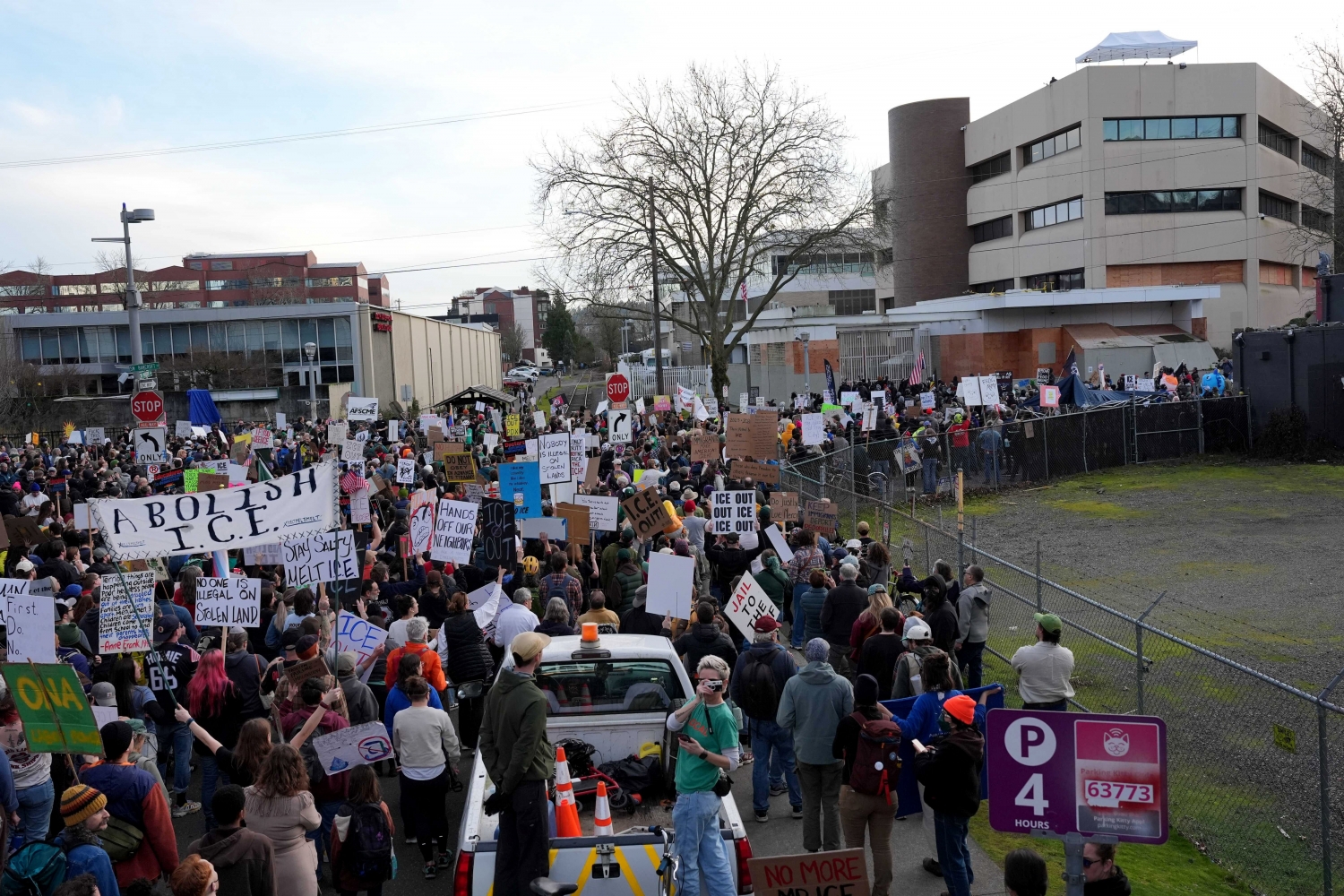
Weekend protests in Portland against federal immigration actions were again met with thick clouds of tear gas outside the city’s U.S. Immigration and Customs Enforcement office.
Federal officers’ use of chemical munitions on demonstrators, including older adults and children, sparked outrage among the public and lawmakers. It’s also raised questions about what Portland can do to hold federal agencies accountable for its treatment of protesters.
Some of these concerns are being addressed in court, as Portland protesters have accused the federal government of using excessive force against them.
But local officials are also looking toward a number of bureaucratic sanctions within their control to limit ICE’s actions against protesters. Some have been in the works for a while and others are more contemporary – but all focus on the landlord who leases the South Portland ICE facility to ICE.
To help understand the role these penalties could play in limiting ICE, here’s a breakdown on their origins, impact and where they currently stand.

History of the ICE facility
ICE operates out of a building along South Macadam Avenue that previously housed a Bank of America.
In 2011, building owner Stuart Lindquist acquired a new tenant: the federal government. ICE sought to use the building as an administrative office for meeting with people with active immigration cases, and also as a place to briefly detain people who are facing deportation before they are transferred to a larger detention center.
Turning the bank into a detention facility required a zoning change. In October 2011, City Council granted Lindquist a “conditional” land use approval. That included an agreement by Lindquist to not allow ICE to detain people in the facility overnight or for longer than 12 hours.
Land use violation
The building largely operated in anonymity until 2018, when it became the focus of protests against immigration policies used during President Donald Trump’s first term. Dubbed Occupy ICE, that protest movement inspired activists to build an encampment alongside the Macadam facility and prompted ICE to temporarily close the office.
It came back on Portlanders’ radar in early 2025, as critics of Trump’s immigration tactics returned to the streets outside the facility to protest. In July, as demonstrations outside the building became more frequent, several Portlanders filed complaints with the city, accusing Lindquist of violating the land use agreement for a variety of reasons.
In September, the city announced it had enough information to confirm that Lindquist had violated the conditional use agreement. The city pointed to public records showing that ICE had held people overnight and for more than 12 hours at least 25 times since October 2024.
The city gave Lindquist a month to fix the issue, or face a monthly fine of nearly $950. That fee could double if it wasn’t addressed after three months. But Lindquist appealed the decision before that 30-day mark.

Lindquist’s appeal
Lindquist challenged this decision through his attorneys and asked the city’s permitting department to reconsider the ruling.
In a letter to the city’s Permitting and Development department, Lindquist’s lawyers accused the city of unconstitutionally retaliating against Lindquist for choosing to lease to ICE.
“This code enforcement case is a textbook example of unlawful selective enforcement with a clear discriminatory motive and unlawful political retaliation,” wrote attorneys Thomas Rask and Wendie Kellington in the Oct. 14 letter.
The city initially gave Lindquist until the end of October to send over evidence that ICE was not violating city policy. The city subsequently extended that deadline to the end of the year, after Lindquist’s lawyers said that the government shutdown had impeded their ability to track down public records.
Lindquist met with the city permitting officials on Dec. 30 to argue his case.
If the bureau reaffirms that Lindquist violated the agreement, the city hearings officer could schedule a public meeting to “reconsider” the land use agreement and potentially rescind it. That could set off a series of appeals.
The hearings office decision could then be appealed to Portland City Council. Whatever they decided could be appealed to the Oregon Land Use Board of Appeals. That, too, could be appealed to the Oregon Court of Appeals. It could then land before the Oregon Supreme Court.
There’s a lot of uncertainty as to what this could mean for the building – and ICE’s operations in Portland. What is certain is that this process will likely last many, many more months.
In the interim, city leaders have proposed other more immediate sanctions.

The detention facility fee and fines
In December, City Councilors adopted a new policy regulating any privately-owned property that is leased for use as a detention center in Portland. While it’s not explicitly named in the policy, the Macadam ICE facility is the only building in Portland that currently meets this description.
That policy, introduced by Councilors Angelita Morillo and Mitch Green, does a few things.
First, it levies a still-to-be-determined fee against landlords of detention facilities. This fee will only go into effect at the start of a lease, so it would only impact Lindquist if he renews the lease, which expires in 2033.
But the policy introduces a more immediate penalty: It levies fines against detention facilities that create “nuisance” by contaminating areas outside their building with hazardous materials, like tear gas and pepper spray.
This policy went into effect Jan. 1. But the city administrator’s office still has yet to set the fee and fine rates or write the rules for enforcement. Last week, Morillo and Green sent Mayor Keith Wilson a letter urging him to direct the city administrator’s office to finalize these details in order to begin enforcing the rules.
“We believe there are concrete, immediate steps that you can take today to show Portlanders that we will not tolerate the tear-gassing of our neighborhoods in violation of our local laws,” the councilors wrote.
At the time, a spokesperson for Wilson told OPB that the “enforcement framework” remains in development.
While Wilson issued perhaps his strongest indictment of ICE in the wake of officers’ tear gas use this weekend, calling on ICE employees to quit their jobs, he didn’t offer specifics on how soon the city is taking action to enforce its new rules.
“The City of Portland is moving swiftly to operationalize an ordinance that went into effect this month, imposing a fee on detention facilities that use chemical agents,” he said. “As we prepare to put that law into action, we are also documenting today’s events and preserving evidence.”
It’s still uncertain when the city will be able to start enforcing this policy.
What else can be done?
Activists who’ve spent months protesting ICE in Portland say city officials haven’t done enough to fight ICE. Their largest demand is to “revoke the permit” that allows ICE to rent property in Portland, a reference to the 2011 land use agreement.
At city council meetings and other venues, a group of protesters has urged councilors to introduce legislation to ban ICE from operating in Portland or introduce new zoning codes to further penalize ICE’s actions, among other things. Activists say they plan to continue protesting during city council meetings until a change is made.
City officials have said that many of these demands would land the city in court, further delaying lawmakers’ ability to hold ICE to account. City councilors have also refrained from commenting on the land use violation on legal grounds.
That’s because there’s a chance the permitting decision could land before city councilors on appeal. If councilors express an opinion on the land use ruling before that hearing, they could be disqualified from participating in that appeals vote.
City Councilors are considering other ways to hold ICE officers to account. Over the weekend, councilors Tiffany Koyama Lane and Mitch Green both posted requests on social media for the public to contact them if they were tear-gassed outside of the ICE building. They said they plan on connecting people who contact them with the ACLU of Oregon and the Attorney General’s office, in case those cases could be part of a legal challenge.
News Source : https://www.opb.org/article/2026/02/02/how-portland-is-using-city-policies-to-try-and-punish-an-ice-facility/
Other Related News

02/02/2026
UPDATE AWAY GAME PORT ORFORD CANCELLED The away basketball game scheduled for today Mon...

02/02/2026
Tonights NBA slate features Kawhi Leonard and the LA Clippers facing the Philadelphia 76er...
02/02/2026
A fight between left- and right-wing protesters cast a six-figure shadow Friday as a jury ...

02/02/2026
A bill sitting in the Oregon Senate has a goal to stop syringe services programs near area...

02/02/2026
A passenger in a car died late Sunday morning when the driver tried passing another vehicl...

Follow

Download Our App


Copyright 2022 © EPUERTO. All Rights Reserved