

Published on: 02/05/2026
This news was posted by Oregon Today News


Description
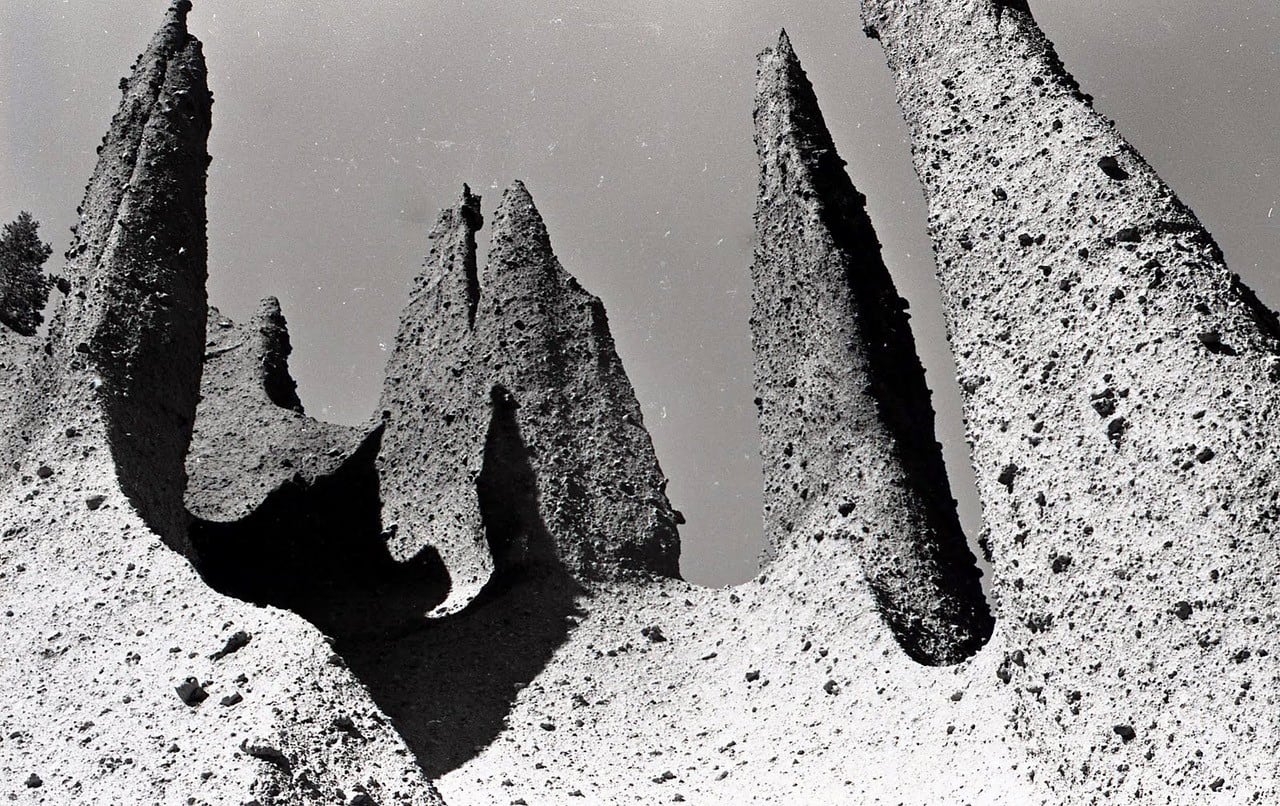
Tucked away in a forgotten corner of Crater Lake National Park, a series of extraordinary rock spires tower over a meandering creek.
Today, they’re hidden behind the scenes of the park’s main attraction: Crater Lake. The epic size, dramatic framing and dazzling blue of the 2,000-foot-deep lake never fail to dazzle visitors. Formed after the eruption of Mount Mazama some 7,700 years ago, the site became the country’s second national park in 1902.
What modern tourists may not realize is that early visitors entering the park in horse-drawn coaches were treated to another spectacle known as the “Pinnacles.”

“The Pinnacles are so spectacular,” said former Crater Lake National Park ranger Larry Smith. “I’ve traveled in all 50 states. I’ve been in over 50 national park areas. I’ve never seen anything like this anywhere. They’re one of a kind.”
Smith, along with his twin brother Lloyd, served as volunteers at the park long after retiring from their ranger jobs.

“Even though I’ve seen them hundreds of times, I kinda get goosebumps looking at them,” Smith said.
Prior to its eruption, Mount Mazama, known as “Giiwas” to the Klamath people, was a massive peak made up of overlapping volcanic structures described as the “Mazama complex.” It appeared as a broad mountain of about 12,000 feet and amassed glaciers in its drainages like other peaks in the region. The cataclysmic eruption 7,700 years ago spewed superheated volcanic material across the Pacific Northwest and formed a deep caldera into which centuries of rain and snow gathered to form present-day Crater Lake.
On the slopes that remained of the mountain, pyroclastic flows filled the glacier-cut valleys with a slurry of molten debris.
“Think hot toothpaste,” Smith said. “Then, because the glaciers had melted, steam pockets formed down at the bottom of the canyon — and of course steam rises.”

As the steam forced its way upward through the volcanic rubble toward the surface, the superheated vapor welded the sides of its escape hatches into hardened chimneys, also known as fumaroles.
Over the centuries, the lighter ash and pumice that filled the ancient glacial canyon after the eruption was carried downstream, revealing the relic pinnacles. Eventually, the gray monoliths stood alone as slender and delicate as spires on a Gothic cathedral, and now they tower above the steam bed below.
It was these features that greeted early visitors as they made their way to the rim in horse-drawn carriages through the park’s old east entrance. Postcards and photos of the eerie monuments drew more visitors. But not for long.

By 1920, cars had become a common mode of transportation and required a new entrance to the park. Eventually, the original eastern approach was abandoned, and the eerie spectacle that is the Pinnacles was all but forgotten.
But according to Smith, the story of the Pinnacles is still unfolding.
“What’s so unique here is that the erosion is continuing. Wheeler Creek is moving in underneath where we’re standing right now and it’s being undercut, and those pinnacles are going to fall in.”
Standing on the high ground beside the Pinnacles’ canyon in September 2024, Smith pointed to his feet.
“As the creek moves this way, it’s going to continue carving,” he said, “and there are probably more fumaroles under where we’re standing.”

Today, the Pinnacles are all but hidden in a remote corner of the park and accessed by a secluded walking path. Despite their obscurity, Smith said, the haunting specter of the Pinnacles remains a secret gem in Oregon’s rich landscape.
News Source : https://www.opb.org/article/2026/02/05/oregon-crater-lake-pinnacles-field-guide/
Other Related News

02/05/2026
A dense fog advisory was released by the National Weather Service on Thursday at 724 am in...
02/05/2026
On Thursday at 713 am a dense fog advisory was issued by the National Weather Service in e...
02/05/2026
On Thursday at 713 am a dense fog advisory was issued by the National Weather Service in e...

02/05/2026
Tillamook was atwitter this week over reports that a tagged great white shark was swimming...
02/05/2026
Police have closed streets in the Pearl District Thursday morning after a critical inciden...

Follow

Download Our App


Copyright 2022 © EPUERTO. All Rights Reserved