

Published on: 05/05/2026
This news was posted by Oregon Today News


Description

Missouri. Utah. LA Unified School District. Bend-La Pine Schools. Medford School District.
What do all of these states and school districts have in common?
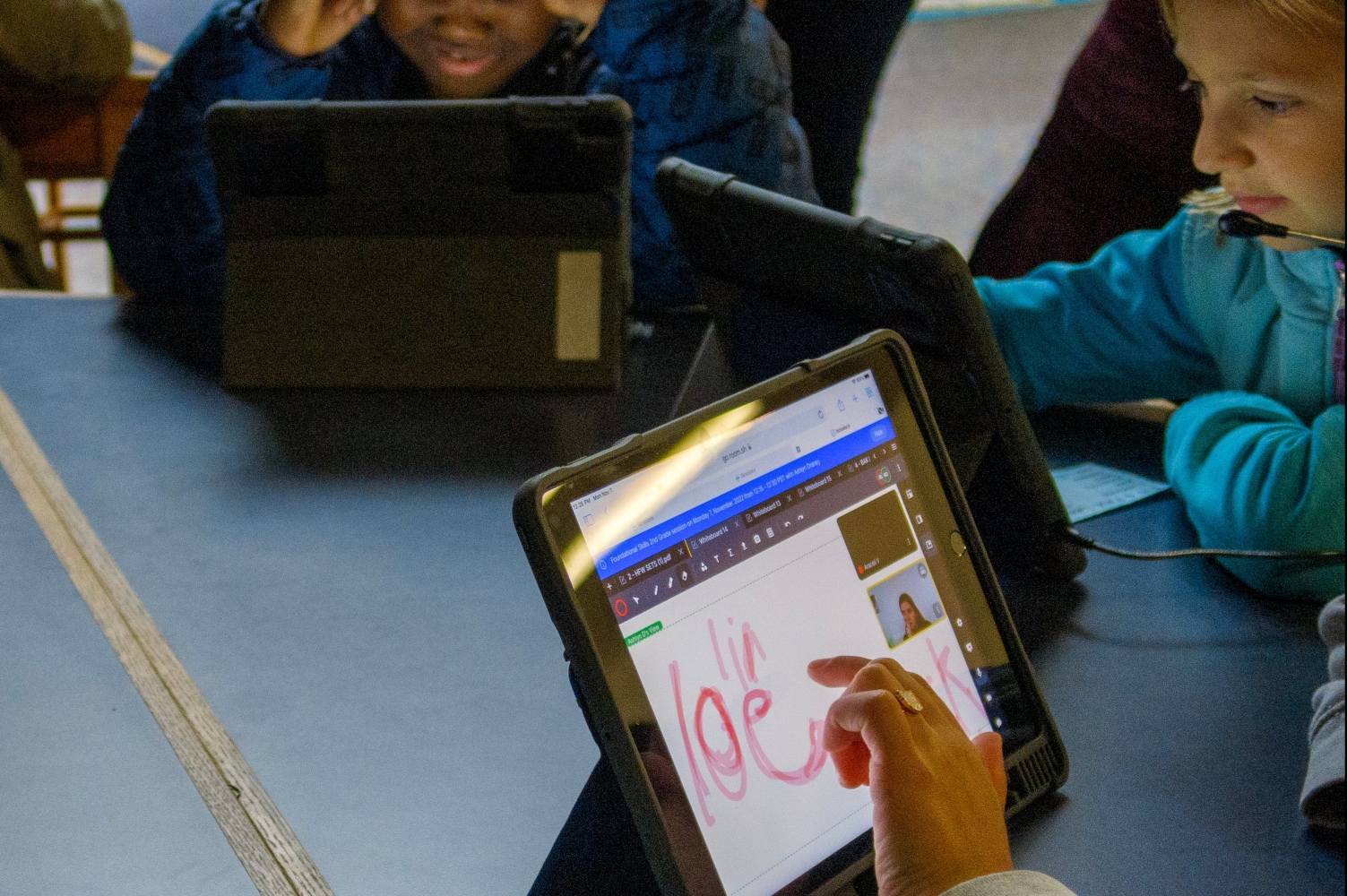
They’re all taking steps to restrict the use of technology and screens in their classrooms, after years of schools increasing their use of laptops.
Last month, the Bend–La Pine school board passed a resolution directing the school district to reframe its relationship to technology in the classroom.
In the resolution, the board cited 2026 research from the Brookings Institution that reported the risks of artificial intelligence in education outweigh its benefits.
The conversation around screens in schools may seem new, but in Bend-La Pine, a coalition of parents and community members has been asking for intervention on classroom technology since 2024.
“This board and this community has now been waiting over two years for action on Ed Tech,” board vice chair Amy Tatom said during the April 14 school board meeting. “I think the wait needs to end now. We need an actionable plan.”
That actionable plan includes standards of use for technology depending on grade, removing “non-evidence-based technology and applications” from student devices, and a consideration of “performance-based contracts with all educational technology vendors to force accountability for their efficacy of their products”.
Following the successful campaign to remove cell phones in schools, including in Oregon, the conversation locally and nationally has moved on to screen time in schools and stricter oversight of the programs and applications students use for school.

Bend-La Pine is like many districts in Oregon and across the country, where beginning in elementary school, students receive a device, sometimes one they can take home, that they can use for educational purposes.
Device use continues into high school.
Along the way, teachers, parents and students learn that non-educational distractions can be endless, with workarounds for even the most restrictive filters.
When Natalie Houston started volunteering in her child’s school in Bend, she saw a classroom full of students entertaining themselves with iPads.
Houston says there’s always a temptation to find something “more entertaining than the academic work itself,” which forces educators to keep students focused.
“It puts teachers in an unfair position, adding more responsibilities to police classroom device use that only adds to the stress and strain in modern-day classrooms,” she said.
Houston is a parent of three current Bend-La Pine students and one graduate. She’s also a licensed professional counselor.
Earlier this year, Houston’s petition to the board to reduce screen time and the use of technology in school received over 1000 signatures and prompted the school board to take up its April resolution.
“I’m a quiet mental health therapist that got really angry,” Houston said.
“What parents are wanting is not anti-tech,” Houston said. “We want to recalibrate classroom technology with best practices for learning and student wellbeing.”
Like the outside world, technology is everywhere inside a school.

In some schools, all assignments are posted online — to the point where some students might not see the need to attend school at all.
Building social skills can be harder to build behind a screen, as researchers learned during pandemic distance learning.
Some worry that the push to remove technology from schools will keep students from being tech literate, or that removing all screens may mean limiting an opportunity for individualized instruction.
Sarah Barclay, the current president of the Bend Education Association, is on leave from her job as a kindergarten teacher.
When she was in the classroom, she used devices as a “station,” where students could independently work on their reading skills while Barclay read to another group of students.
Barclay said the overall “content” of the resolution is okay, but she wished the union had been contacted to give feedback on parts of it.
She said the union is currently surveying educators at schools about educational technology, with plans to present a “stance” on the issue later this month.
Barclay also wonders if addressing technology use in schools isn’t really the problem community members want to solve.
“I wonder if we need to be looking at it from the bigger lens of how we use technology in our culture, how we use technology in our communities, and what kind of impact that’s having, because I don’t know that we’re solving the problem at its root by really pressing forward on technology use in schools,” Barclay said.
These conversations are kicking up all across Oregon.
In Southern Oregon, officials in the Medford School District recently announced a move to reduce the use of technology devices in kindergarten through second grades, beginning in the 2026-27 school year.
In a press release announcing the change, the district cited research that increased screen time may negatively impact language development.
“We are prioritizing developmentally appropriate learning during the most critical period for language, social, and cognitive development,” said Medford superintendent Jeanne Grazioli in the release.

“Our goal is not less opportunity; it’s better opportunity. We want to ensure every minute in a K–2 classroom is aligned with how young children learn best, while still giving teachers access to technology when it truly enhances instruction.”
One example of technology adding to instruction is virtual tutoring programs like Ignite! Reading, which districts across Oregon have adopted over the years.
Sarah Barclay, the Bend teachers’ union president, said effective technology can act like a “third dose” of reading practice after a student develops those skills and practices them with a teacher.
“Then those apps can go and reinforce and re-teach those skills and help to continue developing them while everyone else in the space is getting access to that teacher,” Barclay explained.
Beaverton is another Oregon district that recently implemented Ignite! Reading.
According to district results, 84% of kindergarteners who participated have “fully closed their kindergarten skill gaps”.
In first grade, 69% of students have moved past grade level.
A group of Beaverton parents also wants to impose screen-time limits for students in those early elementary grades, restricting screen use to “intentional, standards-aligned instructional purposes.”
The group’s petition also asks Beaverton to communicate clearly about educational technology and the companies that contract with the district.
A new local nonprofit, OR Unplugged, is advocating for increased oversight over educational technology in schools and is hosting events around the city.
Technology, including AI, is not going away.
During the COVID-19 pandemic and the years of distance learning that followed, technology became not only a tool but a crucial connection between students and teachers.
That leaves students, parents and schools to figure out how to move forward.
First, they took cell phones out of schools. Now, they’re figuring out when other devices and applications should be a part of school — and how to regulate that.
“I think we’re having an important calibration,” said Shawn Daley, College of Education Dean and Vice President of Strategic Initiatives at George Fox University.
Technology has played a role throughout Daley’s career, from his years as a classroom educator to his recent focus on technology that can assist students with different needs.
He said schools can’t ignore digital technology — it’s integral to being a part of the workforce.
“What we’re seeing from the districts is a rightful calibration to where it’s appropriate use, as opposed to all the time everywhere.”
News Source : https://www.opb.org/article/2026/05/05/in-class-screen-time-is-next-frontier-in-school-technology-debate/
Other Related News

05/05/2026
There are 17 Americans aboard the MV Hondius which is stuck off the western coast of Afric...

05/05/2026
Central Oregon has had its share of viral sensations The latest is a fast-growing but stil...
05/05/2026
The Estacada Fire Department is sounding the alarm about wearing helmets after a crash lef...

05/05/2026
The chain is giving away a free steak-and-cheese melt on May 6 to a lucky group as an homa...

05/05/2026
I am against the war with Iran In my opinion a war should never be started unless it is in...

Follow

Download Our App


Copyright 2022 © EPUERTO. All Rights Reserved