

Published on: 03/26/2026
This news was posted by Oregon Today News


Description

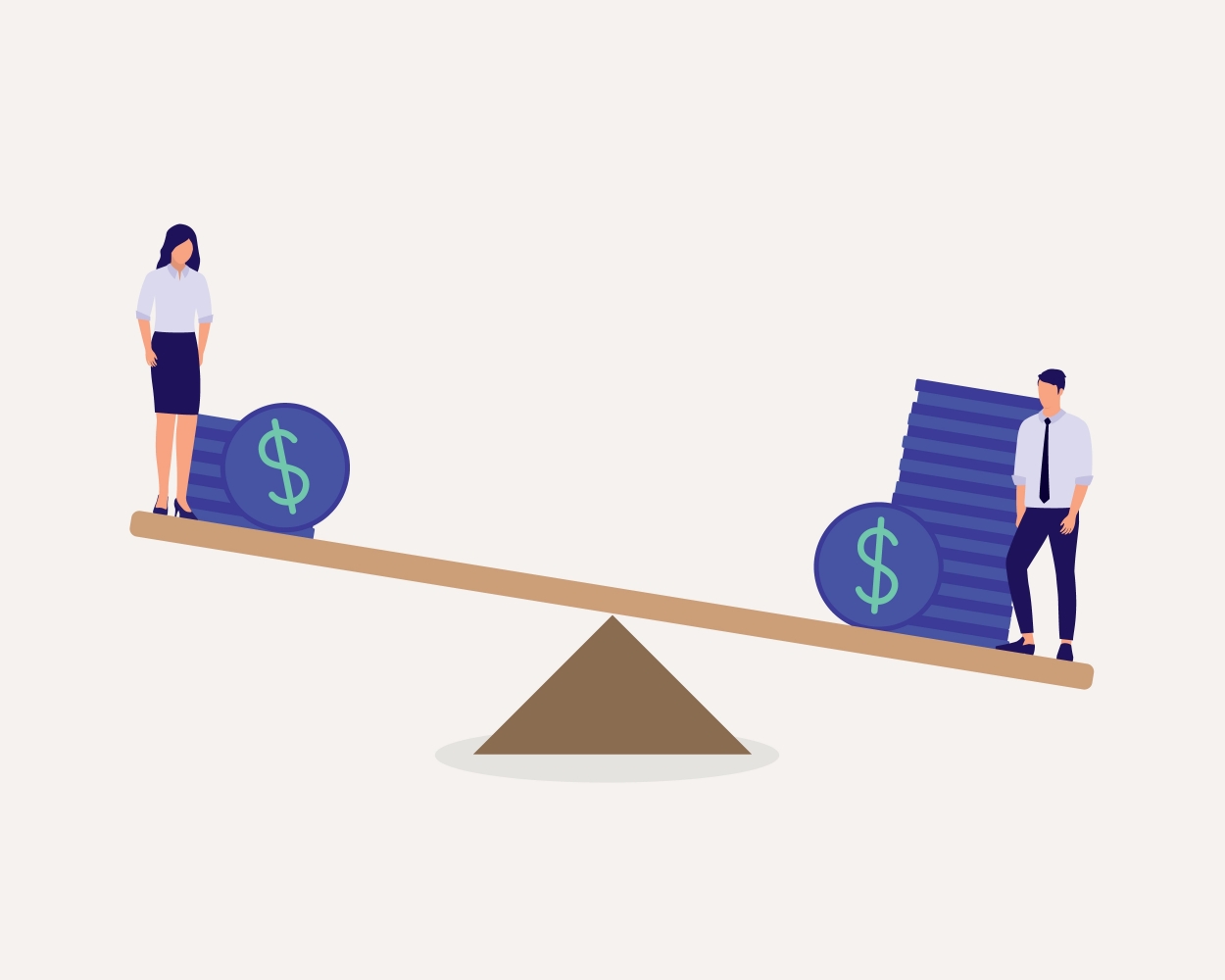
Equal Pay Day has come around again.
The annual observance marks how far into the new year women must work to make what men earned in the previous year. This year, it’s March 26, a day later than it was in 2025.
That’s because for the second year in a row, the gender pay gap in the U.S. has widened.
According to the most recent data from the Census Bureau, women working full-time, year-round, now earn 81 cents for every dollar men earn. That’s down from 83 cents a year ago, and 84 cents the year prior.
It’s the first consecutive widening of the wage gap since the 1960s, says Deborah Vagins, director of the Equal Pay Today, a national coalition that organizes not just one, but nine annual observances, marking equal pay days for different groups of women.
This year, Black Women’s Equal Pay Day will be marked on July 21. Moms’ Equal Pay Day is August 6. Latina Equal Pay Day is October 8.
“We are reversing decades of hard won progress,” Vagins says.
Wage gap grew under Biden
While some fear that policies the Trump administration is now pursuing could exacerbate the wage gap, the Census data used to calculate the equal pay date does not reflect that because it’s from 2024, when Joe Biden was president. Data from 2025 will be released this fall.
One explanation for the growing gap, offered by the Census Bureau, is that men’s median income grew by 3.7% between 2023 and 2024 while women’s median income remained stagnant.
The Biden administration, in fact, was supportive of equal pay efforts and took steps aimed at narrowing the wage gap among federal workers and contractors. But beyond that, advocates ran into resistance from Congress.
The Equal Pay Today coalition unsuccessfully pushed for federal pay transparency laws that would have required employers to provide salary ranges in job postings and banned them from seeking candidates’ pay histories.
“Even a well-meaning employer could carry forward the effects of prior employers’ pay discrimination,” says Vagins.
A number of states already have passed such laws. Studies have found mixed results. While pay transparency does reduce inequities, it doesn’t always lead to higher wages for women. Still, Vagins believes closing the wage gap without such laws will be difficult.
A window into pay disparities closed
In fact, there are fewer tools to narrow the pay gap now than there once were. Under the Obama administration, Vagins worked at the Equal Employment Opportunity Commission, where she helped to push through a requirement that employers submit pay data, broken down by sex, ethnicity and race, to the government.
“That data collection showed there [were] still vast pay disparities by occupation, that occupational segregation remained extremely high for certain fields,” she says.
Two years in, the first Trump administration stopped the initiative, citing its burden to employers.
Now, the coalition is hoping for a changeover in Congress to revive the effort.
“If you can’t measure what’s going on, you can’t fix it,” says Vagins.
The wage gap shapes lives
While no single factor drives the wage gap, occupational segregation accounts for a large part of it. There are far more women than men doing low-wage work in restaurants, hotel housekeeping, and child care. Even within occupations, there are disparities. Studies have found male doctors earn higher wages than female doctors across all specialties.
Vagins says wage gaps affect women throughout their entire lives, translating into less savings for retirement, smaller social security checks, and limits on women’s ability to create generational wealth for their kids and grandkids.
“It has very, very long-lasting impacts,” she says.
News Source : https://www.opb.org/article/2026/03/26/its-equal-pay-day-women-have-lost-ground-for-two-years-in-a-row/
Other Related News
03/26/2026
Nearly 36 years after two young victims were killed a man has been charged in one of Houst...
03/26/2026
The restaurant closed in January citing plummeting tourism rates and immigration concerns
03/26/2026
We may not be on an island but the library is still like paradise
03/26/2026
The Trump administration announced a deal on Monday with French energy giant TotalEnergies...
03/26/2026
March 26 2026Oregon Public Broadcasting has been honored with the national Goldsmith Prize...

Follow

Download Our App


Copyright 2022 © EPUERTO. All Rights Reserved