

Published on: 02/25/2026
This news was posted by Oregon Today News


Description

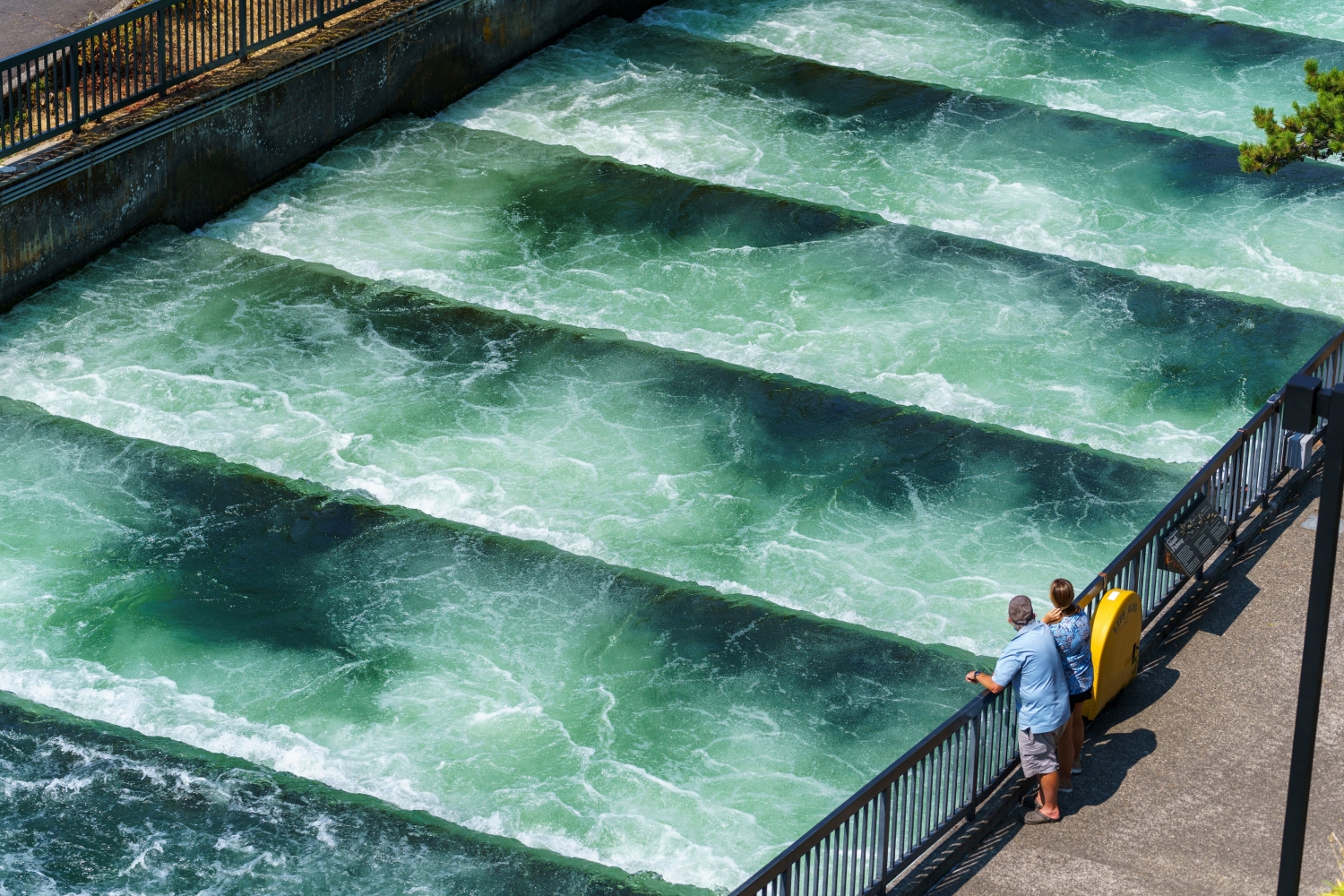
A federal judge in Oregon has ordered dams that operate on the Columbia and Snake rivers to generate less hydropower and allow more water to pass in an effort to keep salmon populations from dying out.
The order largely restores measures that were in place under a landmark deal to protect salmon that the Trump administration canceled last year.
U.S. District Court Judge Michael Simon on Wednesday granted many of the changes that environmental advocates, tribes and the states of Oregon and Washington sought in their decades-long lawsuit over the federal government’s operation of dams on the Columbia and its largest tributary, the Snake.
Simon wrote that his orders weren’t exactly what they wanted, but “generally represent an effort to address the problems.”
Simon is requiring federal agencies to release more water over longer periods of time through the dams’ floodgates — up to 24 hours per day for months at a time during downstream salmon migrations in the spring, summer and fall.
He’s also requiring the dams to operate with smaller reservoirs than they have historically, meaning smaller pools of water trapped behind the dams.
The effect is a swifter, colder river flow that eases the journey for young oceanbound salmon. It also limits the ability of those dams to generate hydroelectric power that many of Oregon’s and Washington’s smaller electric utilities rely on.
Simon’s preliminary order is the first major change to dam operations since Trump’s actions reactivated the case, which has its roots in endangered species listings for multiple salmon and steelhead populations in the Columbia River basin more than three decades ago. And the latest legal twist comes at a critical time for both salmon and energy in the Pacific Northwest.
“One of the foundational symbols of the West, a critical recreational, cultural, and economic driver for Western states, and the beating heart and guaranteed resource protected by treaties with several Native American tribes is disappearing from the landscape,” Simon wrote of Columbia River salmon in the 101-page order Wednesday. “And yet the litigation continues in much the same way as it has for 30 years.”
The lawsuit was put on hold in 2023, after the states and tribes hailed a historic deal with the Biden administration to halt lawsuits and collaborate on salmon recovery. President Donald Trump canceled that agreement last summer.
Wednesday’s decision puts temporary measures in place while the larger case drags on in its third decade.
Salmon survival clashes with demand for power

Columbia River salmon populations are nearing the brink of extinction.
Survival rates in recent years are as low as they have ever been on record, and are projected to drop by as much as 90% in the coming decades because of climate change.
Those salmon, which have been central to the culture and livelihoods of Native American tribes for thousands of years, were a centerpiece of treaties that granted the United States the land that became the Northwest states.
They remain a key fixture of the Northwest culture and economy.
“We’re incredibly relieved,” Earthjustice attorney Amanda Goodin, one of the groups suing the government, said. “Overall, it’s a great decision that’s going to have an immediate impact protecting salmon this year.”
Other parties in the litigation, including the Yakama Nation, the Nez Perce Tribe, and Oregon Gov. Tina Kotek’s office, did not immediately respond to requests for comment.
Meanwhile, Northwest energy demands have been skyrocketing, largely because of a proliferation of data centers.
New power sources aren’t keeping pace. That’s raising the likelihood of rate spikes and the threat of blackouts that could endanger lives during a prolonged heat wave or cold snap. Limiting hydropower to protect salmon can strain the electrical grid.
The Bonneville Power Administration, defendants in the case, estimated the measures sought in the lawsuit would result in a 17% rate increase for its power customers, largely because of the increase in water spilled past the dams rather than moving through its turbines.
“While we are still reviewing the judge’s order and he did appear to grant our request for more balance in a few limited areas, overall, there are concerning elements in this order that we worry will directly translate into serious reliability and affordability concerns for the region’s electricity consumers,” Scott Simms, executive director of the Public Power Council, said.
The council represents non-profit community-owned utilities, many of which rely entirely on federal dams for their power.
A spokesperson for Bonneville did not immediately respond to a request for comment.
Public utilities that buy electricity from federal dams have long argued that reducing hydroelectric output on behalf of salmon is counterproductive because climate change is the biggest threat to salmon and Columbia River dams are an energy source that doesn’t burn fossil fuels.
They point to studies that show ocean conditions are by far the biggest driver of salmon survival.
A compromise decades in the making

Environmental advocates and a large contingent of biologists, including many within the federal government, say the dire forecast for ocean conditions is the very reason salmon survival must be prioritized in streams and rivers like the Columbia and Snake.
The courts have repeatedly admonished federal agencies for failing to prioritize salmon survival in their operation of 14 dams on the Columbia River system.
Judges have rejected their plans for salmon recovery at least five times. In one of those rulings, Simon stated that the dam system “cries out for a new approach.”
For about two years, the federal government appeared to be headed toward a new approach.
In 2023, tribes, states and environmental advocacy groups reached an agreement with the Biden administration to pause litigation for at least 10 years while they pursued a series of billion-dollar investments in salmon recovery.
Central to that agreement was the momentum tribes and advocates had gained toward breaching four dams in Washington on the Snake River.
Removing those dams has long been a top priority for them, and the Biden administration agreed to study the issue, even acknowledging in a report from federal biologists that breaching the dams was “a centerpiece action” to salmon restoration.
A deal unravels
President Trump reversed course in June 2025, canceling the agreement with a memorandum titled “Stopping Radical Environmentalism to Generate Power for the Columbia River Basin.”
In its announcement, the White House called the Biden administration’s commitments to salmon “onerous” and harmful to farmers and power production.
The federal plan for salmon promptly landed back in court. This time, the states, environmental advocates and tribes sought more severe changes to dam operations than they’d accepted as part of the broader agreement.
Representatives of electric co-ops and other public utilities, who had opposed the agreement and said they were shut out of the negotiation process, were optimistic when Trump killed it.
They said at the time that they didn’t want to end up back in court with injunctions dictating dam operations.
“That doesn’t help anybody in the region,” Simms, the Public Power Council director, said at the time.
Hours before Judge Simon’s ruling, Simms said he thought the agreement was worth revisiting as a starting point for the opposing parties to find a potential solution outside of court.
“There were building blocks from that agreement that were workable,” Simms said.
This is a developing story and could be updated.
Other Related News

02/26/2026
The former president and secretary of state are set to testify on Thursday and Friday

02/26/2026
YETI is running one of those rare deals that actually feels useful free customization on a...
02/26/2026
PORTLAND Ore KOIN A bill that proposes Oregon disconnect from the federal tax code has pa...

02/25/2026
Media Release February 25 2026 Toledo Vehicle Crash - Update 02 - Final Update At approxi...
02/25/2026
Its time to grab your tickets and check to see if youre a big winner The Powerball lottery...

Follow

Download Our App


Copyright 2022 © EPUERTO. All Rights Reserved