

Published on: 09/07/2026
This news was posted by Oregon Today News


Description

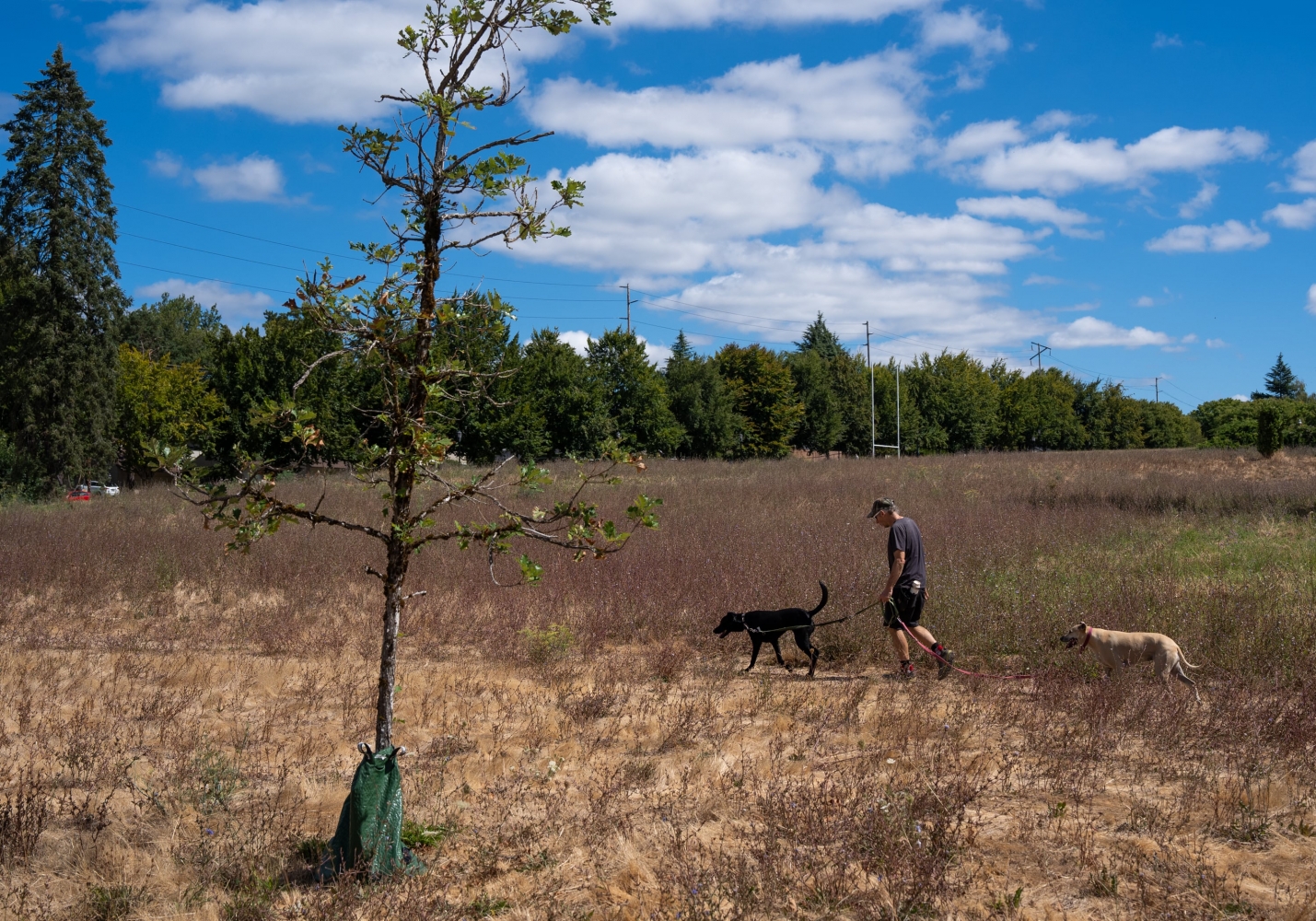
When Amanda Wilson became a groundskeeper at Lewis & Clark College in 2012, there was a campus parking lot full of alder trees. Alders grow quickly, want a lot of water and live relatively short lives.
But as the Pacific Northwest has experienced warmer and drier conditions, especially in the late summer and early fall, those parking lot alders have suffered, most of them fatally.
“Over time, between being in that hot frying pan of a parking lot, and then all the asphalt and the roots reaching for water… they all had to get taken out,” Wilson said.
For Wilson and the groundskeeping crew she now leads, the cumulative effects of late summer drought and heat stress have challenged their work as caretakers of the 137-acre campus nestled in an urban forest.
In 2026, widespread drought in Oregon reached its worst level in four years. Record-low snowpack also spelled trouble for cities and, by extension, the people tasked with keeping trees alive in urban spaces.


While an unusual cold front brought brief rain to parts of Oregon early September, trees planted many years ago are still suffering due to these changing climate patterns, despite the short-lived relief.
Zac Perry, who has worked on the grounds at Reed College for 27 years, said that’s been hard on many of the non-native trees that were planted at Reed several decades ago.
“The summers have been particularly challenging through my career here,” Perry said. “Every year is some sort of level of that heat exhaustion for these trees.”
“As we get into modern times, those introduced trees that may not be native or particularly resistant to drought… are things that I’m challenged to take care of.”
Perry said heat and drought stress carry subtle visual cues that might be hard to miss: wilting leaves, a dying canopy or cracks in the trunk due to lack of water. The needles on the lower branches of a conifer tree may also begin to turn yellow.

Lewis & Clark College groundskeeper Chris Larsen said it may also take time for those signs of heat and drought stress to show up.
“You could think of [trees] almost more like glaciers: The processes that affect their stress factors are already in play,” Larsen said. “This year’s drought and next year’s and the following years’ — those cumulative stressors are what lead to when you start to see decline.”
Larsen also said stressors like wildfire smoke and exhaust from cars and buses can weaken trees’ ability to protect themselves, and that late summer heat and drought add to the dogpile.
Groundskeepers, arborists and homeowners alike can benefit from many of the same management strategies used to keep trees hydrated and cool the soil.
Experts at Reed and Lewis & Clark said slow, deep watering and using organic material like mulch or woodchips can help keep the water in the ground, avoiding waste.
Portland arborist Leo Katz said mulch is a particularly cheap and effective resource for homeowners. He also said homeowners shouldn’t shy away from doing their own research about how to take care of their trees, but should seek expert help when making those decisions.


“I’m very much not of the mindset that you need us arborists on site for everything,” Katz said. “Give your local trusted arborist a call. Talk to them about what you found online.”
Katz also cautioned against using AI tools to help with that research, citing some clients’ experiences sending pictures of their ailing trees to ChatGPT and getting poor suggestions.
“A few times I’ve said, ‘This is completely wrong,’” Katz said.
As heat and drought become new constants for crews at Reed and Lewis & Clark, deciding which trees to plant now has become more important.
For Perry at Reed, that means stewarding the old trees while planting new ones that are better adapted to the changing climate.
“Even though we’re fortunate to have the ability to water in the summer, that’s not something I can assume will be there in the next 50 years,” he said.
For Larsen, some of the kinds of trees that have defined the Lewis & Clark campus may also change, perhaps for the better.
“It makes sense to me that, being part of a forward-thinking organization, that we can show a different way forward, a different way to engage with the landscape.”
News Source : https://www.opb.org/article/2026/09/07/summer-heat-drought-oregon-trees-caretakers/
Other Related News

09/07/2026
The OregonianOregonLives article Group chat underscores divisions among Democrats after ac...
09/07/2026
A custom 1952 ranch house with a swimming pool wing enclosed by glass walls in Southwest P...
09/07/2026
You dont have to be an enrolled student to get some environmental education at Oregon Stat...
09/07/2026
I love these patients but its really hard to go home and not be able to provide for your f...

09/07/2026
September is an awesome month Some mornings have a little nip in the air your Halloween dc...

Follow

Download Our App


Copyright 2022 © EPUERTO. All Rights Reserved