

Published on: 08/28/2026
This news was posted by Oregon Today News


Description

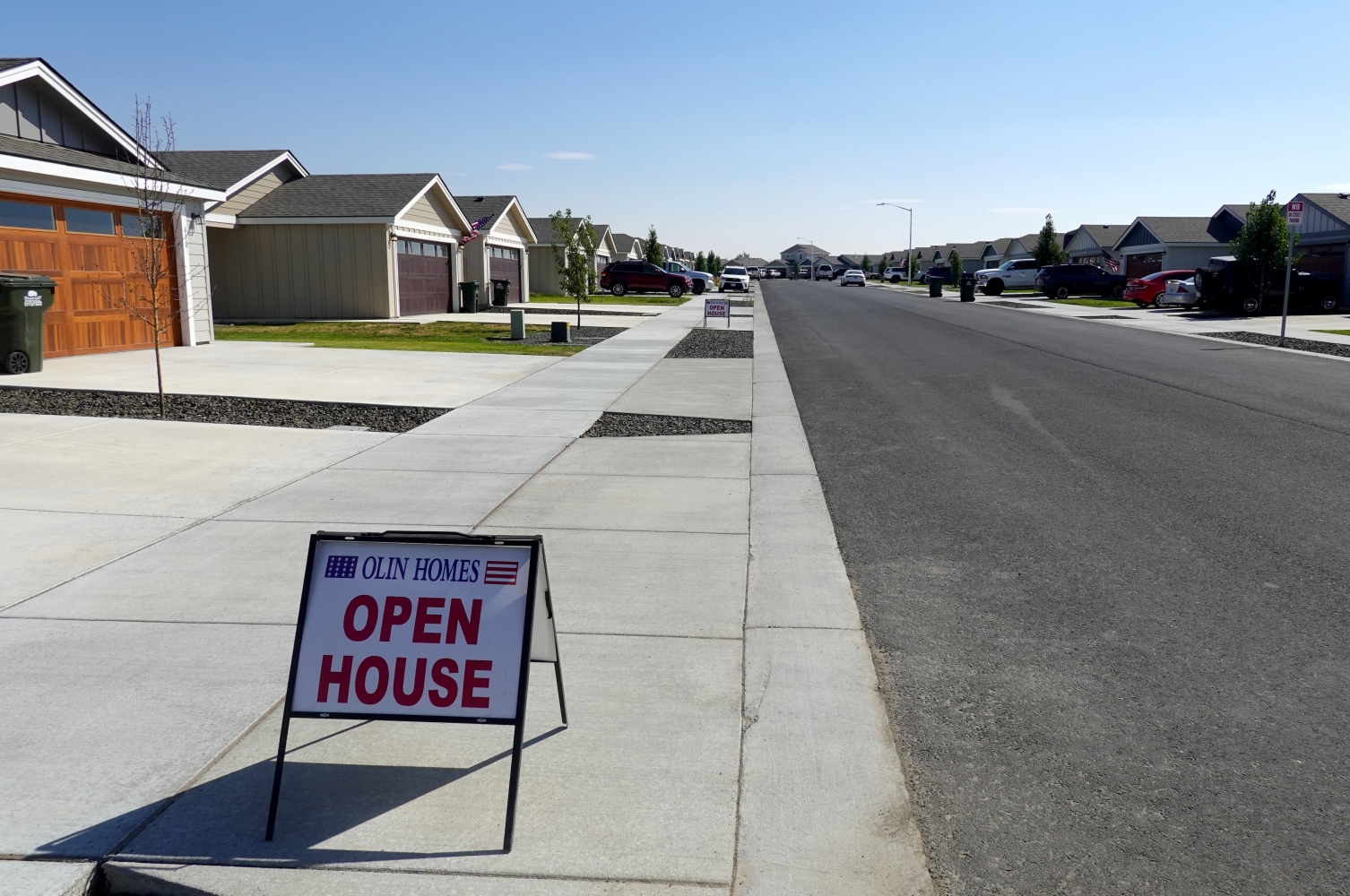
Up close, Stanfield’s Bumble B Estates looks like any suburban subdivision.
Uniform rows of single-family homes are arranged around a looping road, the asphalt and concrete broken up by shocks of green manicured lawns. But zoom out a little bit and Stanfield’s rural roots come into view. One of Bumble B’s closest neighbors is a corn field. Further down Highway 395, a traffic signal manages Stanfield’s only intersection.
State Sen. Todd Nash said Bumble B and Stanfield — a small subdivision in a town of a couple thousand people — are models of what housing development in rural Eastern Oregon should look like. He’s now bringing fellow lawmakers here in hopes of convincing them to loosen Oregon’s longstanding land use laws.
“I wanted to get legislators out here to see on the ground kind of what we’re up against,” Nash, the Republican from Enterprise, said. “This project right here in Stanfield was one of the inspirations.”
Oregon’s land use laws have long protected rural areas from housing developments. For decades, housing growth was sluggish. But new developments like Bumble B are starting to pop up around the region due to high demand. In fact, much of Eastern Oregon is now in the midst of a growing housing crisis. Nash’s effort is at the center of an ongoing debate over how much the state’s land use laws should be altered to accommodate home builders.

Land versus infrastructure
Todd Nash made a run at changing rural housing earlier this year.
Nash was a chief sponsor of Senate Bill 1578, which would have tweaked Oregon’s land use laws to allow for more housing to be built on the outskirts of rural communities. In 1973, the Oregon Legislature created urban growth boundaries, a system that limits outward expansion unless communities fill in enough of their existing space with homes and businesses. Nash’s bill would have allowed rural counties to rezone up to 50 acres for residential dwellings outside of their communities’ urban growth boundaries and ease the process to put accessory dwelling units on farmland.
Lawmakers created Oregon’s land use system in part to protect agricultural land, but Nash, a rancher by trade, said some farmland has gone fallow and unused.
“In Eastern Oregon, we’re blessed with some of the best farmland in Oregon. We have some really productive land here in Morrow and Umatilla County that’s under irrigation,” he said. “We also have some very compromised land that is a better value putting houses into.”
While the bill had bipartisan support, it also drew a fair amount of opposition.
Representatives from 1000 Friends of Oregon, a nonprofit that supports Oregon’s land use system, opposed the bill, arguing that it didn’t do enough to protect forests and agricultural lands. The legislation also drew measured opposition from the Oregon Farm Bureau, which was concerned that new housing might come into conflict with productive farmland.
The bill didn’t advance out of committee before the session adjourned.
1000 Friends associate director Mary Kyle McCurdy said in an interview that many rural communities aren’t struggling because of a lack of land, but because of a lack of investment.
“We know our rural and smaller communities need more housing, she said. “They need more investment in infrastructure, in workforce development, in order for that housing to be built.”
After the bill failed, Nash joined a working group focused on rural housing. Nash said the tour of towns like Arlington, Stanfield and Pendleton was meant to inform that ongoing discussion so that planning decisions were put into the hands of local commissioners.
“I really like decisions to be made locally,” he said. “Not by 1000 Friends, not by the state legislature.

Development challenges in Eastern Oregon
Stanfield real estate gets snapped up fast, City Manager Darla Linker said.
“If you watch Zillow or Realtor.com, if there’s something on the listing in Stanfield that lasts more than two weeks you’re kind of wondering what’s wrong with the property,” she said.
Linker said Bumble B has been a great addition to town, its affordability attracting both young families and retirees looking to downsize. But more housing developments like Bumble B might be a tough proposition for Stanfield.
“Infrastructure, I would say, is the biggest hurdle because it’s so expensive and there’s not a lot of available affordable funding for that type of expansion,” she said.
Cities across the state are racing to build more housing and grappling with rising construction costs.
But there are unique issues affecting rural areas, said Angie Sullivan, a partner at LandWise, a land development consulting company that specializes in workforce housing in the inland Northwest.
She said developers need to consider if a rural community’s public infrastructure can support new development.
Hiring contractors and subcontractors for rural construction often involves looking out of town since many local tradesmen have retired or moved to larger communities.
“There’s a whole lot to this ragu,” she said.
LandWise worked on the Stanfield project, and Sullivan said it took about a year to find a home builder for it. Rising interest rates and inflation had spurred the landowner to subdivide the project into smaller lots, which scared off many builders that wanted to construct bigger homes.
Business has been swift, though, since construction on the 99-lot Bumble B subdivision began in 2023. Sullivan said the lots are quickly selling even as construction crews build out the final set of homes.
Despite the challenges, Sullivan is bullish on Eastern Oregon’s future, predicting more housing development in the next 5 to 10 years.
“There’s a little bit of a buzz going around here in northeast Oregon that isn’t happening in other places of the state,” she said. “We’re pretty fortunate here that we’ve got a lot of good stuff happening.
News Source : https://www.opb.org/article/2026/08/28/lawmakers-eastern-oregon-housing-solutions/
Other Related News

08/28/2026
Al Michaels appeared to poke fun at President Donald Trumps decision to rename Lake Ontari...
08/28/2026
Wrestling fans are sending prayers this week to legendary former WWE and WCW wrestler Konn...
08/28/2026
One building on the corner of West Baseline Road and Southwest 170th Avenue in Beaverton s...
08/28/2026
The best college in Oregon apparently isnt the one with the acclaimed education and journa...
08/28/2026
Flight cancellations and delays disrupted operations at multiple airports across the US

Follow

Download Our App


Copyright 2022 © EPUERTO. All Rights Reserved