

Published on: 06/26/2026
This news was posted by Oregon Today News


Description
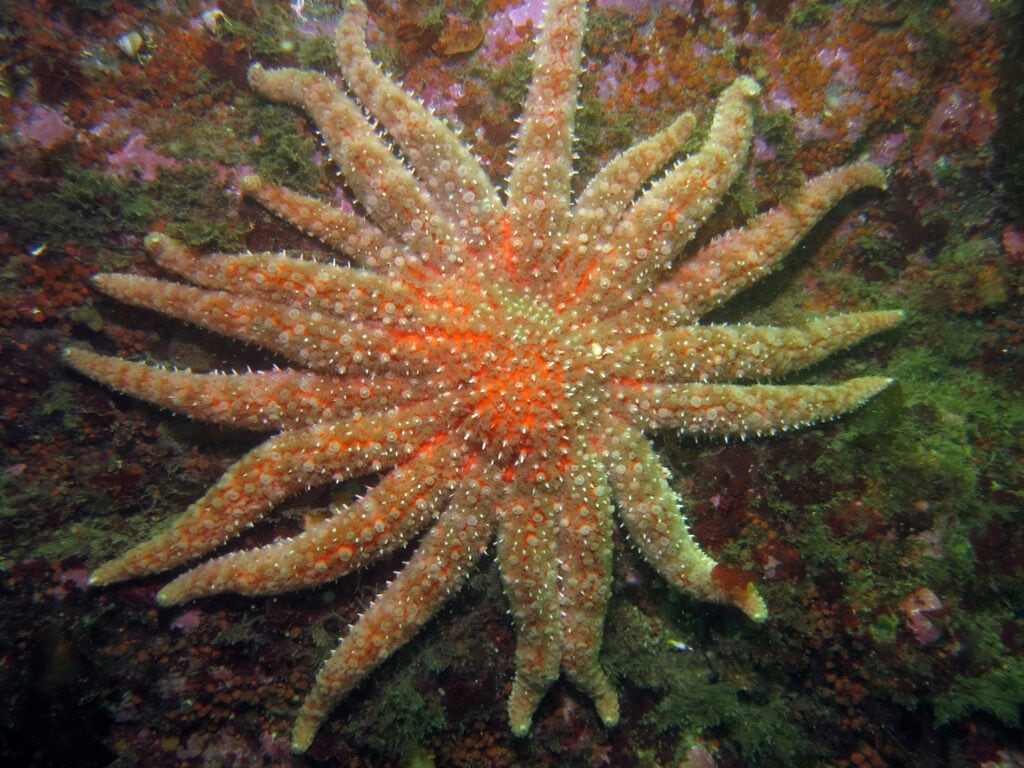
An environmental group has sued the Trump administration over its failure to grant Endangered Species Act protections to sunflower sea stars, a keystone Pacific Ocean species that lost 90% of its population since 2013 to a wasting disease.
The Center for Biological Diversity, in its lawsuit filed Monday in U.S. District Court for the Northern District of California, accused the National Oceanic and Atmospheric Administration of illegally delaying endangered and threatened listings for the giant sea stars.

NOAA’s Fisheries Service in 2023 proposed listing the species as threatened across its entire range, which stretches from Baja California to Alaska. That proposal stemmed from a petition the Center for Biological Diversity filed in 2021.
However, NOAA Fisheries has missed the legally mandated 12-month deadline for issuing a rule, thus violating the Endangered Species Act, the lawsuit said.
“The agency’s failure to meet the deadline delays crucial protections for the sunflower sea star, increasing its risk of extinction,” the lawsuit said.
Sunflower sea stars are among the world’s biggest sea stars, growing up 3 feet across and with as many as 24 arms. The multicolored sea stars are important to marine habitats and fisheries because they eat sea urchins that, if left unchecked, can mow down kelp forests that fish need.

The wasting disease, which turns sea stars to glutinous blobs, has been most severe in the southern part of the sunflower sea star’s range. In California, the species isconsidered functionally extinct, according to the California Ocean Protection Council. Remnant populations remain in farther-north waters, though the wasting disease has caused massive die-offs in the northern part of the range.In Alaska,hotspotsfor the wasting disease, which affects sunflower sea stars and other species, included the Kenai Peninsula’s Kachemak Bay and Katmai National Park and Preserve along the Alaska Peninsula.
“These incredible many-armed sea stars have taken a huge hit from climate change and obviously need protection, but for years federal officials haven’t acted,” Miyoko Sakashita, oceans program director at the Center for Biological Diversity, said in a statement. “It’s been painful to watch disease spread among the species as the ocean warms. We need to jump in and do everything we can to save these gorgeous sea stars. The Trump administration has a clear legal duty to take action on these amazing animals.”
A NOAA spokesperson said the agency has been working on the listing and continues to do so.
“At this time, NOAA Fisheries has not yet completed our work on the Center for Biological Diversity’s proposal to list the sunflower sea star under the Endangered Species Act,” Micheal Milstein said by email. “NOAA Fisheries continues to optimize its available resources to prioritize mission-critical research and actions to address fisheries management and endangered species responsibilities. NOAA remains dedicated to providing information, research and resources that serve the American public and ensure our nation’s economic and environmental resilience.”
New research findings
Recent research has shed light on the progression of wasting disease and possible ways to counter it.
A large research team led by the University of British Columbia, the University of Washington and the Hakai Institute last year identified the culprit in the massive wasting disease die-off: a bacterium called Vibrio pectenicida.
Climate change is implicated as a factor in the disease-caused death, the researchers said. Wasting disease deaths are most concentrated in warmer waters, suggesting that warmer temperatures have caused Vibrio pectenicida to proliferate, the researchers said. They point to the way warmer temperatures encourage the growth of other vibrio species, including Vibrio parahaemolyticus, which can cause gastrointestinal sickness to seafood eaters — and which has become a concern for Alaska oyster growers.

Even if warmer temperatures do not directly causeVibrio pectenicidato proliferate, the UBC researchers said, the presence of the bacteria could be an additional stressor to the sea stars on top of climate change.
In its lawsuit, the Center for Biological Diversity characterized climate change as part of a suite of compounded threats.
“Sunflower sea stars are also at risk from ocean acidification, which can make it more difficult for them to build their skeletal structures. Sunflower sea stars are also threatened by coastal development and pollution, harmful algal blooms, and other forms of habitat loss,” the lawsuit said.
There is other ongoing research that points to possible tools to help sunflower sea stars recover.
Scientists at the University of Washington and in California have been experimenting with captive breeding of sunflower sea stars, with the idea of bolstering or reestablishing wild populations.
The California project, funded by NOAA Fisheries, the Nature Conservancy and other organizations, is also studying sunflower sea star DNA to better understand the genetic diversity to keep a wild population resilient.
The University of Washington researchers have also found through lab experimentation that juvenile sunflower sea stars can withstand warm temperatures, a positive sign for possible restoration of wild populations in the future. The results of that experiment are described in a study published last year in the journal PLOS One.
This story was originally produced by Alaska Beacon, which is part of States Newsroom, a nonprofit news network which includes Oregon Capital Chronicle, and is supported by grants and a coalition of donors as a 501c(3) public charity.
This republished story is part of OPB’s broader effort to ensure that everyone in our region has access to quality journalism that informs, entertains and enriches their lives. To learn more, visit opb.org/partnerships.
News Source : https://www.opb.org/article/2026/06/26/pacific-ocean-west-coast-sunflower-sea-stars-threatened-species-lawsuit/
Other Related News

06/26/2026
Want to give back to Tualatin this summer Enjoy spending time outdoors caring for nature l...

06/26/2026
Ukraine launched a major nighttime attack on a dozen Russian regions Russian-held Crimea a...

06/26/2026
Beijings tallest building showed signs of damage on Friday as images and videos shared on ...

06/26/2026
Wonder Woman take note

06/26/2026
Oregon State has added another right-handed pitcher this time from Division II

Follow

Download Our App


Copyright 2022 © EPUERTO. All Rights Reserved