

Published on: 03/18/2026
This news was posted by Oregon Today News


Description
This story is a special collaboration with the Southern Oregon University Laboratory of Anthropology and the Oregon Historical Society, with support from Roundhouse Foundation.
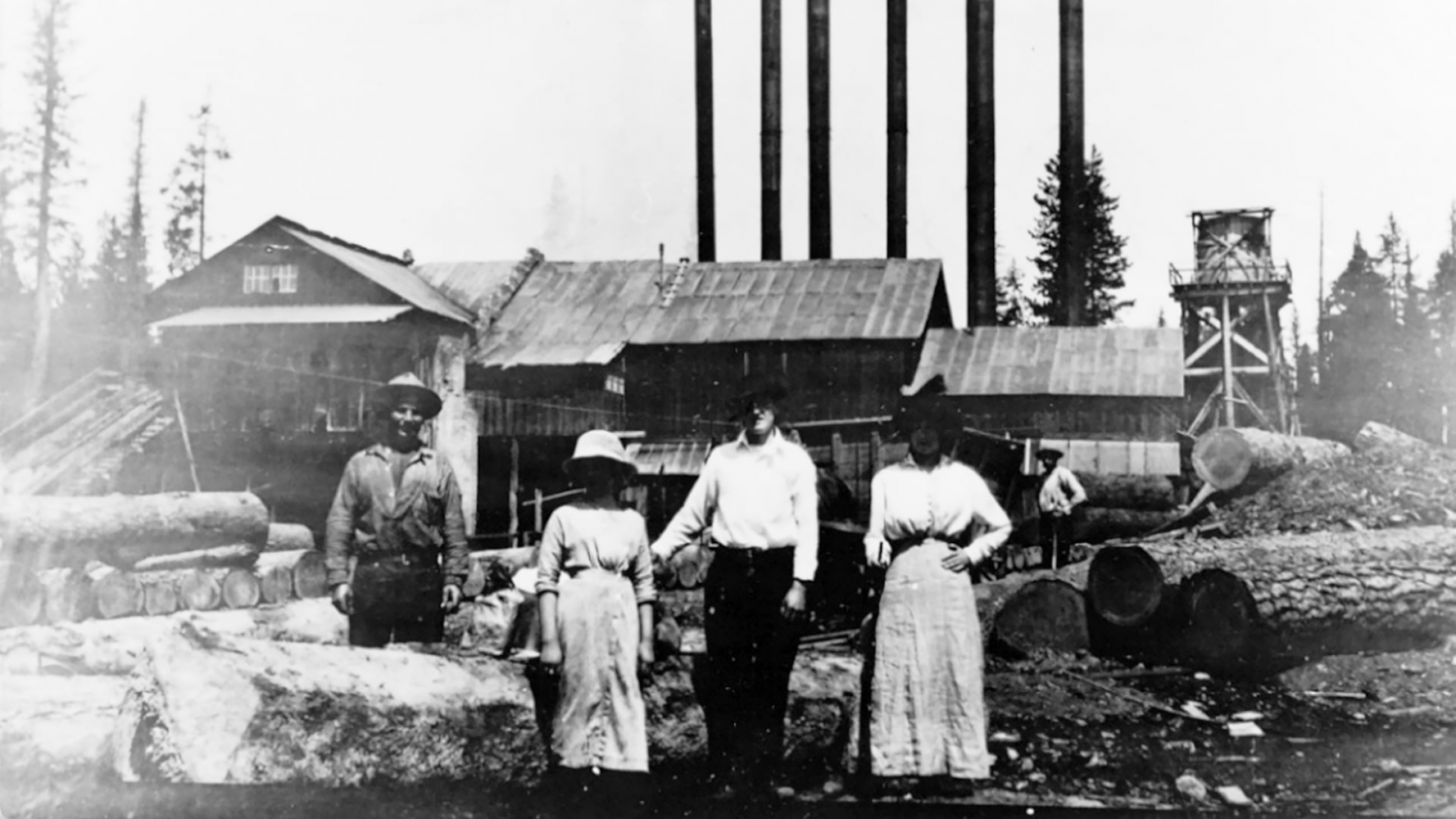
Iron pipe, concrete foundations and an abandoned railroad grade off a dirt road deep in an Eastern Oregon forest mark a once-bustling mill community that operated in the early 20th century.
Image courtesy of the Sumpter Valley Railroad Archives.
Established in 1910 by the Baker White Pine Mill Lumber Company, the site was occupied for less than a decade. Now only traces of the industrial landscape remain as testament to the extractive timber industry that once dominated the region.
Archaeologists working at the Baker White Pine Mill site a century later found it a welcome opportunity to explore daily life at the mill.
The artifacts recovered challenge mainstream notions of flannel-clad lumberjacks doing manly things in the woods into a more nuanced story recognizing the important contributions families made in the male-dominated lumber industry.
The rise and fall of the Baker White Pine Mill
In the late 19th and early 20th centuries, the rich pine forests of the Blue Mountains in Northeastern Oregon were seen as a resource ripe for harvest. With the depletion of East Coast timber reserves, attention shifted West. Railroads made accessing remote forests easier and also created a near-insatiable need for lumber as they continued to build and maintain tracks.
The Baker White Pine Lumber Co. logged public and private lands using a system referred to as ‘milling in transit.’ Workers built their own railroad grades, logged trees and used their own rail cars to transport their harvest to the mill at White Pine.
The logs were then milled into rough cut lumber, railroad ties and timbers, which were transported by the Sumpter Valley Railroad to their mill in Baker City for drying and finishing.
When the mill closed and moved its operations elsewhere, all of the portable infrastructure was moved with it, leaving little trace of the once bustling community that once supported it.
The short occupation, abandonment and remote location of the site made it an excellent candidate for archaeological inquiry.

The Southern Oregon University Laboratory of Anthropology (SOULA), local archaeologists and citizen scientists investigated the former Baker White Pine Mill in 2022, and have spent the last few years analyzing more than 8,000 artifacts recovered from the site.
Those items revealed important information about the former logging town’s immigrant workforce and also uncovered new insights into the domestic lives of logging families in Oregon’s early lumber industry.
The working wives of Baker White Pine Mill
Historians might be able to tell you how a tree in Grant County became a mansion in Portland, but only an archaeologist can tell you what the loggers and their families had for dinner.
During the Baker White Pine Mill era, there was a shift from an all-male workforce living communally under the company’s care towards a company town model where workers’ families were invited to join them.
This kept families together, but was also a means for companies to save costs for feeding and caring for the all-male workforce, by discretely outsourcing the labor to their wives. As an added bonus, company stores could now sell the very food and supplies they once provided for their workers for free.

The presence of women at the Baker White Pine Mill can be seen in a number of ways through the material culture left behind. The drudgery of household chores and caring for lumbermen can be seen in the washboard fragments, enamelware basins and shoe polish bottles recovered from the abandoned households.
These items were found alongside corset stays, jewelry and face creams that indicate a care and attention to appearances in the remote community. High-end tablewares and decorative household furnishings reflect the emulating of middle-class domesticity deep in the forests.

Canning jar fragments and lids and a copious amount of tablewares speak to women’s roles provisioning their families. Where the mess hall meals were designed to recruit and retain workers by providing high quality and plentiful meals, families were incorporating wild game, home canning seasonal ingredients and employing other cost saving measures to stretch the dollar.
The presence of teapots, tea cups and large serving vessels also indicate that social entertaining was practiced.
Household assemblages from Baker White Pine Mill speak of families that closely curated their dinner tables, decorated their homes with cut glass and hung curtains: Activities aligned with the “cult of domesticity” one might not expect in such rural or industrial contexts.

Finding families in the forest
The presence of women is surprisingly loud in the archaeological record of the Baker White Pine Mill, in direct contrast to how silent they are in the documentary record.
This reinforces why archaeology matters: To give voice to the voiceless and make space for the invisible labor that was capitalized on by this company town.
Whether or not these women were willing participants does not really change their contributions to the industry at this key moment in Oregon history — when flannel and corsets alike helped build the West.

This story was written and reported by Chelsea Rose, edited by Arya Surowidjojo, and digitally produced by John Hill. The short documentary was filmed and edited by Christie Goshe.

- Learn more about Oregon’s early logging industry from the multi-racial community of Maxville
- Visit the Sumpter Valley Railroad Museum to learn more about the line connecting early mills in eastern Oregon
- Check out more archaeological stories with Chelsea Rose in this Oregon Historical Society “Unearthing Oregon History” blog series
News Source : https://www.opb.org/article/2026/03/18/women-oregon-early-timber-industry-new-archaeological-research/
Other Related News
03/18/2026
The Marion County District Attorney says she has grown increasingly concerned in recent ye...

03/18/2026
Israels defense minister said Wednesday that the military has killed Iranian Intelligence ...

03/18/2026
WASHINGTON Top Trump administration national security officials facing back-to-back congr...

03/18/2026
The average US taxpayer has received about 350 more in refunds this tax season compared to...

03/18/2026
John Eves a radio and TV broadcasting veteran was born with a birth defect that he learned...

Follow

Download Our App


Copyright 2022 © EPUERTO. All Rights Reserved