

Published on: 03/13/2026
This news was posted by Oregon Today News


Description

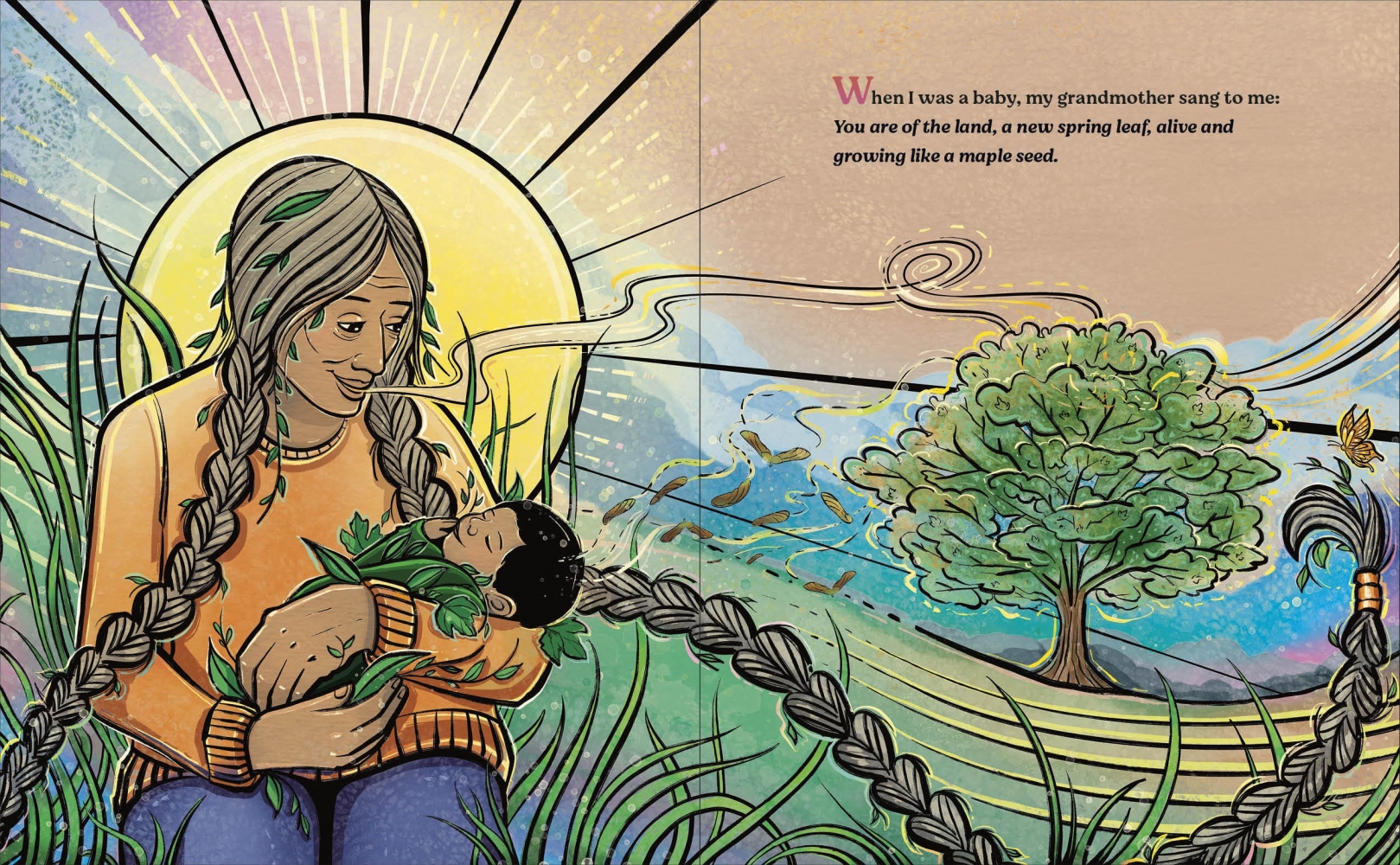
“You Are The Land,” a new illustrated book written and illustrated by Steph Littlebird, shares the joy of a child exploring her relationship with her family, her community and the land.
Littlebird, an enrolled member of Oregon’s Confederated Tribes of Grand Ronde, previously illustrated the celebrated “My Powerful Hair” and has also written a series about indigenous resilience for Oregon Arts Watch magazine.
This conversation has been edited for length and clarity.
Jess Hazel: “You Are The Land” starts with a note from you explaining how your Indigenous identity influences your relationship with the land. What parts of that influence did you feel were most important to highlight in this book?
Steph Littlebird: Part of being a tribal member here in the Pacific Northwest is that we consider ourselves to be place-keepers and … no matter what land that we’re on, we are responsible for its safekeeping. And so, I wanted to share that value because I feel like a lot of people outside of native culture feel those kinds of things, but there isn’t a lot of language around it. And so sharing that through the Indigenous framework, I think can help people more deeply connect to their own relationship with nature.
Hazel: Were there specific Oregon landscapes you wanted to feature in your art?
Littlebird: Oh, yes. This is a love letter to the Willamette Valley, specifically the northern Willamette Valley. That’s where my people come from. We are sort of the very northernmost tribes of the valley here in Oregon. So it really is filled with those luscious, electric, colorful landscapes that we live in here. And I know it’s so special, like this place is like no other in the world.
Hazel: I love how you phrased that. “Luscious, electric landscapes.” I think that comes across in the colors that you use a lot. How do you approach color in your work?
Littlebird: Some artists are afraid of color. I am probably not afraid enough of color. My work that I have always been known for is a very intense use of color and that, to me, is a reflection of contemporary Indigenous powwow culture. If you go to a powwow, you will see the brightest of colors on our regalia, and so it really is a reflection of that. Often when we are depicted, we’re depicted in like sepia tones. So color is a way to also show Indigenous life in a contemporary way.

Hazel: When it comes to the writing, this book uses a lot of similes. “My grandmother is like a flower. My little sister is like a spring fawn.” And that’s a great way to introduce kids to this literary device. I also noticed the child we follow through the story hears plenty of statements that don’t feel like metaphors. So, can you tell me a little bit more about what it means to literally be the land?
Littlebird: One thing that my community teaches me is that not only are we place-keepers, but that we are an extension of the land. We are living embodiments of the land. A young student just recently told me after I read my book to them for the first time, they were like, ‘yeah, this makes sense because without the earth, we literally could not exist.’ And I was like, ‘you got it. You nailed it.’
Hazel: It seems like children a lot of the time are more curious about their place in the world and more ready to explore it in those creative ways. How did you go about writing from that perspective?
Littlebird: The trick of writing a children’s book is that you need to be able to distill really big ideas into their most essential forms. This idea of being connected to the land is something that people feel, but they really don’t have any way to explain in the culture. American culture just doesn’t really have language around it, but Indigenous culture does. I know that even though it seems complicated for adults, kids get it really easily. So I just had to uncomplicate it in my own mind and get down to the bare essentials of these concepts.
Hazel: Do you have any tips for other adults who are trying to kind of reconnect with that childlike mindset?
Littlebird: You know, being in connection with the earth doesn’t really have to be that complicated. It can literally mean going outside on a walk. Walking with the trees, recognizing that … likely many of the trees that you’re surrounded by will be there long after you are gone and that the world around us is ancient. And we are merely visitors here that should take more responsibility for the time we spend here.
News Source : https://www.opb.org/article/2026/03/13/steph-littlebird-you-are-the-land-illustrated-book-oregon/
Other Related News

03/13/2026
NASA said asteroid 2026 EG1 passed about 198000 miles from Earth at more than 21500 mph as...
03/13/2026
SEOUL South Korea AP All six crew members of a KC-135 refueling aircraft supporting opera...
03/13/2026
In the back of a church in an anonymous stretch of 7 Mile in Detroit dotted with industria...
03/13/2026
The nominations for the 98th Academy Awards are out Its a lot of films and we are here to ...
03/13/2026
Not so long ago eggs were the poster child for runaway grocery bills People were scramblin...

Follow

Download Our App


Copyright 2022 © EPUERTO. All Rights Reserved