

Published on: 12/29/2025
This news was posted by Oregon Today News


Description

Oregon lawmakers passed hundreds of bills in the first half of 2025, but many are only now getting ready to impact your life. Absent special language, bills become operative on the next Jan. 1 after they are passed.
The passel of laws that will take effect on New Year’s Day contains some interesting changes. Hijinx by ticket sellers, nitrous oxide abuse and the state’s legal marriage age all got attention this year. One long-sought shift will make it easier to force people with severe mental illness into treatment. A hugely contentious tweak will allow striking workers to receive unemployment pay.
Democrats, with supermajorities in both legislative chambers, dictated the policy direction this year. But, as the Salem cliche goes, most bills pass with bipartisan support. That’s the case with many of the bills detailed below.
Here’s a rundown of notable new laws ringing in the new year.
Civil commitment changes
Debates have raged for years in the Capitol over whether Oregon makes it too difficult to civilly commit people.
Mental health experts, law enforcement groups and others have urged lawmakers to clarify state statutes to make it easier for judges to send patients into forced care. People with mental illness and their advocates have fought such changes.
This year, after intensive negotiations, lawmakers acted. As part of House Bill 2005, Oregon’s standards for when a person can be committed into state custody for treatment are being relaxed.
Beginning Jan. 1, judges will have a new set of standards for determining whether commitment is appropriate. One crucial change: A judge no longer needs to find that there’s an “imminent” likelihood a person will harm themself or others if not committed. That term – and a series of appeals court rulings that helped define it – has been blamed for making civil commitments too difficult in Oregon.
Advocates of the law change say it’s a way to get people the necessary care before they commit a crime. Detractors warn that the state doesn’t currently have enough space to handle a deluge of new patients.
Unemployment benefits for striking workers
No bill saw more impassioned debate this year than Senate Bill 916. Proposed by labor unions – and lambasted by business groups, school officials and Republicans – the bill will make Oregon the first state in the nation to allow both public and private workers to collect weekly unemployment checks while on strike. Other states with similar laws, such as Washington, do not allow public employees to strike.
Backers of SB 916 argued that it’s currently easy for employers to win unfair contracts by waiting until striking workers can’t pay their bills. They said the law gives workers more leverage.
Opponents warned that the law would lead to more frequent and lengthier strikes by teachers and other unionized professions.
Under SB 916, striking workers can receive up to 10 weeks of unemployment benefits.
New restrictions on nitrous oxide, aerosol duster sales
Two products that Oregon officials say are being increasingly abused will see new restrictions on Jan. 1.
Lawmakers bolstered rules requiring dealers of nitrous oxide canisters to confirm customers are at least 18 before selling the products, which can lead to addiction when huffed.
Oregon also has new requirements for businesses that sell aerosol dusters commonly used for cleaning keyboards and other devices. Under Senate Bill 1032, people must be at least 18 to purchase dusters containing a certain gas, 1,1-Difluoroethane. The new law also requires safety labeling that dusters can lead to death if inhaled to get high.
Raising Oregon’s legal marriage age
As of Jan. 1, Oregon joins a growing list of states that prohibit minors from being married — even with a parent’s permission.
Currently, Oregon allows 17-year-olds to be married as long as a guardian says it’s OK. Advocates say that this technically allowed parents to sign their child into marriage without the child’s consent. And because people under 18 lack legal standing in many contexts, proponents say that it can be hard or impossible for them to break free from abusive, often older, spouses.
According to estimates by the national advocacy group Unchained At Last, more than 3,600 minors were married in Oregon between 2000 and 2021.
Protections for ticket buyers
Shady practices by outfits that sell event tickets have been a major focus of legislation nationally, and Oregon lawmakers joined the fray this year.
With House Bill 3167, the Legislature bolstered prohibitions on software “bots” that can be used to skirt limits on ticket purchases, and barred resale of tickets that have been bought with such bots. The bill also bans websites that attempt to confuse ticket buyers by appearing to represent the venue hosting an event.
Lawmakers are also requiring more transparency about how much items actually cost. Senate Bill 430 requires sellers of tickets and other goods to advertise the final price of an item – including any convenience or service fees – rather than tacking those charges on at the end of a transaction. The law does not apply to taxes and shipping costs.
New consequences for sending intimate images
Creating an intimate image of someone using artificial intelligence is now a crime if that image is used to harass or degrade. House Bill 2299 added AI-generated deep fake images to the state’s criminal statute against disseminating “revenge porn.” It’s now a Class A misdemeanor, but multiple offenses can lead to felony charges.
The Legislature also opened the door to lawsuits against those who send sexual images to others with the intent to harass. Beginning Jan. 1, people who receive such unwanted material can sue for up to $10,000.
Stricter rules for telemarketers
As of Jan. 1, it will be illegal for telemarketers to call or text potential customers outside the hours of 8 a.m. to 8 p.m. in Oregon. Under House Bill 3865, telemarketers can also not call more than three times in a 24-hour period, or misrepresent their reason for calling.
More leeway for tenants
Under House Bill 3521, tenants who have paid a deposit to a potential landlord before signing a rental agreement have the right to be refunded if they find the unit has flaws that make it uninhabitable. Such problems can include faulty plumbing, electrical problems, unsafe drinking water and more.
News Source : https://www.opb.org/article/2025/12/29/oregon-new-laws-2026-january-1-politics/
Other Related News

12/29/2025
Neighbors described a chaotic scene as sirens cut through the quiet community
12/29/2025
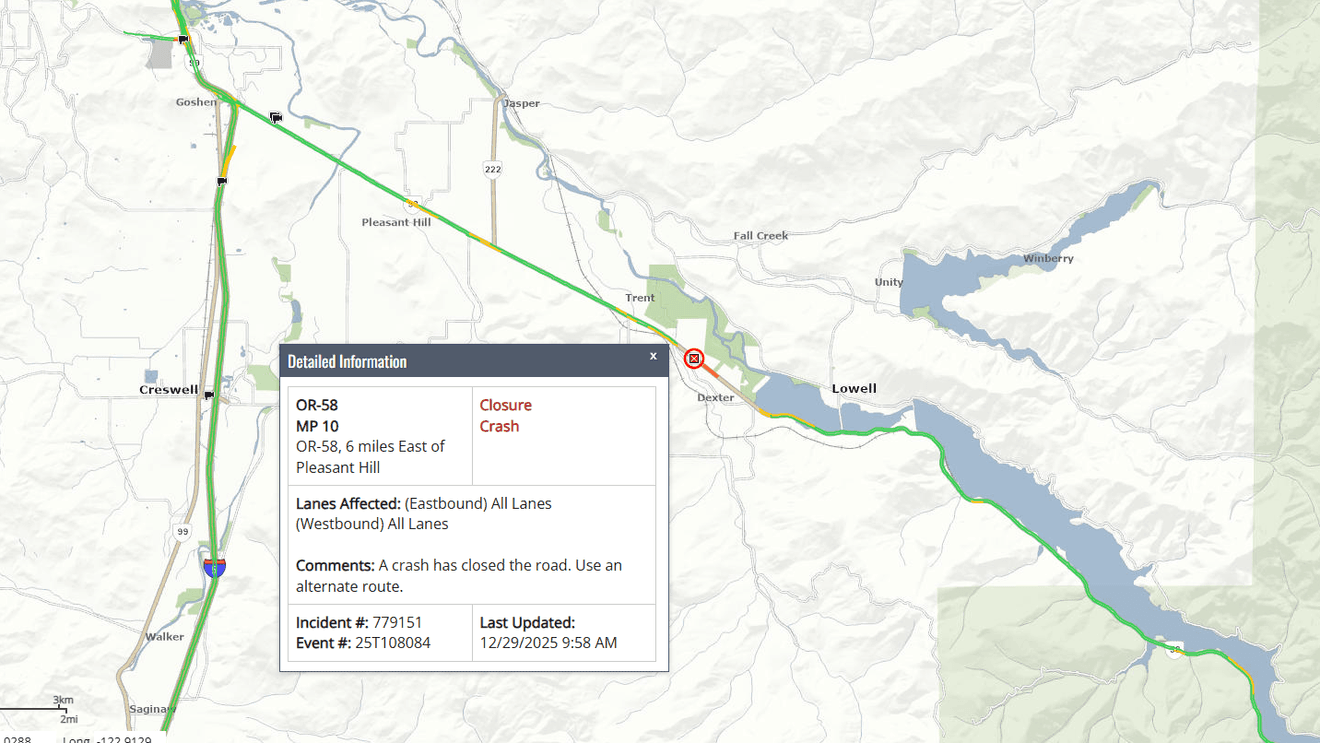
PLEASANT HILL Ore - OR Highway 58 is closed 6 miles east of Pleasant Hill at milepost 10 d...
12/29/2025
122925 - Water Obstruction Upper McKenzie River below Paradise Campground There is an ...

12/29/2025
The remains of a 20-year-old man in a Northwest Portland grave plot that was accidentally ...

Follow

Download Our App


Copyright 2022 © EPUERTO. All Rights Reserved