

Published on: 03/19/2026
This news was posted by Oregon Today News


Description
People living in northern Morrow and Umatilla counties in Eastern Oregon have dealt with polluted drinking water for at least the last three decades.
The problem has long been linked to the nearby food processors and farms that use nitrogen-rich fertilizers that then seep into the Lower Umatilla Basin.

Local advisory committees, state and local agencies have hashed out plans to clean up the groundwater below, but those measures have mostly been voluntary, with little government regulatory action.
Until now.
On March 13, the Oregon Department of Agriculture adopted a first-of-its-kind set of rules that will require virtually all farmers in the Lower Umatilla Basin Groundwater Management Area to draft up a nitrate management plan, have it certified by an agronomist, test the soil on their fields for nitrate and keep records of those tests for at least 10 years.
The largest farms will be subject to audits from state agriculture regulators starting May 2027.
When the state was drafting the rules, some farm lobbying groups worried the publicly available data would be taken out of context or misinterpreted, especially as some of the biggest agricultural businesses face ongoing litigation over allegations of nitrate pollution. Those groups also argued the rules would put undue economic strain on smaller farms.
Groundwater pollution puts drinking water at risk in Eastern Oregon counties
Meanwhile, one of the environmental advocacy groups that has been at the forefront of the nitrate crisis has raised concerns over the effectiveness of the new rules due to a lack of state resources. While others say the state does have the ability to enforce them, it will need time to adjust.
Ongoing decadeslong nitrate problem
The Lower Umatilla Basin Groundwater Management Area, or LUBGWMA, is a 550 square mile area in northern Morrow and northeastern Umatilla counties. In 1990, the Oregon Department of Environmental Quality, designated it a groundwater management area because of the high nitrate levels in the groundwater. Many residents in the region rely on domestic private wells for drinking water.
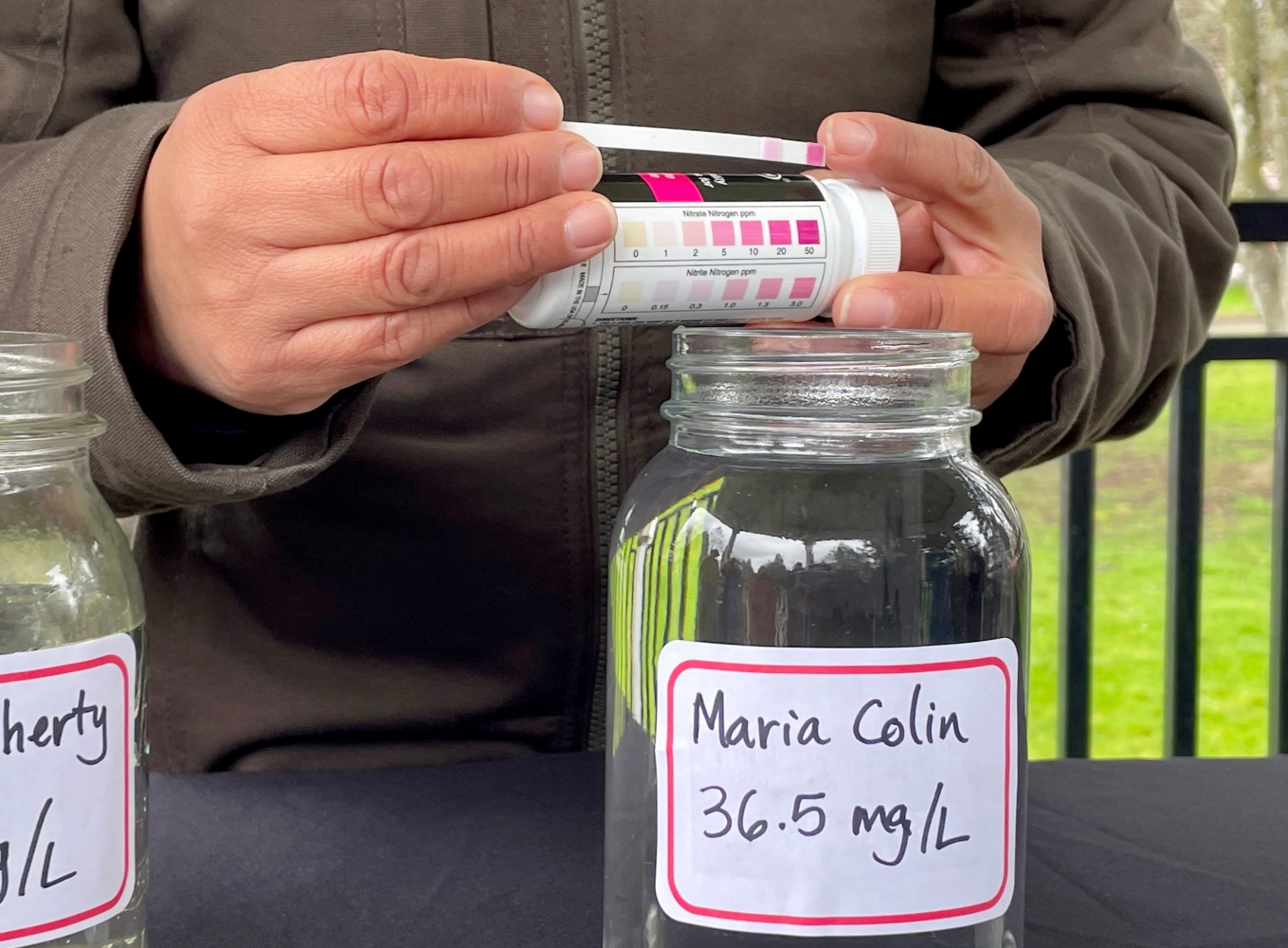
Nitrate is colorless, odorless and tasteless. Drinking it in excessive amounts can lead to miscarriages, respiratory infections, thyroid dysfunctions and can be especially harmful to infants.
Despite ongoing efforts to address the problem — including a 2024 nitrate reduction plan meant to bring nitrate concentrations below 7 milligrams per liter — it’s gotten worse.
About 32% of the total private domestic wells the state has tested so far show nitrate levels exceeding 10 milligrams per liter, the federal safe drinking standard before serious illness are likely to occur. Some wells tested at 10 times the federal standard.
To date, the Oregon Health Authority has tested roughly 2,119 domestic wells. It estimates it still hasn’t tested some 1,181 wells, according to an OHA spokesperson.
A plan to target nitrate source
The same year the state released its nitrate reduction plan, in 2024, the Oregon Department of Agriculture began drafting up the nitrates management rules with the intended goal to limit further pollution in the basin from large-scale farms.
“By requiring growers to implement certain best management practices and keep records, that holds them to a higher account,” said Isaak Stapleton, the natural resources division director at ODA. “They [farmers] ideally will run a tighter ship and maintain closer awareness of the fertilizer that they’re using and limit the impacts of groundwater.”
Critics say Eastern Oregon nitrates report shows more progress on policies than pollution
As spring comes around, farmers will have to begin testing their fields before applying fertilizers and keep records of that data.
“Those will have costs for folks that maybe weren’t doing as frequent sampling as the rule requires,” said Justin Green, the executive director of Water for Eastern Oregon, a nonprofit representing some of the largest farms and food processors in the Lower Umatilla Basin. “But we’re all in this together and this rule and these requirements are an important step in showing the public that farmers are responsibly managing nutrients.”
Green said he’s largely satisfied with the rules.
Some environmental advocacy groups have dismissed Green’s group as an attempt by local agriculture industries to look more environmentally friendly.

Farms larger than 1,000 acres will have to submit a certified nitrate management plan to ODA by May 2027. The agency will begin conducting audits on those farms after that date. Farms larger than 500 acres, but smaller than 1,000, will have to do the same by May 2028.
Farmers could be investigated by agriculture regulators if they receive a complaint. ODA is not requiring farmers to submit their records annually, but instead will conduct compliance audits on a scheduled basis dependent on agency capacity.
The reason for this, Stapleton said, is a lack of staffing and funds.
“These rules didn’t come with additional new resources for the agency. We have a single program person that will be leading the efforts,” he said. “To manage the additional records being submitted to the agency and be responsible for those, it didn’t make sense.”
Kaleb Lay, the director of policy and research at Oregon Rural Action, an environmental advocacy nonprofit that’s been at the forefront of the issue, said this lack of investment “speaks to how seriously the state is taking this.”
Though Lay said he believes the state agriculture agency did everything it could to draft a set of rules that worked, he doesn’t think the department had the full political backing from policymakers to get something more meaningful through.
He said the rules are just more of the status quo.
“I think they’re genuinely trying, but they’re not being given the resources,” Lay said. “If they can’t even stand up a system so that farms can report these components of the rules to them, and instead they’re just having one person go out and audit all these farms, that is not a system that is likely to work.”
Oregon drafts nitrate monitoring rules for Lower Umatilla Basin
Karen Lewotsky, the rural partnerships and water policy director for the advocacy group Oregon Environmental Council and a longtime member of a local committee involved in remediation efforts in the Lower Umatilla Basin, shares a similar concern.
“Right now they’ve just got one person,” Lewotsky said. “I suspect we would be happier if there were more people in the agriculture water quality section, so we could have more people available to do those audits.”
She doesn’t see the newly adopted rules as more of the status quo though, but rather a tool agriculture regulators can enforce.
“If that rule is violated, the agency can bring enforcement actions,” Lewotsky said. “This is not, from my point of view, a voluntary program, and I don’t think that the agriculture community considers it a voluntary program. They know they have to do this.”
Stapleton, with the agriculture department, said regulators could pursue civil penalties against a farmer that violates sections of the rules.
The agency will hold outreach and educational meetings to let farmers know what they need to do now to comply with the rules, though that effort is still in the planning phase, Stapleton said.
News Source : https://www.opb.org/article/2026/03/19/lower-umatilla-nitrate-monitoring-rules/
Other Related News


03/19/2026
The No 16 Howard Bison face the No 1 Michigan Wolverines in NCAA Tournament Midwest Region...

03/19/2026
Secretary Steve Hobbs claims the SAVE Act will force voters to take extra steps and could ...

03/19/2026
Watch Sunrise for the Word of the Day and text to win

Follow

Download Our App


Copyright 2022 © EPUERTO. All Rights Reserved