

Published on: 06/11/2026
This news was posted by Oregon Today News


Description
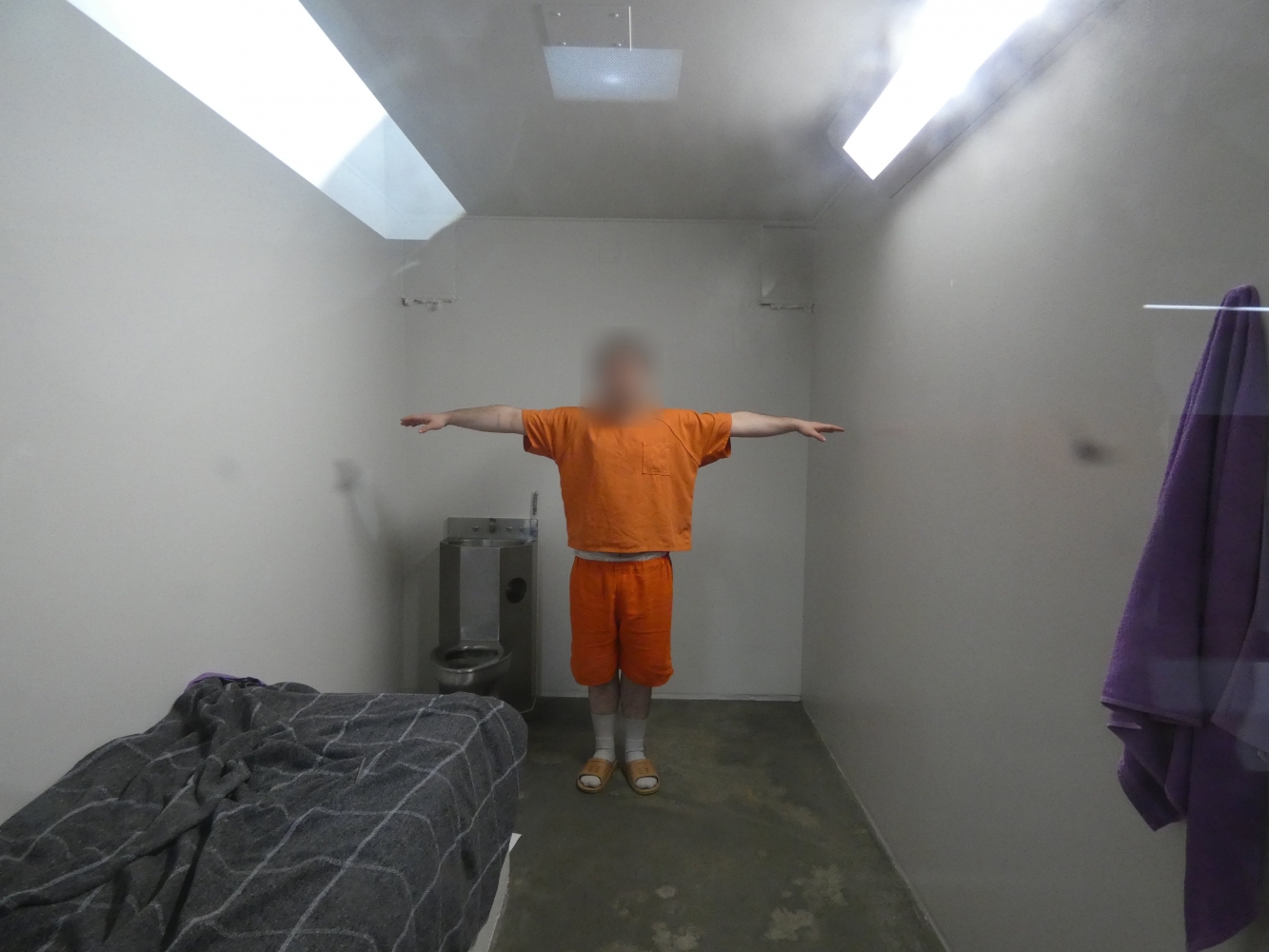
More than half the time Dominique Jenkins-Millage has spent in prison, he’s been in some form of solitary confinement.
The 29 year-old began serving his sentence in August. Before prison, Jenkins-Millage said his life was difficult. He’s been shot and experienced homelessness. But his current situation, he said, marks the lowest point of his life.
“I would rather take a bullet than go through this; this sucks,” Jenkins-Millage said. “I would rather be homeless outside where I have a chance to better myself or better my situation rather than be stuck in a box like an animal.”
Jenkins-Millage is part of a group of prisoners currently in solitary confinement who are challenging the conditions of their incarceration. In a class-action lawsuit filed Thursday in Marion County Circuit Court, they argue the state’s prison system is violating the Oregon Constitution, which prohibits the “harsh, degrading, or dehumanizing treatment of prisoners.”

“Across the state, the Oregon Department of Corrections holds hundreds of people in solitary confinement under brutal conditions that inflict significant physical and psychological harm,” according to the lawsuit. Oregon holds adults in custody inside windowless rooms smaller than a parking space for 23 or 24 hours per day, the lawsuit alleges. Not only are prisoners “generally forbidden” from going outside, they “rarely even see sunlight.”
The Oregon Department of Corrections declined to comment on the allegations, citing the pending lawsuit. In a statement, a spokesperson said the agency is committed “to safe, secure, and humane operations for adults in custody, staff, and the communities we serve.”
Data published by the agency shows a recent upward trend of adults in custody held inside Disciplinary Segregation Units. The most current data shows as of May 1, 561 prisoners were held in those units, nearly the highest during the past two years.
Disciplinary segregation is limited to 90 consecutive days, under state administrative rules.
“Oregon has certainly become an outlier in the use of disciplinary solitary confinement, which in some ways is the most punitive,” said Ben Haile, an attorney with the Oregon Justice Resource Center, one of the legal nonprofits bringing the lawsuit.

In 2021, Washington state ended the use of punitive solitary confinement. Nevada and Idaho each have 15 day limits of disciplinary segregation; California has a similar limit.
“However, that can be a little bit deceiving because solitary confinement comes by many names and many euphemisms,” Haile explained. “Often within the prison there’s a shuttling from one designation to another.”
In Oregon, adults in custody are also placed in Administrative Segregation for safety purposes, including during misconduct investigations, or assigned to Intensive Management Units, which last at least five months. Both are forms of solitary confinement, according to Haile.
Combined, the practices playing out in Oregon’s prison are at odds with the messages from state officials about treating adults in person with dignity, said Jacob Hutt, an attorney with the Prison Law Office, which is also bringing the litigation.
“What makes Oregon unique, in a way, is that it positions itself as a progressive leader on criminal justice issues,” Hutt said. “So all of these factors make it ironic and surprising that you’re finding these brutal and really extensive solitary confinement practices in Oregon.”

Jenkins-Millage received a 26-month sentence after pleading to third degree robbery charges.
In January, he got into a fight at the Oregon State Penitentiary with the person who killed his cousin, according to Jenkins-Millage. After that, he was put into a disciplinary segregation unit.
“If I can be totally honest, I imagine it’s because I punched a dude and his friend saw me punching him then he punched me then my friend punched the dude who punched me,” Jenkins-Millage said. “It kind of had a domino effect and I can understand it looked like I was the dude who pushed the first domino.”
In April, Jenkins-Millage was transferred from Salem to the Snake River Correctional Institution near the Oregon-Idaho border. He went from disciplinary segregation to an Intensive Management Unit.
His interactions are largely limited to medical staff or correctional officers. Others on the same unit sometimes communicate by shouting through the slot in their cell door.
“It’s definitely impacted my mental health,” he said. “This is the lowest point in my life. On top of being in prison, being in solitary confinement just makes it worse.”
He described it as a “demented torture,” being “confined to a box” for months: “It’s insanity to me.”
Jenkins-Millage said he hopes the lawsuit will bring change, even if he won’t benefit from it.
“When we made the decision to do whatever put us in prison,” he said, “we didn’t stop being humans.”

News Source : https://www.opb.org/article/2026/06/11/oregon-class-action-lawsuit-solitary-confinement/
Other Related News


06/11/2026
The Polymarket invite code OREGON has been upgraded for Thursday evening June 11th 2026 wi...

06/11/2026
WNBA commissioner Cathy Engelbert paid a visit to the Rose City on Thursday as the Portlan...

06/11/2026
Oregons holiday train rides are beloved but one excursion is getting a little extra attent...

06/11/2026
Gonzalez has been on the Metro Council since 2018 but he was one of six on the tri-county ...

Follow

Download Our App


Copyright 2022 © EPUERTO. All Rights Reserved