

Published on: 01/16/2026
This news was posted by Oregon Today News


Description
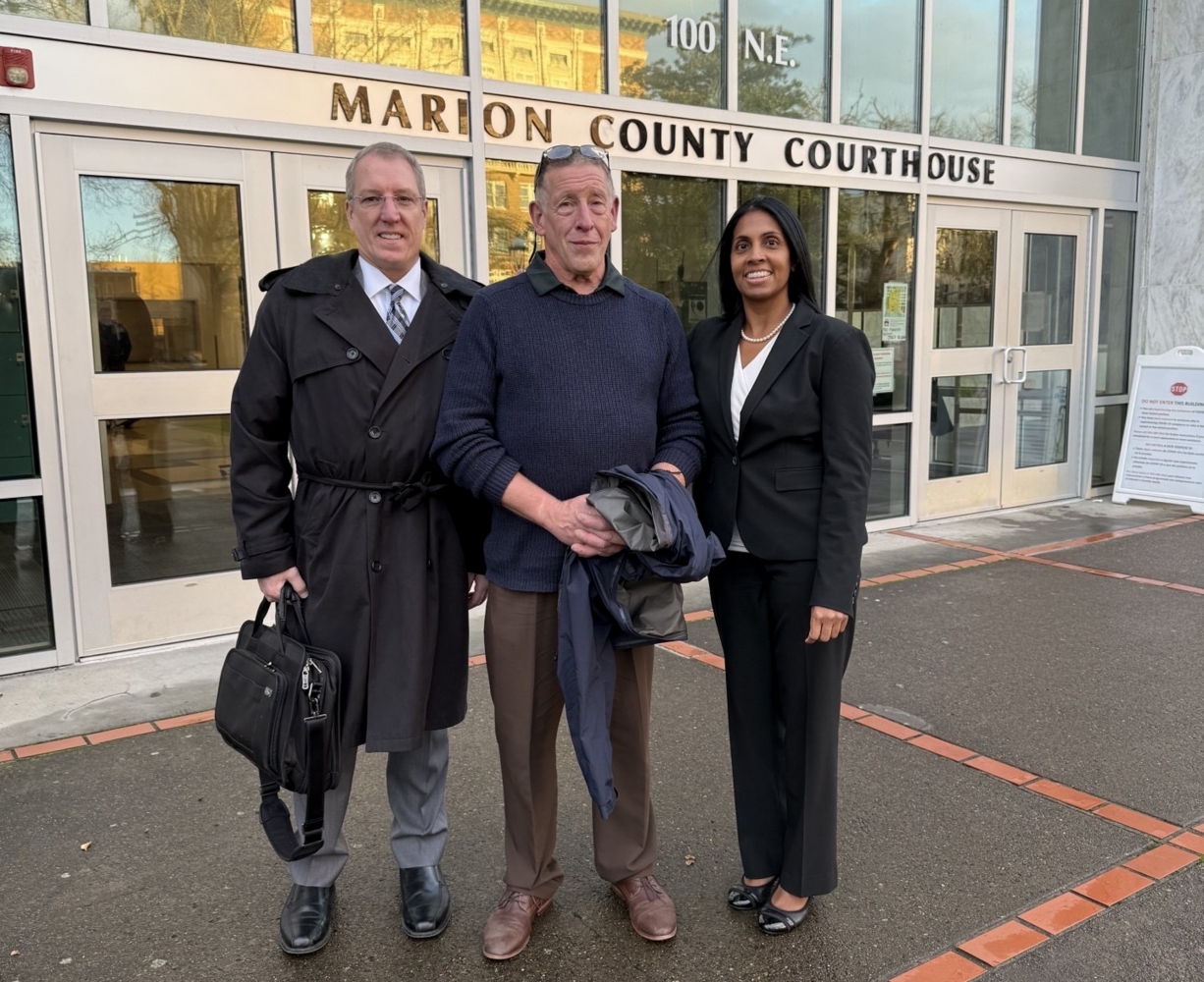
A man wrongfully convicted of murdering three people decades ago in Salem has received a certificate of innocence and compensation for his wrongful incarceration.
Philip Scott Cannon spent 11 years in prison after a jury convicted him using forensic science that’s since been deemed unreliable.
He was exonerated in 2009.

On Thursday, an order was entered in Marion County Circuit Court to seal his records and finalize the case.
The state of Oregon has paid $925,000 to compensate Cannon, 59, for the years he lost.
“While we celebrate this victory, there are still people in Oregon prisons who were convicted on junk science like Mr. Cannon was,” Janis Puracal, executive director of Forensic Justice Project and one of Cannon’s attorneys, said in a statement. “Mr. Cannon’s case is a great example of why we can’t just lock people up and throw away the key.”
The decision in Cannon’s case comes as Oregon lawmakers plan to take a closer look at how the state addresses wrongful convictions and forensic evidence.
The case
In 1998, Cannon, a handyman, was hired to fix the plumbing at a mobile home park in Salem. After he assessed the job, he left to get parts.
“All three victims were alive when Cannon left,” his attorneys wrote in their 2024 petition.
While he was gone, Celeste Graves, Jason Kinser and Suzan Osborne were all found shot in the head with a .22 caliber firearm.
At trial, the most significant evidence came from an employee at Oregon State University’s Radiation Center who testified that the comparative bullet lead analysis showed the “ammunition from Cannon’s home had lead composition that was ‘analytically indistinguishable’ from the lead composition of the ammunition used to kill the victims,” according to court records.
Comparative bullet lead analysis is a forensic process that compares ammunition from a suspect with trace chemicals found in bullets or bullet fragments at a crime scene.
The FBI first used it during the assassination of President John F. Kennedy.
In 2000, Cannon was convicted of murdering all three and sentenced to life in prison.
According to Cannon’s attorneys, he “categorically denied committing the murders, and maintained his innocence.”
During the legal fight, Cannon presented evidence in court that “his convictions were based on two kinds of forensic evidence that had been debunked; there was no other convincing evidence of his guilt.”
The FBI’s preeminent expert on bullet lead analysis and related forensic science later stated during Cannon’s post-conviction case that comparative bullet lead analysis “had been proven unreliable and repudiated by the FBI.”
The law enforcement agency stopped using it in 2005.
In 2009, the court dismissed Cannon’s conviction, and he was released.
“Cannon’s conviction was based primarily on forensic science evidence that has been completely debunked,” his attorneys wrote in a 2024 court petition seeking compensation and a certificate of innocence.
Cannon is the second person in Oregon to be granted a certificate of innocence, based in part on faulty forensics.
Oregon gives its first ever ‘certificate of innocence’ for wrongful conviction
In August, Nicholas McGuffin received the state’s first certificate of innocence.
McGuffin was wrongfully convicted in 2011 for the manslaughter of 15-year-old Leah Freeman in Coos County and spent nearly a decade in prison.
He sued and won a $14 million settlement in part because the Oregon State Police forensic lab failed to disclose DNA evidence.
Legislative fix?
Cannon was compensated through a law passed in 2022 by the Oregon Legislature. It created a process for compensating people wrongfully convicted, providing $65,000 for each year a person spends in prison.
Historically, the Oregon Department of Justice fought the petitions, resulting in protracted legal fights between people exonerated and the state.
“Attorney General Rayfield has heard concerns about how long the compensation process takes and is taking steps to move it more quickly within the bounds of the law,” Jenny Hansson, a spokesperson for the Oregon Department of Justice, said. “We’re pleased that this case is getting resolved.”
Oregon exonerees face ‘broken system’ of compensation for another year
Additional legislation, aimed at addressing issues with forensic science, could also be considered. A bill set to be introduced during this year’s short legislative session would apply to cases where the forensic science is undisputedly discredited and no longer used.
Those include hair microscopy – or comparing hairs under a microscope – and bite mark comparison. It would also include comparative bullet lead analysis, which was used in Cannon’s case, according to a copy of the legislative concept.
“I’ve been fighting for years to get here,” Cannon said in a statement. “I’m grateful for everything the legislature has done to make this right. Now it’s time for the State to do the same for other exonerees.”
News Source : https://www.opb.org/article/2026/01/16/oregon-gives-certificate-innocence-to-wrongfully-convicted-man/
Other Related News

01/16/2026
If winter has you stuck inside the best casino games at LoneStar Casino this weekend offer...

01/16/2026
New court records shed additional light on a Vancouver shootout that police have linked to...
01/16/2026
Buffeted by criticism they badly missed the mark in summarizing two proposed ballot measur...

01/16/2026
A new exhibit at the University of Oregons Museum of Natural and Cultural History highligh...

01/16/2026
President Donald Trump last year promoted unproven ties between the painkiller and autism ...

Follow

Download Our App


Copyright 2022 © EPUERTO. All Rights Reserved