

Published on: 07/08/2026
This news was posted by Oregon Today News


Description

Bipartisanship and earlier deliberations over transportation funding are a priority in the 2027 legislative session, a mostly Democratic group of lawmakers told the business and transportation experts tasked with vetting and recommending ideas to solve the Oregon Department of Transportation’s impending funding shortfall.
For a third year in a row, lawmakers in January will meet in Salem knowing the state’s transportation agency can’t afford to maintain its current service levels without new funding.
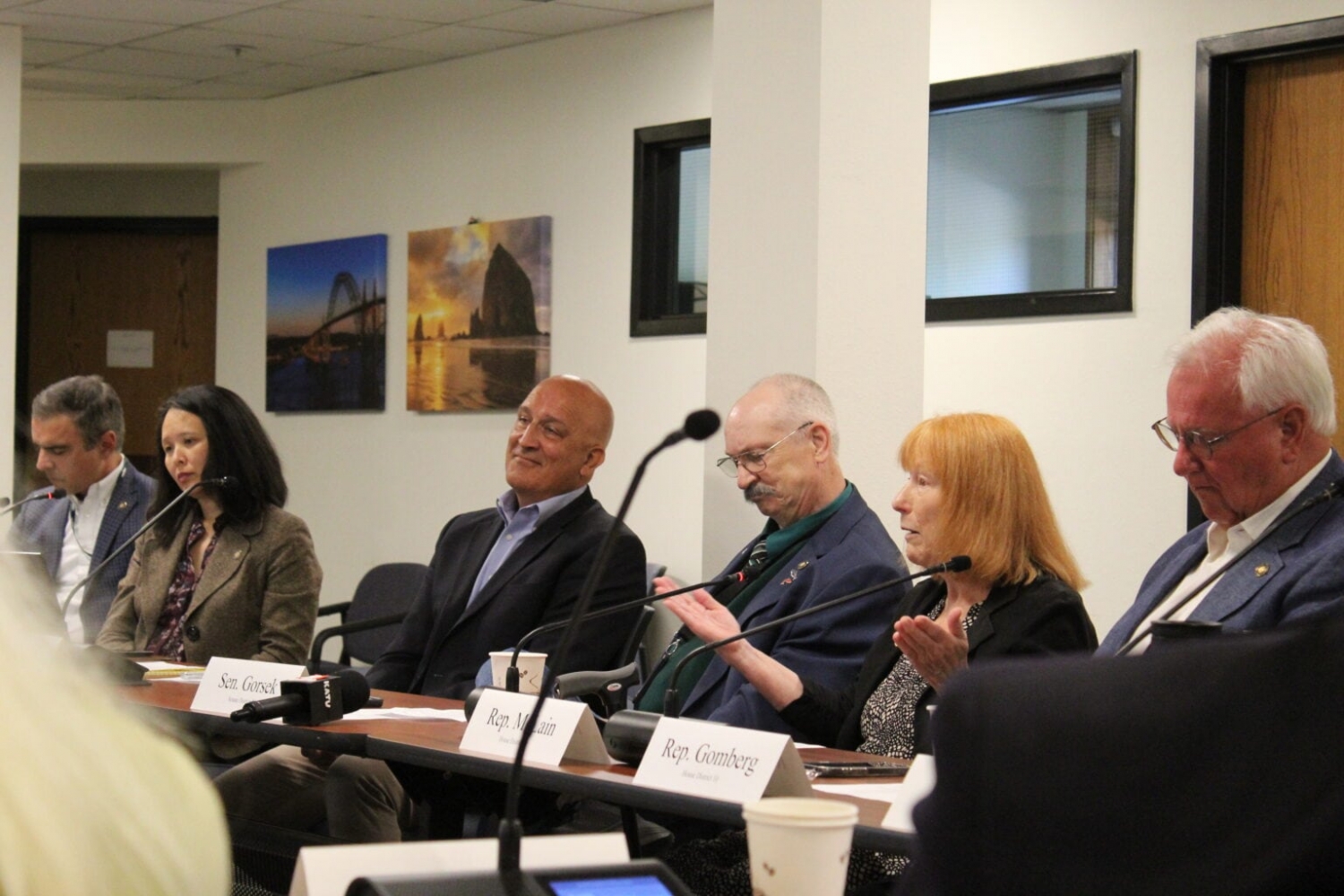
But this time, lawmakers hope they’ll have a clearer, sustainable plan with guidance from Gov. Tina Kotek’s 12-member “Rebuilding our Transportation Vision” workgroup. In its third meeting, the workgroup on Tuesday invited seven lawmakers to a roundtable to reflect on past legislative mistakes and the policy ideas they think could reach across party lines.
“I’m looking for something that can garner not just the majority, but something close to a consensus and to do so in a bipartisan way,” said Rep. David Gomberg, D-Otis.
Sens. Anthony Broadman, D-Bend; Khahn Phạm, D-Portland; Chris Gorsek, D-Gresham; and Bruce Starr, R-Dundee and Reps. Susan McLain, D-Forest Grove and Mark Gamba, D-Milwaukie, joined Gomberg.
Starr, the lone Republican lawmaker on the panel, said he was encouraged by his colleagues’ bipartisan goals.
“I’m really hopeful that the work that you’ll do will help to inform a bipartisan consensus-based package that comes forward potentially, but let’s not kid ourselves about the challenges facing us,” he told the workgroup.
After Democrats in a fall 2025 special session passed a scaled-down, highly unpopular transportation plan to raise $4.3 million over the next decade, Starr, alongside Rep. Ed Diehl, R-Scio and Taxpayer Association of Oregon founder Jason Williams, spearheaded a petition that successfully blocked hikes to the gas tax and other transportation fees after a referendum vote in May.
Oregonians overwhelmingly voted against those tax and fee hikes, and the state’s massive transportation agency still doesn’t have a permanent director, Starr reminded the group. The agency is on its second interim director after former director Kris Strickler retired from the public sector last year.
Oregon lawmakers brainstorm ways to relieve gas tax reliance
Many lawmakers agreed that Oregon’s transportation system overrelies on the gas tax.
Half of the money raised from the gas tax goes to the state, and the remaining is split between cities and counties. But as more Oregonians drive electric vehicles and the cost of transportation materials and labor increases, the state and localities have gradually collected less revenue from the gas tax despite fuel-efficient vehicles contributing to the wear and tear of public roads.
Democrats suggested indexing the gas tax so it’s proportional to inflation, taxing the sale of new vehicles or drivers who buy a new car worth more than $75,000. Another suggestion was finding a way to tax tourists who contribute to wear and tear on state roads.
The workgroup and lawmakers also concluded that Oregon’s transportation agency has too much responsibility on its hands and not enough money. Both Starr and Gomberg poked at the idea of splitting some of the department’s responsibilities into their own agencies.
“I think we need to reimagine the Department of Transportation,” Starr said. “Does it make sense to have DMV as part of the Department of Transportation? Does it make sense to have a rail division as part of the transportation department? You can pull out rail and transit as a separate standalone agency. I think we need to think about those bigger questions.”
Many in the roundtable supported the idea of implementing road user charges, or charging drivers based on the number of miles they travel rather than the amount of fuel they purchase.
Some shared concerns about how the state would track people’s vehicle mileage and privacy concerns without creating more bureaucracy. Those concerns, Starr said, can be addressed if the state were to contract with an outside vendor.
The state already offers electric vehicle drivers the option to pay per mile or pay higher fees at registration to account for not paying a gas tax.

Oregon lawmakers reflect on transportation funding mistakes
Lawmakers emphasized the need to introduce their transportation funding legislation much earlier in the process than they did in 2025.
“The bill has to come out at the end of January, beginning of February,” Gamba said. “That’s how early so that we have the time to work through it.”
Lawmakers and workgroup members also agreed that a new transportation funding package shouldn’t commit to projects before having an accurate cost estimate, pointing to the uncompleted Interstate 5 Rose Quarter and Interstate 205 Abernethy Bridge projects met with staggering cost overruns surpassing initial legislative estimates.
“I’d like to see that to make sure that we can really make sure we’re preserving our existing road system first before we overcommit our state and then our debt and bond capacity,” Phạm said.
Broadman said he sees 2027 as a clean slate for lawmakers to address the state’s transportation woes.
“I would love to leave the politics of 2025 behind,” he said. “I don’t want to leave the work behind.”
Oregon Capital Chronicle is part of States Newsroom, a network of news bureaus supported by grants and a coalition of donors as a 501(c)(3) public charity. Oregon Capital Chronicle maintains editorial independence. Contact Editor Julia Shumway for questions: [email protected]. Follow Oregon Capital Chronicle on Facebook and Bluesky.
This republished story is part of OPB’s broader effort to ensure that everyone in our region has access to quality journalism that informs, entertains and enriches their lives. To learn more, visit opb.org/partnerships.
News Source : https://www.opb.org/article/2026/07/08/oregon-lawmakers-to-prioritize-bipartisanship-transportation-workgroup/
Other Related News

07/08/2026
Dear Eric This response is in reference to the 64-year-old grandmother taking care of twin...
07/08/2026
Iconic broadcast journalist Katie Couric is opening up about a rare and freaky health scar...
07/08/2026
Meta launched a new artificial intelligence image model Tuesday that permits users to crea...
07/08/2026
A US kitten has just tied the Guinness World Record for most toes on a catToby a 10-month-...
07/08/2026
A leading department store is set to offer thousands of back-to-school items for under 25

Follow

Download Our App


Copyright 2022 © EPUERTO. All Rights Reserved