

Published on: 02/02/2026
This news was posted by Oregon Today News


Description

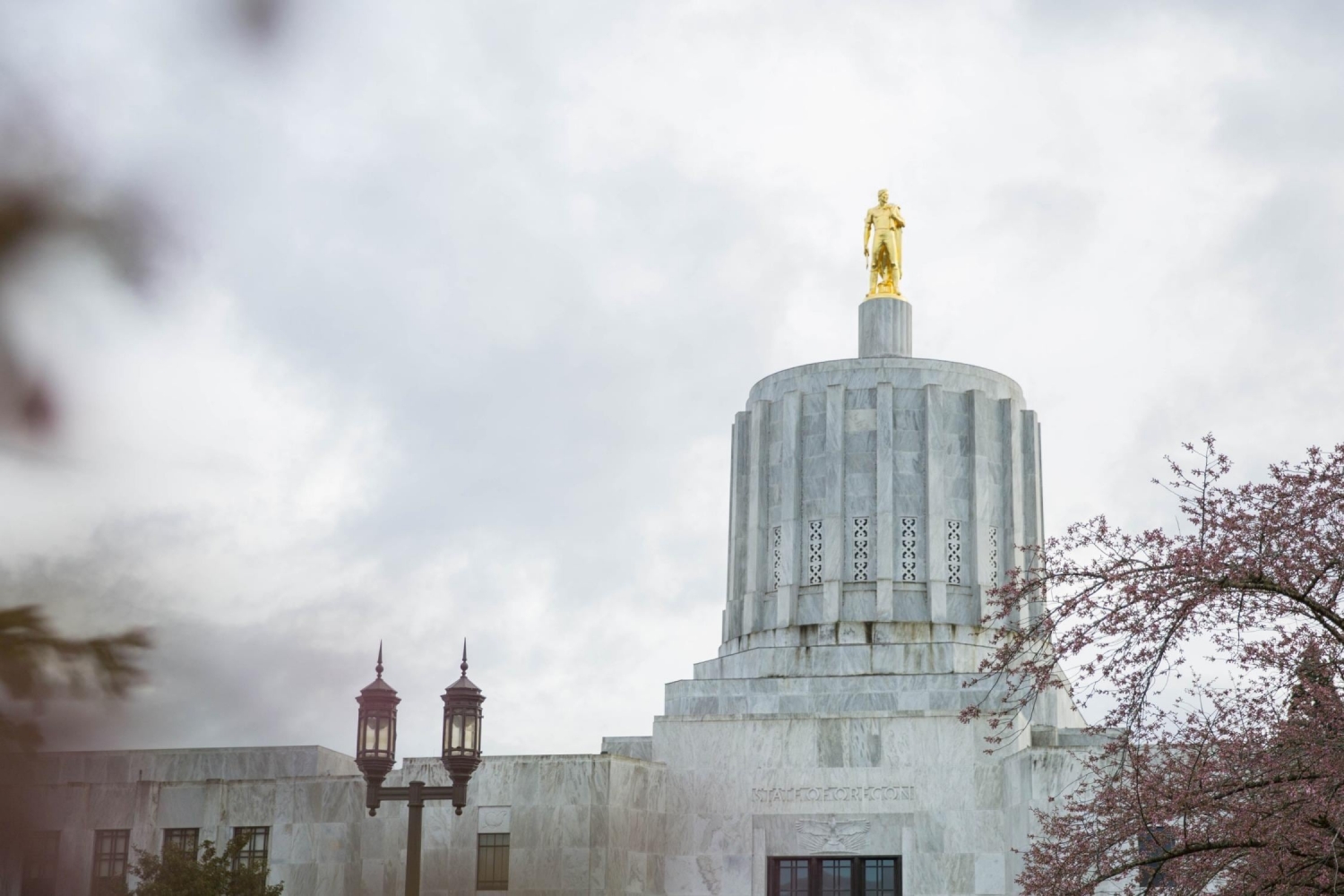
It’s fitting that Oregon’s 2026 legislative session convenes on Groundhog Day.
As lawmakers gavel in the five-week session on Monday morning, they — like the protagonist of the 1993 Bill Murray film — are caught in a bit of a time loop.
As in 2025’s session, the Legislature faces major questions over how to close a hole in the transportation budget. They’re still staring down big uncertainties about how to stand up fast-approaching campaign finance limits. They’re wrestling, again, with high housing and energy costs, soaring homelessness, and a host of other unresolved problems.
And yet for all the similarities, this year’s session brings some special wrinkles — many of them brought on by President Donald Trump.
H.R. 1 — the so-called One Big Beautiful Bill Act, a signature 2025 achievement for Trump — has reduced revenues and increased costs, almost certainly spurring budget cuts this year. At the same time, Trump’s aggressive immigration enforcement agenda has Democrats who run the Capitol vowing to spend the next five weeks in Salem crafting a response.
“You have a lot of political showmanship that’s going to occur on both sides,” said state Rep. Mark Owens, R-Crane. “If cooler minds do not prevail, it could be a tough session.”
There are no shortage of interesting issues lawmakers could tackle between now and their mandatory adjournment on March 8. Here’s a rundown of some of the most pressing.
Transportation funding — again
No political soap opera has so engrossed the Capitol in the last year as Democrats’ quest to pass a slate of tax and fee hikes to fund road maintenance.
The party fumbled its first attempt during last year’s session, then only barely passed a stop-gap bill in a subsequent special session — only to watch Republicans block newly approved taxes with a stunningly successful signature gathering campaign.
The tax hikes will now go before voters, whom many politicos expect to reject them. But lawmakers disagree on when that vote should occur.
Democrats said last month they could not simply repeal the transportation taxes as requested by Gov. Tina Kotek. Instead, they will try to move it to May’s primary election, rather than the November general election as currently scheduled. Legislative leaders argue an earlier vote will give them clarity on the funding challenges ahead.
Republicans are crying foul. They accuse Democrats of trying to avoid accountability by ensuring voters don’t see an unpopular tax the party passed on the same ballot that will decide an important governor’s race and control of the Legislature.

At least one influential Democrat recently acknowledged as much.
“Is it political? For sure,” Senate President Rob Wagner, D-Lake Oswego, told reporters last week. “I don’t think people want to see this on a November ballot.” Wagner’s office later sought to downplay his remarks.
Democrats will need to quickly move a bill changing the date of the tax vote in order to meet deadlines for the May election.
In the meantime, they’ll be working out the thorny question of how close a $297 million gap in the Oregon Department of Transportation Budget. Legislators are working with Kotek on a proposal that will likely involve eliminating vacant positions and stripping money from agency programs in order to assure that layoffs aren’t necessary.
Whether the parties can agree on an approach remains to be seen. Republicans, who sit in the superminority in both chambers, have accused Democrats of disingenuously inviting them to hash out transportation policy.
House Minority Leader Lucetta Elmer, R-McMinnville, recently likened it to “being asked to come to a table that was already set, with a menu that was already pre-approved, and you have a food allergy and can’t eat any of the food, but that’s the only choice you’re given.”
“It’s not that we don’t want to be part of the conversation,” Elmer said. “But it has to be a table where we can also speak and eat and walk away without passing out.”
Responding to ICE
Across the country, Democratic lawmakers are promising to push back on the federal government’s mass deportation efforts. In Oregon, where both legislative chambers and the executive branch are controlled by Democrats, an effort to curtail U.S. Immigration and Customs Enforcement’s tactics will likely take center state in the upcoming 35 days.
A package of bills addressing what Democrats see as federal overreach were underway even before Alex Pretti was killed by federal officers in Minneapolis and before a 7-year-old and her parents were detained at Adventist Health Portland. But those developments have given some lawmakers a renewed sense of urgency.
“We, every day, have chaotic decisions from the federal government around National Guard deployments and ICE immigration raids that are creating real fear and uncertainty for thousands of Oregonians,” said House Speaker Julie Fahey, D-Eugene. “So our job this session is to address those challenges responsibly.”

One sure to be hotly-contested measure would prohibit law enforcement officers from wearing masks. California lawmakers passed a similar bill, which is now being challenged in court. The practice of ICE immigration agents obscuring their identity with face masks has become common under the Trump administration.
Another measure would require Oregon school districts to have clear policies on what to do if immigration officials arrive at their school. It would also require the schools to inform students, parents and community members when federal immigration officials are on school property.
Although so far the package of bills appears to have little Republican buy-in, House Democratic Leader Ben Bowman said he’s hopeful that will change.
“You’re seeing growing numbers of Republicans openly saying this is unacceptable,” said Bowman, a Tigard lawmaker. “So I think the tide is turning on this. I think the public is shifting on this. What we’re seeing is madness.”
Elmer, the House Republican leader, said everyone can agree they “don’t want to see violence.”
But Elmer took aim at Oregon’s sanctuary laws, which prevent state and local law enforcement from helping federal agents to work with immigration officers. She said if the different agencies could work together, federal agents could simply “pick (criminals) out of our jails” so they wouldn’t have to “try to figure out where [the violent people] are.”
Closing a budget hole — size to be determined
Beyond the transportation funding hole of roughly $300 million, lawmakers are looking for around $750 million to balance the state’s two-year budget and leave a cushion of unspent money for emergencies. That number is expected to change, by a little or a lot, when the Legislature gets a new revenue forecast on Wednesday.
Oregon’s costs are rising — in part, but not solely, because of new mandates included in H.R. 1 last summer. At the same time, the megabill passed by congressional Republicans is poised to land a major blow to Oregon’s general fund.
Because Oregon uses taxpayers’ federal taxable income as a starting point when calculating state taxes, the federal tax cuts are expected to reduce the state’s general fund by nearly $890 million in the current two-year budget — one big factor in the current budget crunch.
Meanwhile, Oregon is looking to hire hundreds of people to track eligibility of those receiving food assistance and the Oregon Health Plan, a requirement of H.R. 1. Rising state health care costs are also demanding more money.
To close the budget gap, lawmakers can slash spending or raise money. Top Democrats say they will look to do both.
The Legislature directed all agencies to propose budget cuts of up to 5% — information that will inform where cuts land, and how severe they will be. Lawmakers say they will look to shield schools from negative impacts, and that they may tap state reserves to avoid pain in the beleaguered K-12 system.
Legislative Democrats also want to claw back some of the revenue Oregon is currently slated to lose because of H.R. 1. They would do so by passing a bill unlinking pieces of Oregon’s tax code from the federal government’s.
“If we’re not gonna cut things, we gotta find revenue,” said state Rep. Pam Marsh, D-Ashland. “So let’s buckle down and figure that out.”
Democrats hold three-fifths supermajorities in both legislative chambers, but can pass a disconnect bill with a simple majority vote. Even so, they will face stiff pushback from Republicans. While disconnecting from the federal tax code doesn’t raise Oregon’s tax rates, it does mean some residents will pay higher taxes than they otherwise would have.
“If the majority party focuses again on just pulling more money out of Oregonians’ pockets and continuing to grow the size of government with new programs that are extraordinarily expensive… we will do everything in our power to try to slow it down and expose it,” said Senate Minority Leader Bruce Starr, R-Dundee.
Boosting Oregon’s beleaguered economy
In her fourth session as Oregon governor, Kotek is switching it up.
While housing, schools and behavioral health have dominated the governor’s agenda since taking office in 2023, she named a new top priority in the 2026 session: jobs.
“First and foremost is building our economy, making sure that we are focused on job growth, job creation here in the state,” Kotek said last week.

The approach makes sense, given the mood of Oregon voters. As the governor seeks reelection this year, new polling commissioned by the state’s business lobby suggests nearly 75% of voters rate the state’s economy as poor.
A bill the governor is putting forward this year marks the opening salvo in what she has pledged will be a major focus on economic development in coming years. House Bill 4084 looks to speed state permits for large development projects tied to Oregon’s target industries. Kotek is also hoping lawmakers will plunk $40 million into helping prepare land for industrial uses, and she wants to tweak laws that grant property tax breaks to businesses for new investment.
Some lawmakers are getting in on the action.
State Sen. Janeen Sollman, D-Hillsboro, has a multipronged bill that bolster tax credits for research and development investments. More controversially, the bill would open up 1,700 acres of land in North Hillsboro to development for advanced manufacturing. The land has been part of a decades-long tug of war over industrial development in Hillsboro, epicenter of the state’s semiconductor industry.
And state Rep. Daniel Nguyen, D-Lake Oswego, is hoping to right-size Business Oregon, the state’s economic development agency. The agency administers roughly 90 programs, some of them only tangentially related to economic development. Nguyen’s bill would direct Business Oregon to analyze its offerings and recommend those that should be eliminated.
“It’s the island of misfit toys,” said Nguyen. “If there’s not a home for it, it goes to Business Oregon, and that really is not fair to them.”
Republicans are making affordability a key focus this year, and they also have ideas. Among them: reversing a law Democrats passed in 2025 that will allow striking workers to receive state unemployment payments.
“Right now, too many families are struggling, costs keep rising, systems feel broken and too often state government responds by asking for more money without delivering better results,” said Elmer, the House Republican leader. “That’s simply not sustainable and it’s also just not acceptable.”
Other bills of note
During even-year short sessions, the state’s 90 lawmakers can introduce two bills apiece, and legislative committees can introduce three. That means the Legislature has hundreds of other proposals to consider. Among them:
- Recreational immunity: Lawmakers will consider recognizing liability waivers in Oregon. The waivers, which prevent a customer from suing a business for negligence, have been unenforceable since a 2014 Oregon Supreme Court ruling. Proponents hope that using waivers will curb rising insurance premiums that are pushing up costs for customers at ski resorts, gyms and more.
- Renovating the Moda Center: With the Trail Blazers soon to be under new ownership, lawmakers are likely to weigh whether to set aside state funding to spruce up the aging Moda Center in Portland. Top Democrats, including Kotek, say ensuring the team remains in Portland is worth spending public money.
- Campaign finance limits: Two years after its passage during the 2024 legislative session, the Legislature is likely to take up changes to the state’s campaign finance reform law. With new contribution limits set to kick in next year, lawmakers are weighing whether to delay parts of the law. Meanwhile, Tobias Read, the Oregon secretary of state, is asking for $25 million to implement systems that would track political giving statewide.
- Tax hike for wildlife: Lawmakers are proposing to increase the state lodging tax to pay for wildlife and habitat conservation. The bipartisan bill would raise the state tax for camping or staying in hotels and vacation rentals like Airbnbs from 1.5% to 2.75%. The money would go to a variety of Oregon Department of Fish and Wildlife programs that aim to protect imperiled species. It would also compensate ranchers whose livestock are killed by wolves.
- Cow pregnancy exams: A Republican senator from Enterprise is bringing back a bill that would have allowed people without veterinary licenses to perform pregnancy checks on cows as a paid service. The bill aims to increase the number of large-animal veterinarians in Oregon. Kotek vetoed the bill last year, which Republican Sen. Todd Nash called retribution for his role in killing a separate bill related to water issues.
- Kicker reform: Democrats are proposing a number of changes to the “kicker” rebate, which sends money back to taxpayers when personal income taxes come in higher than predicted. One idea: State Sen. Floyd Prozanski, D-Eugene, wants to ask voters to agree to split any rebate amount past $300 million with the state.
- More manufactured home parks: Gov. Kotek has a bill that would allow cities to bypass the state’s land-use laws if they are building more affordable homes for those 55 and older or manufactured homes. This is not the first time the governor has suggested allowing for an exemption to land-use laws to build housing.
- Farm stand regulations: Lawmakers want to expand what farmers can offer and sell on their land. A new bill would add non-farm use — or a “farm store” — into rules that apply to rural land zoned for agriculture. That would allow farmers to sell food, beverages, farm-to-table dinners and other “agritourism” activities. The bill would also get rid of a 25% cap on yearly sales of non-agricultural souvenirs and other goods, and other fees farmers charge for activities.
News Source : https://www.opb.org/article/2026/02/02/oregon-2026-legislative-session-preview/
Other Related News

02/02/2026
Subscribe to OPBs First Look to receive Northwest news in your inbox six days a weekGood m...
02/02/2026
WASHINGTON President Trump said Sunday he will move to close Washingtons Kennedy Center p...
02/02/2026
A new report from a government watchdog suggests the Trump administrations efforts to fire...
02/02/2026
CAIRO Gazas Rafah border crossing with Egypt reopened on Monday for limited traffic a key...
02/02/2026
PUNXSUTAWNEY Pa Punxsutawney Phil is said to be predicting six more weeks of wintry weath...

Follow

Download Our App


Copyright 2022 © EPUERTO. All Rights Reserved