

Published on: 10/28/2026
This news was posted by Oregon Today News


Description
Kelly Juarez moved from Reno, Nevada, to Linn County about two years ago, choosing her new home based on Oregon’s cooler climate. But the week she moved, temperatures reached 95 degrees — much hotter than she’d expected. And on the day she moved in, the air conditioning unit was broken.
That created a potential health issue for her daughter Sissy, who was 22 years old at the time and has a heart condition that requires her to be in rooms with temperatures of 75 degrees or less to avoid serious health impacts. They stayed with local friends until the heat passed.

“I was feeling sick to my stomach,” Juarez told OPB. “Moving is tough enough, but when you add the stress of your AC going KAPUT at the end of summer, the pressure and stress can be overwhelming.”
Juarez was right that Oregon is historically much cooler than places like Reno. But as she and her daughter learned, a new climate reality has set in.
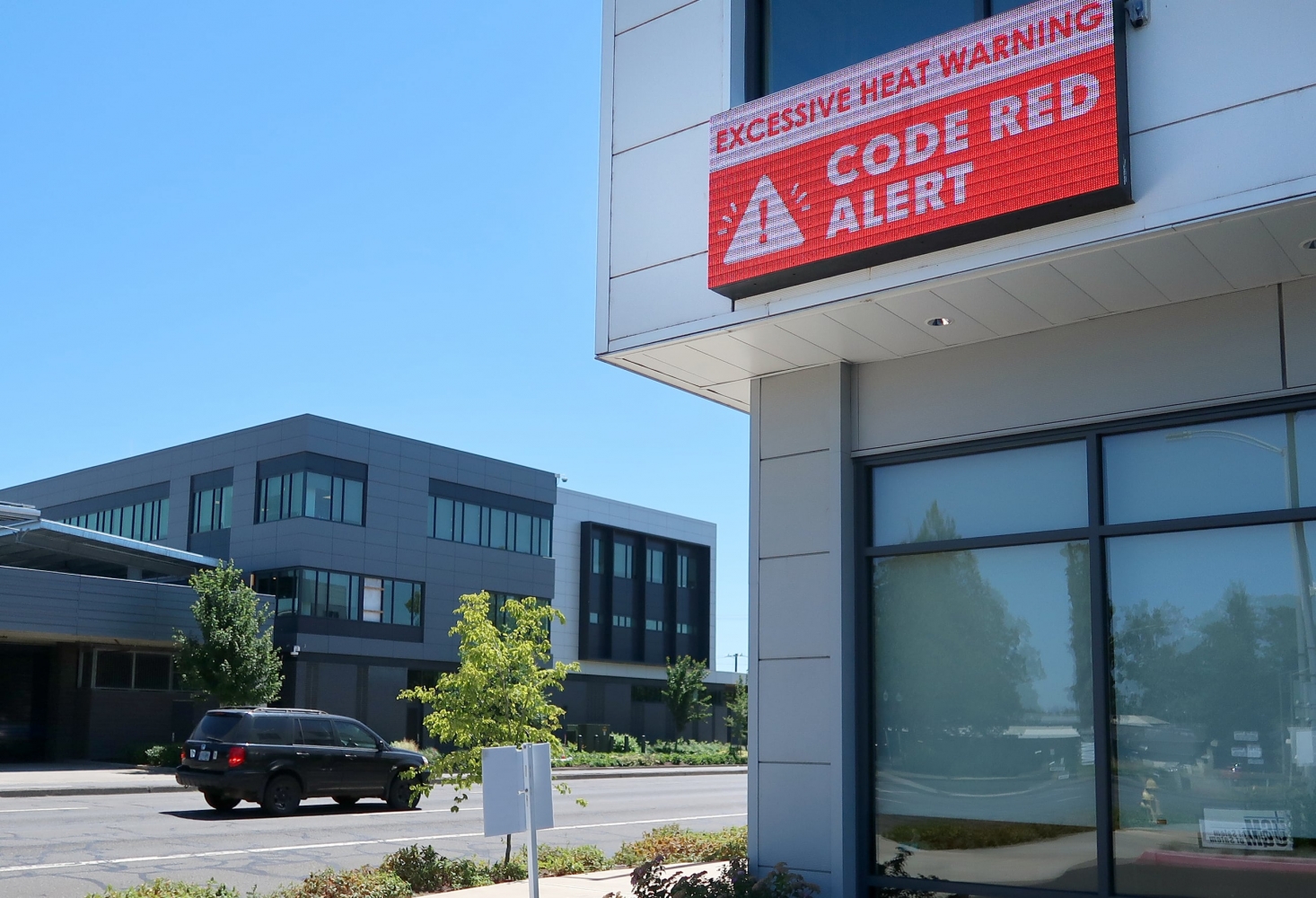
As climate change worsens, Oregon is enduring double the number of extreme heat days and triple the number of days where wildfire smoke is present, according to a study released this month by the Oregon Health Authority.

Combined, Oregon is experiencing quadruple the number of days with both extreme heat and smoke, compared to two decades ago. That’s contributing to an increase in emergency room visits due to heat-related illnesses, like heatstroke. It’s also increasing the number of heat-related deaths the state has recorded in the past twenty years.
But just as Juarez and her daughter found a hotter and smokier state than they expected when they moved to Oregon, they also learned first-hand about the state’s efforts to respond to a changing climate. These programs have helped keep many Oregonians comfortable in their home during hot and smoky days, the health authority report says, though more funding is needed to keep these programs going.
Oregon is getting hotter
The Oregon Health Authority’s Climate and Health report for 2025 gathers health trends related to climate impacts, like extreme heat and wildfire smoke and analyses how that is impacting Oregonians across the state.
The agency compared data in five-year chunks, starting with 2006 through 2010 and ending with 2021 through 2025.
The findings are stark:
- Oregon averaged 12 days of extreme heat per year in 2006 through 2010. That has doubled to 22 days from 2021 through 2025.
- Oregon averaged 11 days of wildfire smoke per year in 2006 through 2010. That has tripled to 33 days from 2021 through 2025.
- Wildfire smoke and extreme heat happened at the same time, on average, two days per year from 2006 through 2010. That quadrupled to nine days from 2021 through 2025.
Oregon Health Authority’s environmental public health manager Gabriela Goldfarb said the trends are “really eye-opening.”
“Both heat and smoke really can affect all of our organs,” she said. “It’s not just respiratory; it’s heart conditions, what they call cerebrovascular, so think strokes.”
The report also noted 2025 was the state’s third warmest year since record keeping began in 1895. Oregon usually experiences hotter days later in the summer, giving people more time to adapt as temperatures gradually climb. But early-season heat in June 2025 broke temperature records, which contributed to a spike in heat-related illnesses, the report says.
Overall, the state recorded nine heat-related deaths in 2025, reflecting a grim trend of higher deaths since 2021.
“Our big hope is that these numbers validate the need to take action,” Goldfarb said.
Some of the areas most impacted by extreme weather and experiencing the hottest temperatures are Southern, Central and Eastern Oregon, with rural areas hit the hardest.
Ben Brint, the senior climate program director with the nonprofit Oregon Environmental Council, said the results are painful to see, but he’s not surprised. The impacts of climate change have recently been in “full-on acceleration mode,” he said.
“We really need an all-hands-on-deck approach to solve these problems. It’s not just one agency; it’s the entire public health system. It’s the nine federally recognized tribes in Oregon, its local, county health authorities, community-based organizations, and officials,” Brint said. “We all need to be working in lockstep to try to both adapt to, but ultimately mitigate these challenges.”
Extreme weather contributing to climate anxiety in youths
According to the state climate and health report, every year since 2000, except 2011, Oregon has recorded warmer temperatures than historical averages, and many of Oregon’s hottest years have occurred within the past two decades.
Data show the state’s average temperatures have increased by about 2.4 degrees Fahrenheit since 1970.
A recent United Nations report says the world is on track for even hotter temperatures. The planet’s average temperature is estimated to climb by 5 degrees Fahrenheit this century. That’s nearly double the increase countries promised to hold global temperatures to in an international agreement.

Scientists have warned for decades that the continued burning of fossil fuels creates greenhouse gases that cause climate change. While Oregon is working to reduce its overall emissions, recent reports show the state is not on track to achieve its own goals.
Oregon has also lost millions of dollars in federal funding aimed at climate action, and lawmakers have yet to figure out how to fill those gaps.
That’s stirring anxiety about climate change among Oregon’s youth.
In a statewide health survey of 11th graders, 71% said they are experiencing stress about the future due to climate change, and nearly 40% said these feelings negatively affected their lives, the Oregon Health Authority reported.
“It’s not a wonder that it’s on their minds,” Goldfarb said. “I think it’s on the minds of a lot of people, and so it’s showing we can’t really shield our youth from that.”
Community action is helping
Though Oregon may not be on track to reduce its overall carbon emissions by mid-century, some programs aimed at climate action are helping residents adapt to a warmer climate.
Kelly Juarez was able to get a new heat pump unit installed in her home after learning about a home modification program through nonprofit Seeds for the Sol.
It offers upgrades like heat pumps for families like hers. That not only helped her and her daughter stay comfortable in their home, it also reduced her energy bills, she said.
But she’s still cautious of a warmer climate.
“I may live in Oregon now, but I absolutely don’t feel ‘safe’ from potential fire,” she said. “Heat and fire threaten every community, here is the worst thought about it — it’s becoming the new normal.”
For the state government, adapting to Oregon’s “new normal” can mean aligning policies aimed at protecting people with the goal of reducing greenhouse gases. Installing an energy-efficient heat pump instead of a less efficient air conditioner helps reduce strain on the power grid, and also reduces the amount of energy used by the homeowner, in turn, reducing carbon emissions and lowering energy bills.
Multiple state agencies have programs to support this transition.

OHA’s Healthy Home Grant provides funding to local organizations to help low-income Oregonians upgrade to energy-efficient appliances and weatherize homes. So far, the program has awarded nearly $25 million in competitive grants to 34 organizations. Between 2024 and 2025, the program served 481 households across 25 counties.
The Oregon Department of Energy also offers several programs for homeowners, renters and property owners to install heat pumps. Over the years, these programs have been so popular they’ve exhausted the available funding.
As the climate continues to get hotter, Oregon Environmental Council’s Brint said there is a need for a call to action. Now is the time to fund programs that work and respond with urgency, he said.
“We have existing programs in place that we just need to continue to fund and support and not walk away from, especially in this federal moment and an international crisis,” he said. “Oregon can lead the way and can continue to do what it’s been doing in that regard.”
News Source : https://www.opb.org/article/2026/10/28/oregon-extreme-weather-climate-change-heat/
Other Related News

10/28/2026
Miguel Grau Seminario El Caballero de los Mares 27 de julio de 1834 8 de octubre de 18...

10/28/2026
Prosecutors called the Halloween night killing a calculated execution inside the Vancouver...
10/28/2026
Basketball registration is now open for the 2027 season httpswwwgreat-futuresorgbasketbal...

10/28/2026
A federal judge rejected a Trump administration request to stop California from processing...

Follow

Download Our App


Copyright 2022 © EPUERTO. All Rights Reserved