

Published on: 10/22/2026
This news was posted by Oregon Today News


Description
Oregon’s largest electric utility says it will need to almost double the amount of renewable energy it delivers to meet the state’s emission reduction goals by the end of the decade.
But Portland General Electric says federal policy rollbacks, transmission constraints and rising development costs are impeding its effort to reach Oregon’s targets. The company is asking state regulators for flexibility as it attempts to balance Oregon’s climate mandate while keeping rates low and the electrical grid reliable.

PGE laid out its efforts to meet state emission mandates in its Clean Energy Plan, which it submitted this month to the Oregon Public Utility Commission.
The document offers PGE’s update on its efforts to comply with Oregon’s House Bill 2021, which requires electric utilities to eliminate greenhouse gas emissions associated with the electricity they provide.
Emissions from these companies must be 80% below 2010-2012 levels by the year 2030, under the first benchmark required by the legislation. They face another benchmark in 2035, and finally must fully eliminate greenhouse gas emissions by 2040.
But PGE is asking the Oregon Public Utility Commission, the regulatory entity that sets utility rates, for flexibility. The company says it can meet those emission goals or keep rates down, but may not be able to do both.
It presented two plans it could follow to balance affordable rates and reliable electricity as it navigates what it calls “considerable headwinds.”
Some of those headwinds can be traced to the Trump administration. President Donald Trump has slowed and canceled federal approval of wind and other renewable energy projects, and pushed Congress to roll back tax credits to support renewable energy.
“There’s been significant changes in the federal policy environment, both the potential availability and durability of federal tax credits that historically have lowered the cost of renewable energy on our system for customers anywhere from 20% to 50% depending upon the project,” PGE’s vice president of policy and sustainability Kristen Sheeran said.
That, paired with supply chain issues, has complicated how and when utilities like PGE can add more renewable energy to their systems.
There are also constraints on transmission, Sheeran said.
The region is not building new transmission lines fast enough to move renewable electricity from where it’s generated to the homes and businesses that use it, she said, adding that permitting and energy site approvals are also slowing the shift to renewable energy.
And it’s all happening when there is a significant increase in demand for more renewable energy. That demand is driven both by data centers, and by households and businesses turning to “electrification,” which is the shift to using electric and energy-efficient appliances and electric cars. It’s becoming more difficult to determine how much renewable energy utilities need to procure to ensure there is enough energy while also reducing emissions.
With federal policy uncertain, and rising demand for electricity difficult to forecast, PGE is asking the Public Utility Commission to allow it to keep its options open as it works to reduce emissions.
“We’re showing the commission a range of alternative portfolios, including one where we make strong, continuous progress toward that target,” she said. “But if we’re not able to procure as much energy as we’re ideally shooting for, would result in a lower total level of emissions reduction by 2030.”
‘No silver bullet’
When the state Legislature passed Oregon’s landmark climate law, House Bill 2021 was hailed as an ambitious climate policy. Many saw it as a signal that Oregon was moving toward an electric future, and away from the continued burning of fossil fuels that was making climate change worse.
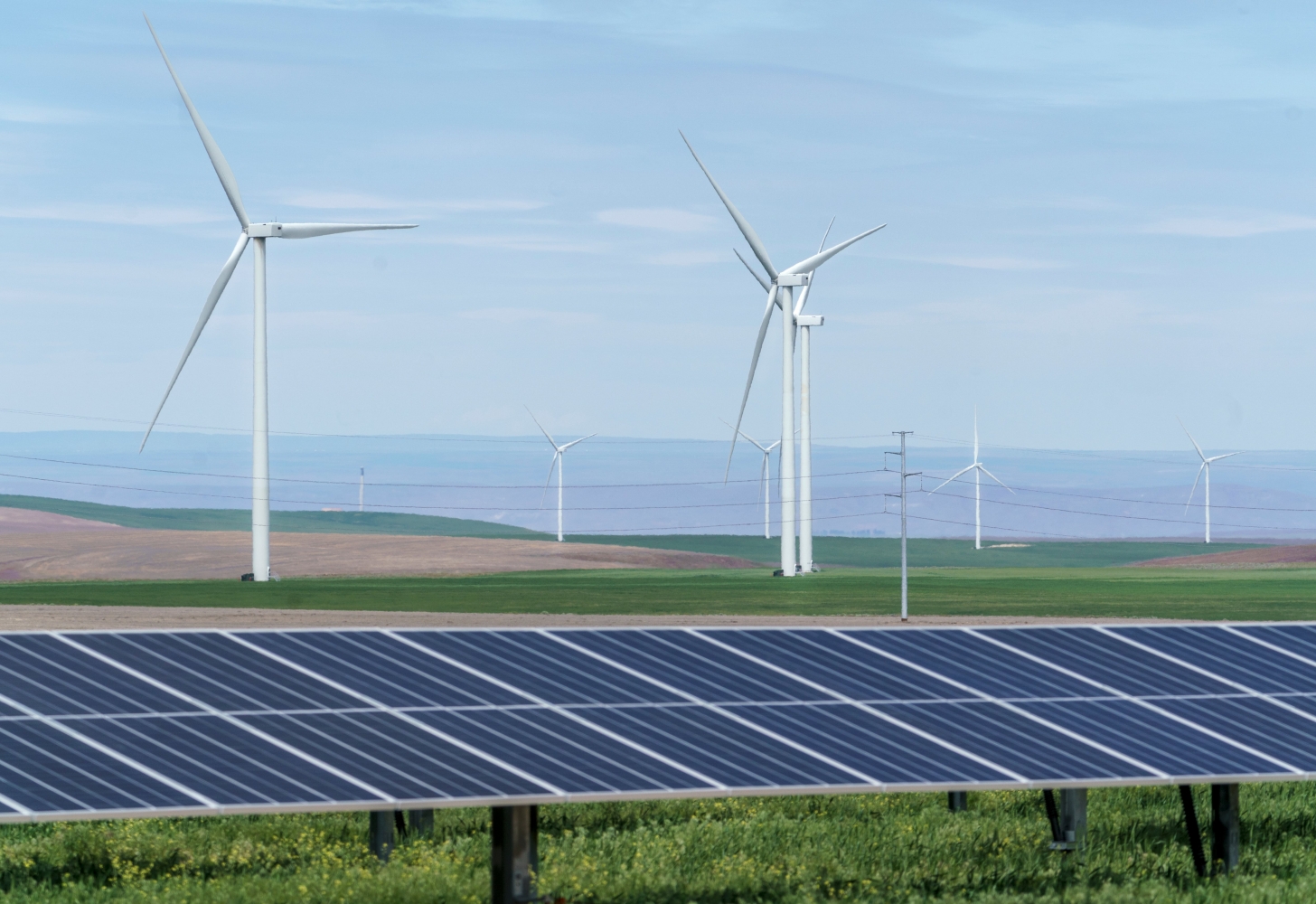
Since the law passed, Portland General Electric has added about 3 gigawatts of renewable energy projects, which now make up 37% of its portfolio, according to its Clean Energy Plan. Earlier this year, PGE announced it plans to add more than 1 gigawatt of renewable energy and battery storage capacity to its system by 2028.
That has so far helped the company get its emissions to 25% below its 2010-2012 levels.
About half of the power served to its nearly 960,000 customers in 2025 was from non-carbon-emitting sources, the company said.
But it’s still far from meeting the upcoming 2030 benchmark, and the climbing demand for energy as well as a lack of available renewable energy projects in the region are making it difficult to meet those goals, the company said.
Sheeran said PGE’s Clean Energy Plan presents two scenarios — one that would meet the state’s 2030 benchmark but might result in higher rates, and another that would keep rates down but fall short of the state’s climate goals.
Under the Preferred Portfolio, PGE would need to add nearly 7 gigawatts of renewable energy by 2030 to meet the 80% emissions reduction target. By 2032, the company would need to add 2 more gigawatts, for a total of 9 gigawatts, to stay on track.
But following this plan will make it hard for PGE to balance the rising costs of building out new renewables while ensuring grid reliability, the company said.
Under the Continued Progress Portfolio, the company says, it could reduce emissions by 60% by 2030 and 70% by 2035 — slower progress than the state has asked for. But this would also ensure customer affordability. This plan would require the company to add about 3.4 gigawatts of renewable energy by 2030, and up to a total of 5 gigawatts by 2032.
That would still be a significant increase in new generation for PGE, which currently owns about 3.5 GW of electricity generation. That’s about 56% of the total power it sells to its customers. It buys the rest of its power through long-term contracts and on wholesale energy markets.
“There’s no silver bullet here,” Sheeran said. “There’s no one resource or one project that’s going to fill that need and allow us to reduce emissions.”
The plans represent what the company has control over and what it can do between now and 2030, she said. But then there’s the federal policy environment, how quickly projects can get built and hooked onto the grid, and how siting and permitting decisions at local, state and federal levels change.
Charlotte Shuff, Oregon Citizens’ Utility Board communications and outreach director, said PGE’s plans reflect “a speed bump, not a roadblock.”
Shuff said when HB 2021 passed, no one could have known the boom in data centers across the state paired with federal funding rollbacks would impact the renewable energy industry. This problem is not unique to just PGE, she said.
“We’ve already seen a lot of things change in the last five years alone, and we expect to see a lot of changes in the next 14 years,” she said. “While we do need to make sure that we are doing everything we can to ensure that our utilities are meeting these benchmarks, we’ve got a long path for clean energy, and they still have another 14 years to get back on track and adapt to the challenges.”
While PGE may not meet its 2030 goal, Shuff said the 2040 goal is most important.
News Source : https://www.opb.org/article/2026/10/22/portland-oregon-general-electric-utilities-energy-climate/
Other Related News

10/22/2026
Michael Gray who starred on the 1970s TV show Shazam and appeared on The Brady Bunch has d...
10/22/2026
The men are home after weeks in ICE custody as Washington lawmakers continue demanding ans...
10/22/2026
Bend-La Pine Schools has asked families and staff to share feedback on returning students ...
10/22/2026
Clackamas County commissioners approved a 120-day moratorium on data center development af...

Follow

Download Our App


Copyright 2022 © EPUERTO. All Rights Reserved