


Published on: 11/20/2026
This news was posted by Oregon Today News


Description
Developers want to build a new high-voltage transmission line in a place you might not expect: under the Columbia River.
They say it will help meet the Northwest’s energy needs. However, many people living along the route are raising concerns about what the project could mean for the river.
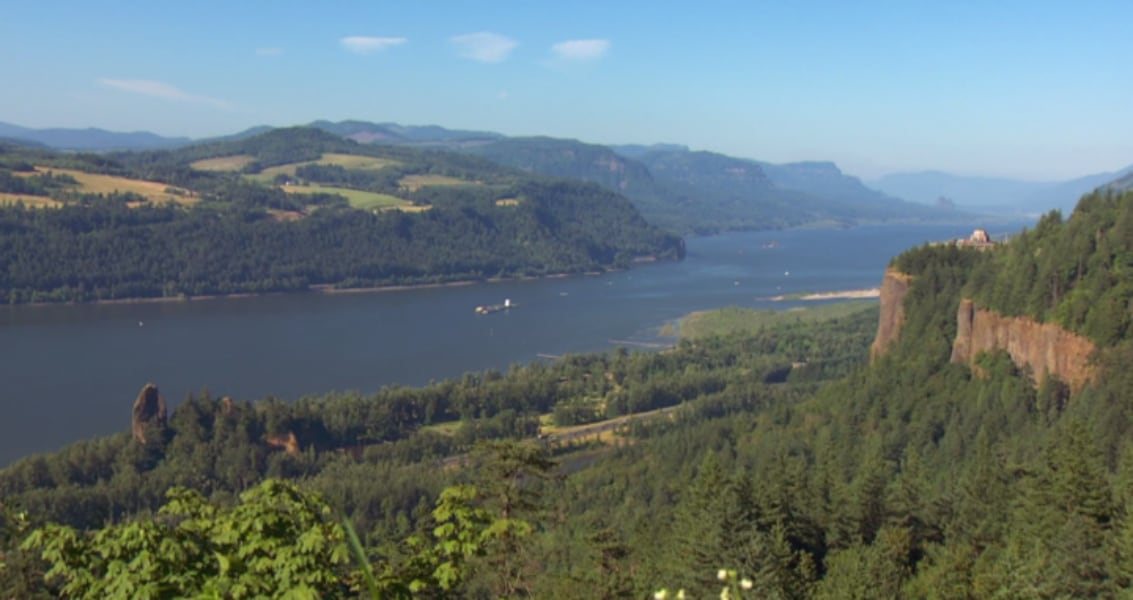
Washington’s Energy Facility Site Evaluation Council, or EFSEC, hosted meetings in Clark, Skamania and Klickitat counties this week, following complaints that the public hadn’t had enough notice for hearings on the line last year.
The proposed project
If approved, the Cascade Renewable Transmission line would stretch roughly 100 miles. It would dip into the Columbia River at The Dalles and run all the way to Portland. The line would briefly pop onshore for about 7.5 miles in Skamania County, Washington, to bypass the Bonneville Dam.
It would include two power cables, each roughly 6 inches in diameter, bundled with a fiber-optic cable. A hydroplow would create a 2-foot trench in the river sediment, which would then settle back into place, according to the developers. The cables would be buried 10 feet under the sediment.

“ I’ll just be transparent on this: is that to the extent there would be any impact, it would be in the first foot of the sediment because that’s benthic habitat — the little critters that the fish feed on,” said Chris Hocker, a representative for the Cascade Transmission Line.
Around 2.4 miles of the cables near The Dalles would be encased in “concrete mattress” because the area is rocky with no sediment. Developers plan to do further geotechnical studies in some places along the route, Hocker said.
The trenches would mostly be built outside of navigation channels. Developers expect the project to take two winter seasons, one above Bonneville Dam and one below. Work would happen during months when salmon aren’t spawning or migrating.
“So one way or the other, some form of new transmission, whether it’s overhead or what we propose, will be needed,” Hocker said. “And one way or the other, eventually it will probably be built.”
Since its initial application about a year ago, new technology has allowed the transmission capacity to increase from 1,100 megawatts to 1,320 megawatts, Hocker said. That would power roughly 800,000 homes.
Concerns along the route
However, some people worry the transmission line would end up carrying energy to large users, like data centers.
“ If this transmission line is approved, it will set a dangerous precedent, turning this river into a power corridor,” said Kristy Podruchny, who lives in Skamania County.
Some of the main concerns at a Skamania County meeting hosted this week by EFSEC were related to the health of the river’s ecosystem — and what that would mean for fish.

“We ask so much of the Columbia River already,” said Mary Rapar, who lives in Stevenson.
People worried the underwater transmission line could increase temperatures in an already warming river. If the water is too hot, salmon could suffer.
Concerns were also raised about how the electromagnetic field, or EMF, from the transmission line could affect fish. Trade groups said converting the power from an alternating current to a direct current would remove the risk of EMF issues affecting fish.
Candice Jimenez, chair of the Portland Harbor Community Coalition board and a citizen of the Confederated Tribes of the Warm Springs, said she worried about the Portland Harbor superfund site cleanup, where the proposed line would end.
“ Communities working towards a cleaner river should not inherit additional exposures or clean up costs into the future,” Jimenez said.
She said she was also concerned about the line being built in the Cascadia subduction zone.
Gabe Sheoships, a member of the Confederated Tribes of the Umatilla Indian Reservation and the executive director of Friends of the Columbia Gorge, said he’s “ thinking a lot about native fish in the area: our salmon, our Pacific lamprey, our steelhead, our freshwater mussels, our macro invertebrates.”
He raised concerns that there hadn’t been enough independently reviewed studies “to back your words up.”
At the same time, Sheoships said he supported green jobs and fair wages. But he said it isn’t the right time or place for the project.
“ I would say respectfully today to the developer, I would encourage you to kind of back away, cut your losses now,” Sheoships said.
Building safely
However, potential construction crews said they could safely build the transmission line.
Ironworker Tyler Smith, who is also a trustee of the Columbia Pacific Building and Construction Trades Council, said the Northwest can’t afford to fall behind on grid modernization. The work could be done with people’s concerns in mind.
“ I am a father. I live in the Northwest. I am concerned about the future, climate change and environmental quality. I do not want folks to think that we want to haphazardly build these projects,” Smith said. “I care about the environment, and I believe that this project will help us reach the point of carbon neutrality.”
Underwater cables could also help prevent some wildfires, which can be caused by downed transmission lines.
“ The past several years, the Pacific Northwest has experienced growing number of catastrophic wildfire events. This system will greatly reduce the risk simply due to the line being submerged,” said Randall Friesen, the executive director of the Columbia Pacific Building and Construction Trades Council.
It would also help energy get to where it’s most needed, said Nate Stokes, the assistant business manager of the International Union of Operating Engineers Local 701.
“ I have 300 workers building windmills and solar farms to create clean energy. There’s a bottleneck right now to get that to where it needs to go,” he said.
The project is midway through the permitting process, Hocker said. It will need multiple approvals from Washington state, Oregon and the U.S. Army Corps of Engineers.
Courtney Flatt is a reporter with Northwest Public Broadcasting. This story comes to you from the Northwest News Network, a collaboration between public media organizations in Oregon and Washington.
It is part of OPB’s broader effort to ensure that everyone in our region has access to quality journalism that informs, entertains and enriches their lives. To learn more, visit our journalism partnerships page.
News Source : https://www.opb.org/article/2026/11/20/proposed-transmission-line-under-columbia-river-raises-concerns/
Other Related News
11/20/2026
Former President Barack Obama had some words of advice to newly elected Democrats this wee...
11/20/2026
This Thanksgiving Dont Just Give Thanks Give Kindness and Build Peace Along the Way Lets m...
11/20/2026
To borrow a phrase from Obi-Wan Kenobi there was a disturbance in the Force on September 1...
11/20/2026
The findings of the workplace safety investigation are part of a larger effort to uncover ...
11/20/2026
A necropsy showed the hat Fiona the hippo ate was so far into her intestine that supportiv...

Follow

Download Our App


Copyright 2022 © EPUERTO. All Rights Reserved