

Published on: 07/09/2026
This news was posted by Oregon Today News


Description

A new round of bombing has begun in the Middle East. More than four months after the beginning of the U.S.-Israeli war with Iran, one thing is clear: Some countries are not going back to fossil fuel imports in the same way they relied on them in the past.
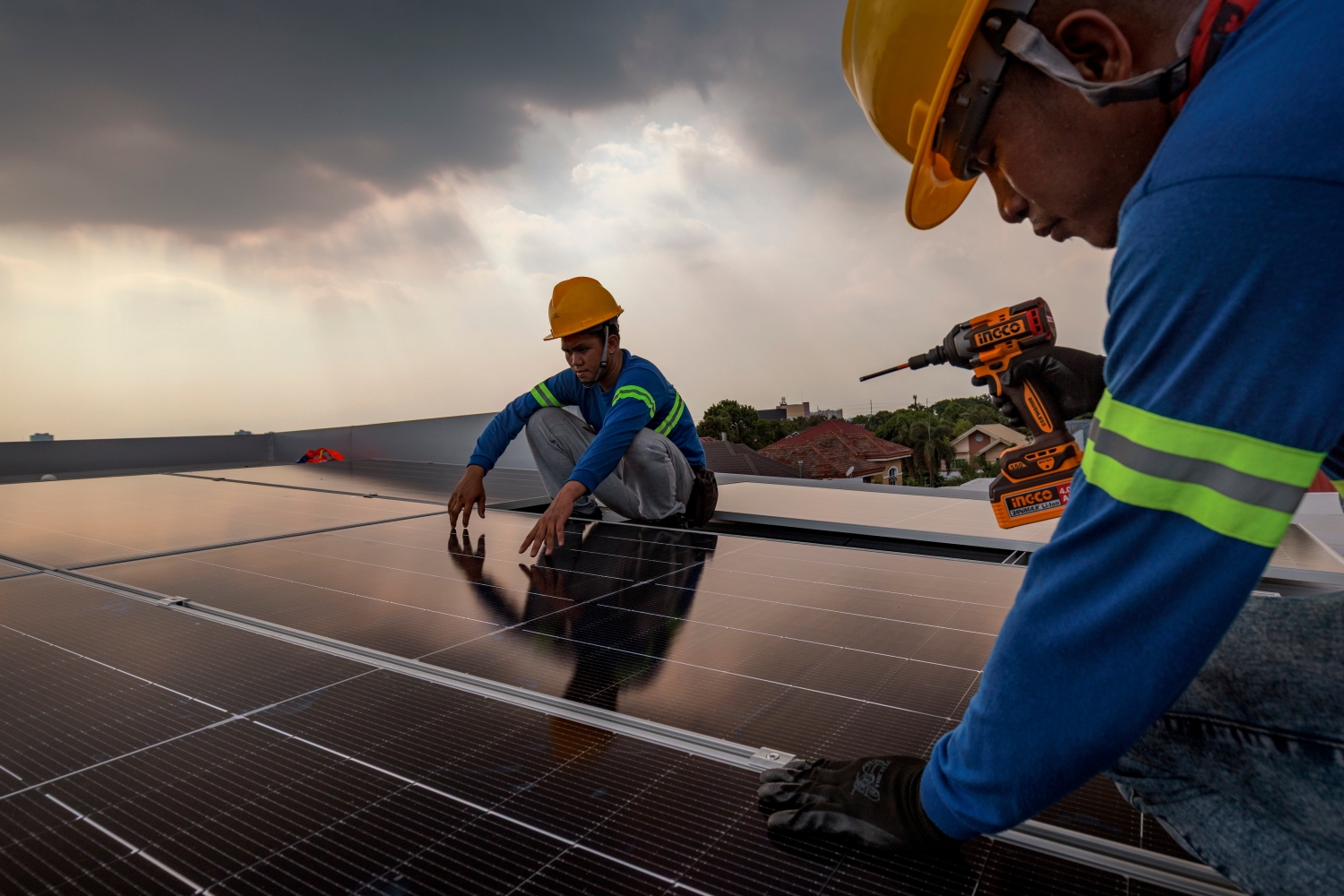
Instead, countries across Asia and Africa are speeding up the adoption of solar, batteries and electric vehicles in a deliberate strategy to decrease their dependence on imported natural gas and oil.
The war has underscored the precarity of oil and natural gas supplies and prices. The effective closure of the Strait of Hormuz cut off more than a fifth of liquified natural gas, or LNG supplies, and prices haven’t been the same since. European and Asian prices for natural gas, which is mainly used for electricity and heating, are up more than 50% from when the war began. Oil prices climbed Wednesday after President Trump said the ceasefire was over.
Countries are forging a new energy path with renewable and electric vehicle technologies sourced from China. In March, Chinese exports of solar panels were up more than 80% compared to last year, according to energy think tank Ember. China exported more than 2 million electric passenger vehicles between January and May, with nearly half of those exports occurring in April and May, according to a recent analysis note from SIA Energy, an oil and gas consultancy.
“If China’s car industry were handing out a salesman of the year award for 2026, President Trump would be a leading contender,” the SIA Energy note says.
Last year, the global use of electric vehicles meant the world avoided consuming around 1.7 million barrels of oil per day, according to the International Energy Agency. That’s more than the daily crude oil production of Nigeria. Burning fossil fuels is the primary driver of global warming, so climate scientists see these energy transition technologies that cut into fossil fuel demand as key climate solutions.
The ongoing conflict in the Middle East has been “an accelerator for the transition,” says Jan Rosenow, climate and energy professor at Oxford University. In an uncertain world, he says, many countries have found that investing in renewables and EVs give them energy security — and makes economic sense.
“And that’s not gonna go away,” Rosenow says.

Speeding up the transition
The fossil fuel industry has long framed natural gas as a “transition fuel” away from coal and oil. But the Iran war has underscored the riskiness of natural gas.
“The Gulf seemed like a safe space [for sourcing natural gas], and then this happened,” says Fareed Mohamedi, managing director at SIA Energy.
Asian natural gas prices shot up over 100% from pre-war levels at their peak in March, and in recent months countries like the Philippines and Tuvalu have faced war-triggered energy crises. Governments have been forced to close schools and offices, and ration fossil fuel supplies.
But imports of solar, batteries and EVs have been cushioning the blow. Pakistan’s investments in solar and batteries have allowed it to reduce oil and natural gas imports, saving the country billions of dollars, according to the nonprofit Centre for Energy and Clean Air.
Other countries, such as the Philippines, are following in Pakistan’s footsteps. The Philippines imported more than $400 million in solar panels from February to May, according to Chinese export data. That’s a 139% increase from a year ago, according to Ember.
Chinese solar and battery imports have changed the calculus for investments in global renewable projects, says Dele Kuti, global head of energy and infrastructure for Standard Bank, the largest bank in Africa. In 2025, Standard Bank’s financing for renewable energy power projects outpaced that for nonrenewable power projects by a ratio of 8 to 1.
“The Chinese crashed the market!” Kuti says. “We started looking at, when it comes to solar projects, it’s actually not bad from a cost perspective.”
The fact that the Iran war happened just four years after the energy crisis spurred by Russia’s invasion of Ukraine has laid bare the risks of relying on imported fossil fuels, says Kaushik Deb, who leads the India Team at the University of Chicago’s Energy Policy Institute. “What this crisis is doing is kind of creating the need for this energy transition to happen much faster,” Deb says.
“This is where the transformation to electric on the transportation side,” he says, “or increasing the share of renewables in the electricity grid is so, so, so central.”

More EVs equal less oil demand long term
In recent months, electric vehicle sales have risen around the world, driven largely by Chinese exports. Those new electric vehicles mean fewer people filling up with gasoline. That affects global oil demand, says Kingsmill Bond, analyst at Ember. Forty-five percent of global oil is used for road transportation, such as cars, motorcycles and trucks, according to the International Energy Agency (IEA).
Before the war in Iran, the IEA was expecting global oil demand to rise this year. But the disruptions caused by the closure of the Strait of Hormuz led them to downgrade expectations to a decline in oil demand for this year.
The Trump administration continues to double down on fossil fuels. While new EV sales are up in the rest of the world, they have slumped in the U.S. compared to last year, according to Cox Automotive. The abrupt removal of federal tax credits for EV buyers, a policy change Trump pushed for, is a major factor.
For the foreseeable future, the world will still need oil and natural gas for things such as fertilizer, plastics and jet fuel, Mohamedi says. “But demand for oil and diesel is falling like a brick,” he says.
Because of renewables and EVs, Mohamedi says, “Countries can say, ‘I don’t need this insecurity.’”
News Source : https://www.opb.org/article/2026/07/09/the-iran-war-is-pushing-some-countries-to-move-away-from-oil-faster/
Other Related News

07/09/2026
Broadway star Frankie Grande suffered a concussion and facial injuries last week after a p...
07/09/2026
WASHINGTON President Donald Trump said Wednesday he plans to ask the US Supreme Court to ...
07/09/2026
A 49-year-old woman in Japan has been arrested for allegedly sewing her roommates lips tog...
07/09/2026
First responders found a body in the Willamette River in Northeast Portland early Thursday...
07/09/2026
A man has been charged with arson after video showed him inside a restaurant with a flamin...

Follow

Download Our App


Copyright 2022 © EPUERTO. All Rights Reserved