

Published on: 10/29/2026
This news was posted by Oregon Today News


Description
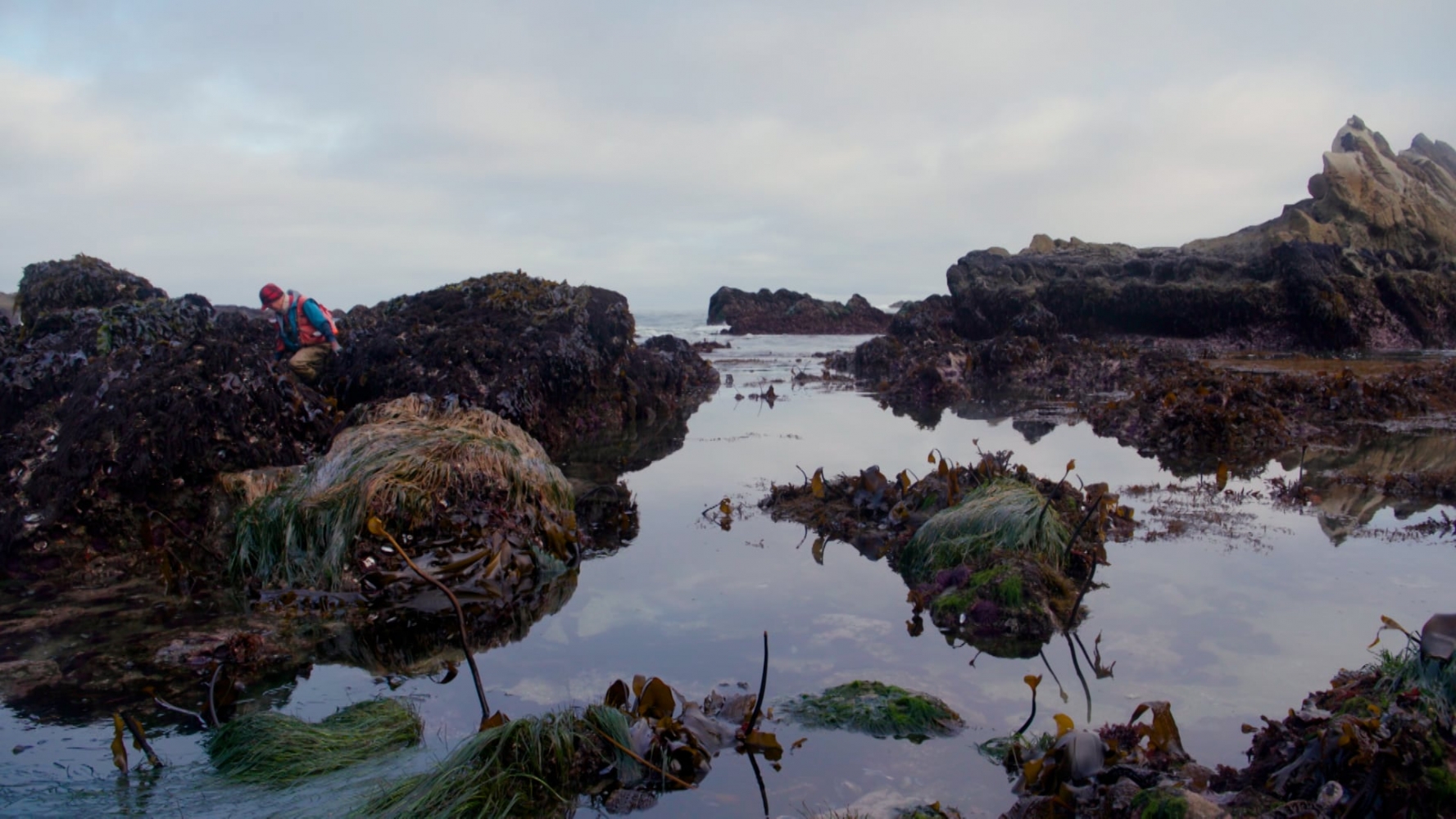
In the gray milky light of dawn on the Oregon coast, I scrambled down a brushy trail to the beach, following marine biologist Nancy Treneman on a search for one of the ocean’s most colorful and weird-looking creatures.
Our adventure was timed for the lowest tide to explore the tide pools at the rocky base of Chiefs Island, below the historic Cape Arago lighthouse near Coos Bay. Although I was familiar with the commonly known residents of the intertidal zone, like sea stars, anemones, mussels and barnacles, Nancy was going to show me tiny, carnivorous creatures much harder to spot: nudibranchs.
These sea slugs come in a kaleidoscope of colors and unexpected shapes that seem straight out of sci-fi. There are roughly 3,000 species worldwide, and Nancy has observed 69 species here in Oregon.
For more than 30 years, the low tide has pulled Nancy back to the tidepools of Cape Arago with the hope of finding nudibranchs.
So on a brisk morning last June, I joined Nancy and learned some surprising facts about these fascinating creatures while getting a firsthand glimpse into what has compelled her to search for them.
To find a nudibranch, think like a nudibranch
Nancy was decked out in heavy-duty chest waders, a plaid wool lugger hat and sun-faded orange utility vest, pockets stuffed with her waterproof notebook, flashlight, and empty gelato canisters that she uses for specimen dishes.
She didn’t walk in a straight line, but zigzagged like an eager off-leash dog, stopping to investigate whatever rock, puddle, or patch of seaweed that caught her attention.
Suddenly she dropped to her knees and pressed her face to a bed of wet kelp and eelgrass to peer under a rock.
“Nudi, where are you?” she called softly.
“Nobody’s home,” she said, rising again and heading to the next possibility.
Knee-deep in a saltwater pool, she scanned a slippery wall of barnacles, sea stars, muscles, and dangling ribbons of seaweed.

Her flashlight beam slid slowly over the rough texture of the rocks as she examined tiny clumps of what appeared to be miniature ferns with feathery fronds. These hydroid colonies were not the nudibranch, but rather the favorite food of a particular nudibranch. Looking for the prey to find the predator is the first trick to spotting nudibranchs, she said.
“Oh wow, how cool!” Nancy exclaimed.
Nancy pointed her fingertip into the water at a patch of swaying hydroids.
“There,” she said, holding her finger steady for me.
I was surprised when my eyes finally locked onto the nudibranch. It was smaller than her fingernail.
“This one, it’s really beautiful,” said Nancy. “It’s white and then the tips of the cerata are colored orange and they kind of glow in the dark.”
Indeed, it was translucent like a jellyfish, with shades of white that seemed to glow against the darker sealife clinging to the rocks. It was nothing like I expected, and yet everything I’d hoped.

Naked gills
Nudibranch (pronounced NOOD-ee-brank) comes from Latin roots meaning “naked gills.” To Nancy, they are all affectionately called “nudis.”
Nudibranchs get the name “naked gills” because they wear their gills on the outside.
And rather than having their gills near their mouths, some nudibranchs have theirs circling an opening that serves another purpose, Nancy explained.
“Their gill plume looks like a little flower coming out of their rear end, and the anus is in the middle of those gills, which is very odd because you’re pooing where you breathe. But hey, I’m not judging,” she said with a chuckle.

Colorful as jelly beans
Imagine an assortment of scattered jelly beans: cotton candy pinks and mango orange, lime green and root beer brown, with stripes and polka dots. Nudibranchs just might be the most psychedelically colored critters on the planet.
Their bright colors are not merely for style points, but rather a tricky way to make predators think the nudibranchs taste terrible or are even poisonous.
As crazy as their appearances look to us, they go unseen by the nudibranchs themselves. They have eye spots where they can sense light and dark, Nancy explained, “but it’s such a shame that they can’t see how beautiful they are.”
Instead, nudibranchs navigate largely by sensing chemicals in the water with hornlike appendages called rhinophores.
Some nudibranchs are smooth and oval-shaped, while others are covered in bumps, feathery plumes or fingerlike appendages called cerata.
“And some of them look so odd that you just can’t even figure out how evolution would produce that thing,” said Nancy. “Some of them you think, ‘Really? Where’s the head?’”

Sea slugs that steal
Despite their unusual appearances, nudibranchs share a surprising trait: they’re carnivores.
Certain species eat stinging animals such as hydroids and anemones, then transfer their prey’s stinging cells into their own bodies for their own defense.
“They keep those toxins in their body and those toxins kill the predator or they taste so bad that they’ll spit them out or whatever,” said Nancy. “It’s crazy!”
Even their reproduction has an artistic flair. Nudibranchs possess both male and female reproductive organs, and many deposit their eggs in delicate ribbons, spirals or rosettes that resemble underwater lace.
Sometimes the eggs are easier to spot than the nudibranchs themselves.

The tide returns, the cycle continues
After our hours of exploring tidepools, Nancy had led me from Chiefs Island all the way round Qochyax Island. The rising tide was about to cut us off from the mainland.
We’d waded across channels knee-deep on the way out, and on our return, we plunged up to our waist. I soon realized why Nancy had worn chest-waders for the adventure, while the knee-high boots I’d selected were soon swamped with icy ocean water.
As a researcher, Nancy has a special permit to collect nudibranchs, and this morning she had carefully scooped a couple of nudibranchs into her plastic gelato jars to take back to the nearby lab at the Oregon Institute of Marine Biology in Charleston.
She’ll use a specimen scope to get a closer look for identification, then return them early the next morning to the exact places where she found them.
She encourages visitors to explore tidepools with the same curiosity, but to leave the animals undisturbed, observing only with their eyes or cameras.
“It’s a joy. It’s a driven joy,” she said, taking a moment to look out at the ocean rolling in over the tidepools. “And when it comes to where I belong, it’s the Oregon coast, but especially Arago, because I’ve been coming here for most of my life. It still makes me choke up every time I come.”
Years ago, along this same stretch of the coast, a young Nancy encountered a hermit crab in a tide pool. A tiny encounter with the natural world that inspired a lifelong career and passion that has only deepened with every returning low tide.
“And I think what gets me is when I go out in that tidepool and I see those lovely nudibranchs, I just am amazed,” she said. “There they are, doing their thing for thousands of years, and now I’m part of that.”
News Source : https://www.opb.org/article/2026/10/29/sea-slugs-nudibranchs-oregon-coast/
Other Related News

10/29/2026
Food delivery app DoorDash could buy Instacart in a 17 billion purchase supercharging its ...
10/29/2026
Loading This winter is expected to be warmer and wetter as national weather agencies poi...
10/29/2026
Police in Florida arrested a mother after she allegedly left her four children ages 9 11 ...
10/29/2026
The small-ball Milwaukee Brewers playing in the smallest market in the majors are World Se...
10/29/2026
One of only three known Nanotyrannus fossils a rare dinosaur skeleton dubbed Jodi sold at ...

Follow

Download Our App


Copyright 2022 © EPUERTO. All Rights Reserved