

Published on: 02/03/2026
This news was posted by Oregon Today News


Description
Maureen Perry and her husband have lived in the same spot, nestled between a zigzag of dozens of homes in Gladstone, for a decade. But two years ago, they upgraded to a new manufactured home — one with better insulation and more efficient appliances.
“The home that I was in before was on this space, but they tore it down, took it away in a dumpster,” Perry said. “It was completely torn down. It was a 1966 home.”

The 60-year-old home had cold floors and walls, and her energy bills were slowly creeping up as utility rates increased, she said. For the Perrys, the home upgrade was about comfort, saving money and a more modern lifestyle.
But climate advocates and those in the energy sector say there’s much more at stake.
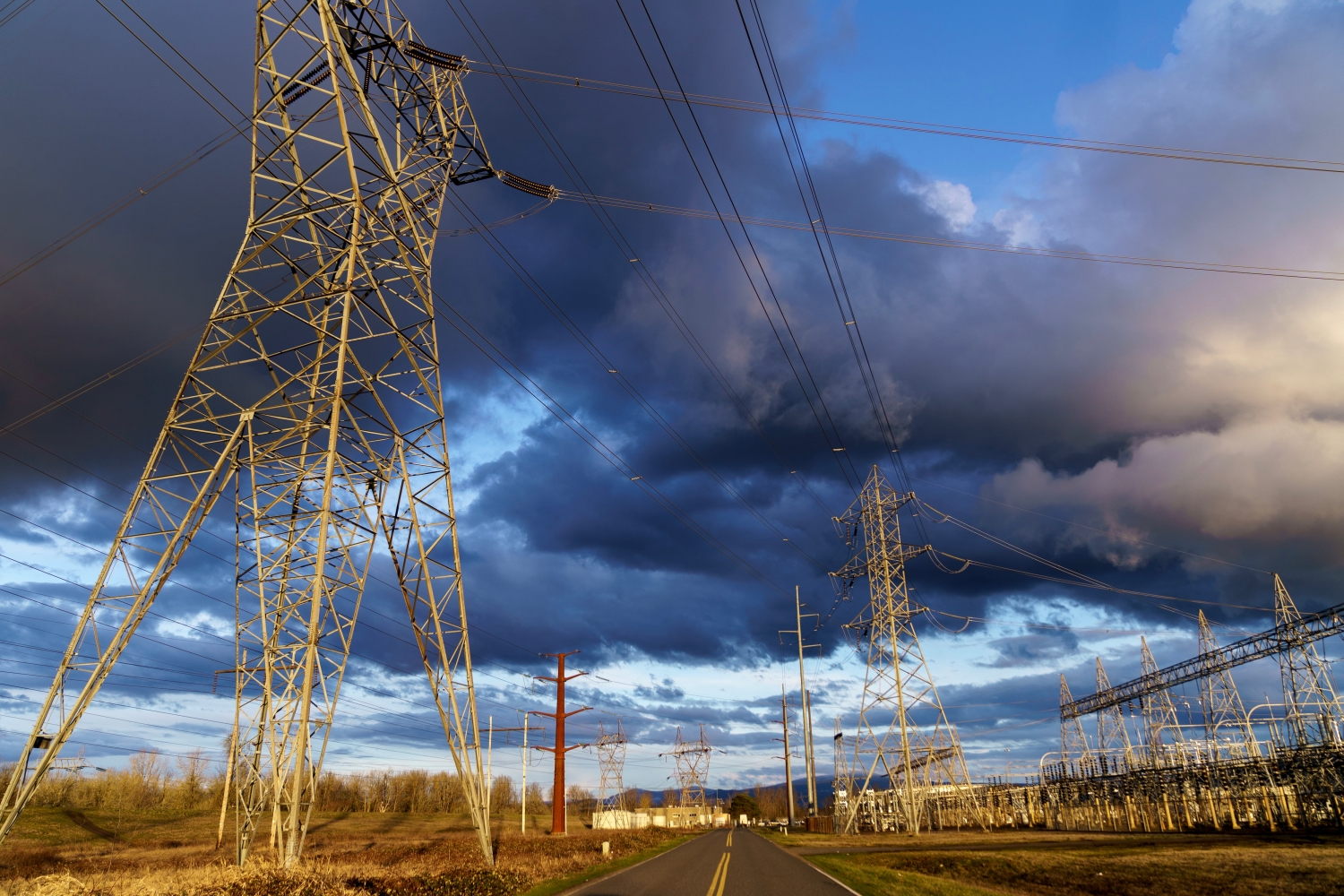
The Pacific Northwest’s electrical grid is strained by aging transmission lines and data centers that use enormous amounts of energy to power artificial intelligence, while green energy sources like wind and solar farms are slow to come online.
Oregon and Washington could potentially see rolling blackouts during extreme weather as soon as this year, according to a recent study. This is all happening at a time when the federal government has rescinded hundreds of millions of dollars previously allocated to the renewable energy transition, leaving little help for states to alleviate pressure on the power grid.
Lawmakers are pushing to break through bottlenecks in both Oregon and Washington.
But families like the Perrys are also part of a quieter solution that’s playing out across the region one home, one school and one business at a time. It’s an energy efficiency policy that Oregon has been pushing for decades.
“If we use less energy, we won’t have to invest so much in new power plants, new transmission lines,” Oregon Department of Energy director Janine Benner said.
A long history, and a new urgency

In 1980, President Jimmy Carter signed the Northwest Power Act to address regional power planning while protecting fish and wildlife impacted by hydropower or dams. The Northwest Power and Conservation Council, an interstate agency representing Oregon, Washington, Idaho and Montana, was created to ensure there is enough energy to meet demand and to help consumers save money.
At the time, people were getting more electric appliances for their homes while large industries like aluminum were driving the need for more energy, NWPCC Director of Power Planning Jennifer Light said. The region was over-invested in nuclear power plants and the cost to pay for those nuclear plants was significant, she said.
That’s why the Northwest Power Act was central to the idea of energy efficiency. It was cheaper for ratepayers if they could reduce their energy use so power companies didn’t have to invest in more nuclear plants, she said.
“That was foundational. That was very unique at that time. That is still very much core to how we think about things today,” Light said.
“If we can encourage consumers to buy these products that use just a little bit less than the alternative, adding that up over millions of households or millions of businesses creates this large amount of energy savings. And that’s really what energy efficiency is,” she said.
Helping the grid — and the people who rely on it

Two years ago, Perry found out about an Energy Trust of Oregon program that replaces older manufactured homes with newer, more energy-efficient homes. These types of homes lower energy bills without having to change the way they use energy in their home. She and three other households in the same community were chosen by the organization, she said.
Her new two-bedroom home was designed with wider doorways for her wheelchair, a walk-in shower, open access to her living room and what she likes to call her drive-in closet.
“Being able to get around in my own home has been a joy to me,” she said. “I’ve never had a brand-new home before.”
Her energy bills have decreased by about $15 a month — even though she’s still using her washer and dryer daily and watching “lots of television.”

Her new home has better insulation to lock in a comfortable indoor temperature, as well as better insulated windows.
Since 1978, efficiency efforts like that have saved enough energy to power eight cities the size of Seattle for a year, according to data from NWPCC. That amounts to about $5 billion in energy savings for consumers over the past five decades.
Efficiency measures have also helped avoid about 25.5 million metric tons of carbon emissions. That’s the equivalent of all the carbon captured by trees and other plants in the national forest lands in Oregon and Washington, according to NWPCC.
And there’s still more to go. By 2050, NWPCC estimates the region can reduce energy use enough that “efficiency” will have the same effect on the grid as a doubling of what Portland General Electric delivered to its customers in 2024.
Oregon’s top Energy Strategy priority
Last year, the Oregon Department of Energy released its first-ever Energy Strategy report. The report takes a deep dive into how Oregon can meet its ambitious climate goals, like requiring electric utilities to deliver carbon free electricity by 2040, while ensuring it’s supporting a reliable and affordable system. The first pathway it identifies for addressing the state’s energy goals: energy efficiency.
“Energy efficiency is the least cost, least risk” option, said Benner, the Oregon Department of Energy director.
The report identified opportunities to boost efficiency in existing and new residential and small businesses, large and commercial industries, and transportation.
But state funds are limited. And Oregon has lost millions of federal dollars aimed at increasing energy efficiency and building out more renewable energy projects under the Trump administration.
“The federal government has gone from being a wind in our sails to being a headwind, and that’s a bummer because we need their help right now as the state is facing these added challenges with increasing electricity loads and climate change and higher energy prices,” Benner said.
Oregon needs to fill gaps created by the federal government’s policy shift, Benner said.
A model for energy efficiency in Oregon
Since 2002, an Oregon nonprofit has helped save enough electricity to power 1 million homes for one year through its energy efficiency programs. That’s the equivalent of the energy produced at five natural gas plants.
And it’s preparing for its biggest lift yet.
Energy Trust of Oregon is funded by ratepayers through a surcharge on utility bills labeled “public purpose charge.” That small surcharge brings in hundreds of millions of dollars for energy efficiency and renewable energy programs.
The nonprofit’s 2025 budget was about $350 million, Energy Trust’s executive director Michael Colgrove said.
Over the next five years, Colgrove expects Energy Trust’s budget to increase to about $500 million, as allocations from utility bill fees shift.
The Energy Trust’s budgets are lofty, but for people who adopt energy efficient lifestyles the results are much more tangible, Colgrove said.
“They no longer have holes in the floors of their home. Their homes aren’t drafty and leaky. There’s not mold and mildew that they have to figure out how to deal with or their children aren’t suffering as many asthmatic attacks as they used to be,” he said. “That’s impact that goes well beyond the savings on the utility bills.”
Through this program, Energy Trust has delivered 216 energy efficient manufactured homes since 2022 and is hoping to deliver an additional 110 homes this year. Perry’s was one of those.
But getting to these homes and achieving more energy efficiency in other spaces will be tough, Colgrove said, and older homes are the hardest to retrofit for energy efficiency.
People and businesses may not see the value of investing in efficiency after a lifetime of doing things a different way, he added.
“The fact of the matter is there’s still a lot to be done,” he said.
Other challenges include upfront costs of appliances like heat pumps or other efficient appliances, which many people cannot afford. Rental properties are also a challenge for efficiency advocates, since renters cannot make changes to their homes without the owners’ permission.

Addressing these challenges requires a different approach, Colgrove said. For Energy Trust, that includes partnering with community-based organizations that have built relationships with those who need the most help. Other times, the nonprofit has provided larger incentives to help pay to weatherize and improve older homes and buildings.
Those incentives got the attention of Hillsboro School District’s resource conservation manager, Mia Hocking. Liberty, which was built in 2003, is one of the largest schools in the Hillsboro school district, spanning nearly 300,000 square feet. It recently underwent significant energy efficiency upgrades after the district found it was responsible for higher than normal energy bills, Hocking said. Despite being one of the newer schools in the district, its control system was nearing its “end of life,” she said, meaning it wasn’t working as efficiently as it did before.
With a $636,000 incentive through Energy Trust, the school did not have to ask voters to pass a school bond or wait years for the district to allocate maintenance funds. Liberty was able to upgrade its main control system and install new energy-efficient boilers. That change helped the school reduce its boilers from five to four and cut its energy use by almost a third.
The school expects to save about $140,000 annually, Hocking said.
Liberty has also worked with Energy Trust to upgrade the stadium’s lighting to LEDs and install a solar array that powers its sustainable agricultural and woodshop building.
Without the help of Energy Trust, Hocking said, none of the upgrades would have been possible.
The school still has much more work to do, Hocking said, and the maintenance for these systems is “constant.”

“Liberty High School has a lot of windows and some of the windows need to be replaced,” she said. “It’s just when you think that, ‘Oh, yeah, I did that piece and I did that piece. Oh, now we’ve got to go look at something else,’ but those are the big components that we’re looking into in the near future.”
And with a focus on efficiency, that future could mean more money for the school district, more comfortable classrooms for students, and less strain on the electrical grid — all at the same time.
News Source : https://www.opb.org/article/2026/02/03/oregon-energy-climate-green-power/
Other Related News

02/03/2026
The country star will return to the road with a 33-date North American tour
02/03/2026
The National Weather Service issued a dense fog advisory at 738 am on Tuesday in effect un...
02/03/2026
A 21-year-old Portland man is accused of setting a parked car on fire in an alleged fit of...
02/03/2026
Want more Olympics updates Get our behind-the-scenes newsletter for what its like to be at...
02/03/2026
The release of millions of pages of Epstein files Friday has raised more questions than it...

Follow

Download Our App


Copyright 2022 © EPUERTO. All Rights Reserved