

Published on: 12/24/2025
This news was posted by Oregon Today News


Description
Editor’s note: Those identified by first name only in this story asked OPB for anonymity so they can continue their outreach to immigrants without jeopardizing those individuals’ safety.

Shirley and Jasmine pull their car into an apartment complex to make the Blueberry family’s weekly delivery.
A young boy — probably two or three years old — toddles out the door of an apartment a few units down. He runs up to greet a man stepping out of a car that just pulled up. The man scoops the boy up and wraps him in a hug.
Several neighbors peek out of their blinds.
This is Hillsboro, Oregon, in the year 2025. For Shirley and Jasmine, and the people they serve, it’s an era of code names, secretive deliveries, encrypted messages, and concerns about government surveillance.
According to the Portland Immigrant Rights Coalition, in October and November, immigration officials arrested at least 265 Oregonians in Washington County, the state’s most diverse county. In the county seat of Hillsboro, those arrests have translated into fear.
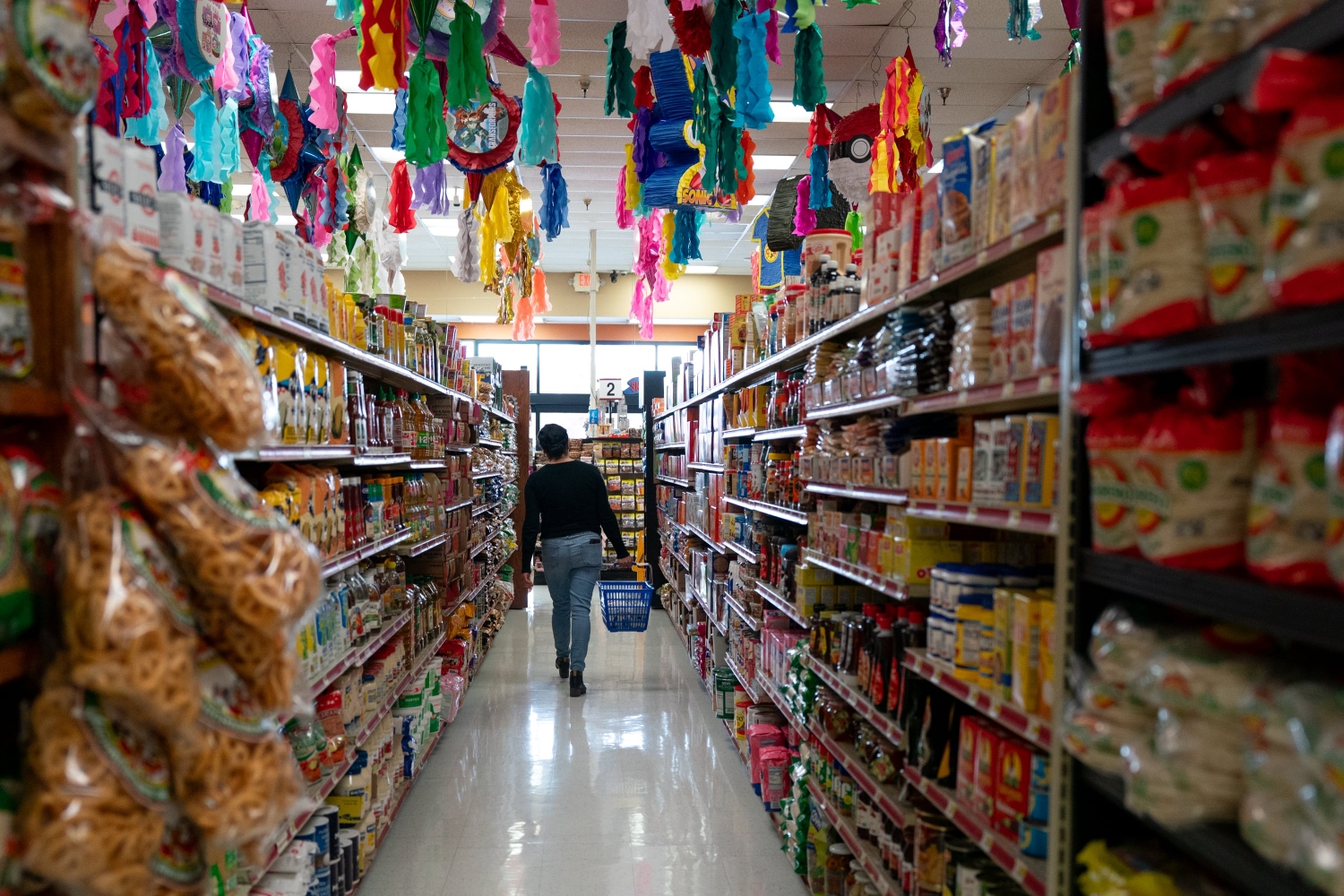
The Hillsboro School District has seen a drop in attendance. Local Latino-owned businesses are void of customers. People have stopped going to work, to the doctor, even to get groceries.
When he was elected last year, Donald Trump promised to deport a million people in the first year of his second term. On a quest to fulfill that promise, immigration agents have fanned out in cities across America, arresting thousands of residents they say are here illegally. They’ve also asked citizens to turn their undocumented immigrant neighbors in to authorities.
Jasmine and Shirley are part of an underground group that has emerged to bring groceries and other essentials to immigrant families afraid to go out because of their citizenship status. Altogether, the volunteers bring food, diapers, laundry soap, toilet paper, shampoo and other essentials to about 60 families each week.

On this day, they’re lugging a large box of food, soap, bleach and water to the front door of the Blueberry family’s apartment.
They say a quick hello to the woman who opens the door. She thanks them and they’re off.
“We don’t want to draw attention to the house that we’re dropping things off — or to ourselves,” Jasmine said. “We don’t linger. We don’t have a conversation with them.”
Later, though, they’ll message the family to make sure they have everything they need.
A remote response
Even before the increased immigration enforcement began, Shirley had a feeling it would hit her hometown hard. Hillsboro — about 20 miles west of the U.S. Immigration and Customs Enforcement facility in Portland — is known for its large Hispanic population, which includes Shirley’s family.
In October, the Department of Homeland Security began what Border Patrol Chief Michael Banks called “The Portland Sweep” — and Shirley’s prediction came true. Since then, more than 600 immigrants have been detained in the metro area, with nearly half of those arrests in Washington County.
Shirley was attending grad school in the Midwest. But from thousands of miles away, she began reaching out to friends and family back home to make sure they were OK. Then they began to talk about how to help their family members and other immigrants who had stopped going out.

A group of about 40 residents from Hillsboro and the surrounding area formed and began to focus on two tasks. The first: “migra watches,” looking out for immigration officials in the community and letting others know where they are.
The second: delivering food to families who’ve had a loved one and primary breadwinner detained or who are afraid to leave home for fear of being taken by ICE.
As arrests picked up, Jasmine — knowing her citizenship gave her some level of protection — felt a duty to help.
“Let’s use our privilege in a positive way for people that can’t go outside,” Jasmine said. “I mean, can you even imagine people are too scared to go out?”
Jasmine manages the group’s funds, collecting donations, and reimbursing volunteers shopping for the families.
When the group first started, volunteers worked with the Hillsboro School District to identify families in need. It was around the time SNAP benefits temporarily disappeared, so there were plenty of families relying on the schools for help.
After that, news of the group helping people in need spread through word of mouth.
“From there, it was just doing the outreach, ‘Hey, what’s the list of groceries that you need?’” Shirley said.
‘The more we can do to be careful’
The volunteers take security very seriously.

“There’s always a risk. The unfortunate thing is that we fit the target regardless. We have seen the patterns of how they just pull over anyone who looks brown right now,” Shirley said. “And I think if I can take as many layers as possible to separate what I am doing from my family, the better.”
All of the group’s communication is either over the phone or via encrypted messaging apps. They also use VPNs and encrypted networks to make their data harder to access.
When they make deliveries, drivers use printed directions rather than their phones’ GPS to find the homes they’re delivering to. This reduces the risk of anyone tracking their location data, Shirley explained.
These precautions can be painstaking, but to Shirley they’re worth it.
“I feel like the more we can do to be careful, the better, because I would rather be overdoing it than not do enough and then somehow be the reason why somebody gets detained or whatever it may be,” Jasmine agreed.
In October, the month they started this work, federal immigration officials arrested a parent near a Hillsboro school. Hillsboro teachers formed a neighborhood ICE watch
At that point, ICE was going door to door in apartment complexes and scaring people, Jasmine said. “I think that for me was one of the contributing factors that made it so we had to look at security.”
The inner workings

Before they can make a delivery, volunteers first stop at Annie’s house – an unassuming suburban home that has become a mutual aid pantry.
That’s where Jasmine and Shirley met in person for the first time. Shirley recently returned home from grad school for a couple of weeks. She was excited to meet all the volunteers she’s been supporting virtually.
Annie, another volunteer, takes care of putting the boxes together and keeping the pantry stocked.
“Usually I’ll know when someone is coming to pick up and I’ll have things ready for them. And a little note of, you need to go pull this from the freezer, pull this from the fridge,” she said.
At Annie’s house, boxes of diapers are stacked on the floor by the living room and dried beans and pasta stashed in her upstairs den. There’s also a whiteboard that has a list of code names they use for families. Deliveries are set to soon go out for the Blueberry family, Daisy family and Lily family.

“We were running out of colors,” Annie said. “So now we’re doing fruits and flowers.”
She’s made space in the kitchen, taking out a dining table and putting up metal shelves that hold staples like corn flour, rice, beans and pasta.
When supplies run low, Annie, Jasmine or another volunteer will run to a store to stock up. Sometimes, they also receive donations of food, diapers or other items from acquaintances who want to help.
With so many people coming in and out of her house, Annie reflects on how much she’s changed in the past couple months.
“Looking back, I might’ve been hesitant to have people over for dinner if my house wasn’t super clean and I’ve just let go of everything, anybody’s welcome anytime,” Annie said.
From Annie’s house, Jasmine and Shirley drive to grab a few remaining items for Blueberry, Daisy and Lily families at the grocery store.
After dropping off food for the Blueberry family, Shirley can’t help but feel a personal connection with the people peeking out through blinds and the young boy running to his dad.
“I have family who lives in and around that neighborhood and they had Christmas decorations up and they had their little lights and the little kids were kind of glancing out the door,” she said. “And it’s hard not to see yourself – or see my parents in those shoes, when they came here 30 years ago.”

News Source : https://www.opb.org/article/2025/12/24/underground-mutual-aid-hillsboro-immigrant-families-ice/
Other Related News

12/24/2025
Shop Mckays for any last-minute holiday needsWow Navel Oranges are only 099lb with rewards...
12/24/2025
Subscribe to OPBs First Look to receive Northwest news in your inbox six days a weekGood m...
12/24/2025
Fee-free days have long been a fairly banal part of federal public lands management as opp...
12/24/2025
Oregon School Activities Association results from Dec 23

12/24/2025
A coalition of 19 states and the District of Columbia on Tuesday sued the US Department of...

Follow

Download Our App


Copyright 2022 © EPUERTO. All Rights Reserved