

Published on: 01/09/2026
This news was posted by Oregon Today News


Description
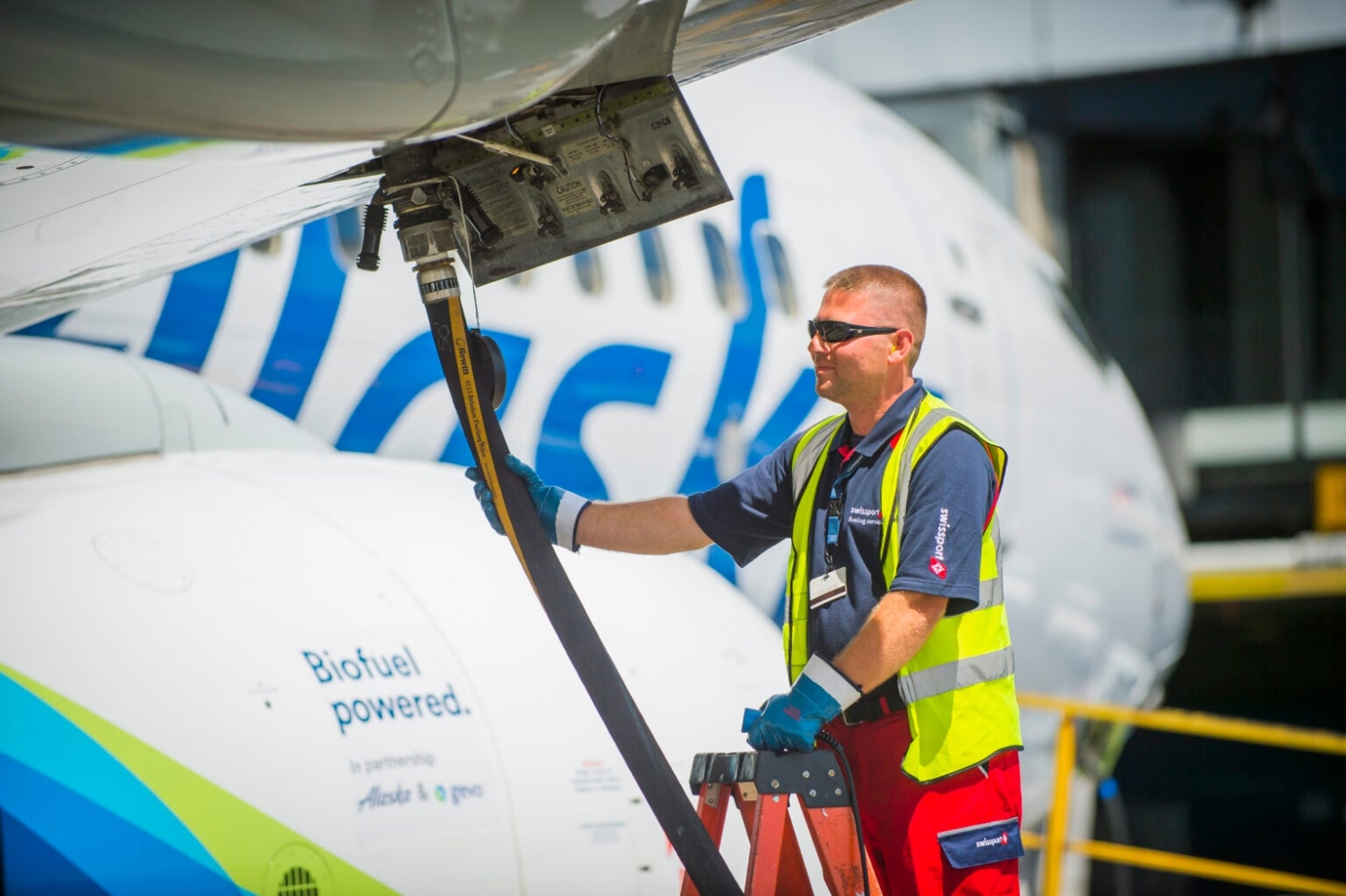
A who’s who from Washington state business and Democratic politics on Thursday extolled the virtues of alternative jet fuel and said the state would strive to become the nation’s leading enabler of greener flying.
The occasion was a splashy launch event in Snohomish County for a new state-funded eco-fuel development nonprofit, dubbed the Cascadia Sustainable Aviation Accelerator.

The business accelerator debuted with $10 million in tax dollars approved by the Legislature, matched by another $10 million from an unidentified philanthropic donor. Those new commitments build on tens of millions of dollars the Legislature and Congress previously allocated. The earlier funding was meant to lure alternative fuel refiners to Washington state, supports a Washington State University research lab, and incentivizes green jet fuel use in the state.
Executives from Boeing, Amazon, Alaska Airlines and the Port of Seattle joined Gov. Bob Ferguson, state legislators and the president of WSU on stage at Boeing’s Future of Flight visitor center next to Paine Field.
“Collectively, we have the political will and the private partnerships to get big things done,” state Rep. Mia Gregerson, D-SeaTac, told the standing-room crowd.
State Sen. Marko Liias, D-Edmonds, said, “Sustainable aviation fuel is essential to decarbonizing air transportation, and Cascadia is the one region with the research, industry, policy and workforce needed to scale it.”
The state’s approach contrasts with the Trump administration, which just this week pulled the U.S. out of the foundational United Nations Framework Convention on Climate Change. Trump administration officials have heaped scorn on taxpayer-financed decarbonization incentives. They favor policies to maximize fossil fuel production to drive down energy costs.
“While there are confusing signals coming out of the other Washington, the rest of the world is all-in on sustainable aviation fuel,” Liias said. “This is the fuel of the future.”
The board chair and vice-chair of the new Cascadia Sustainable Aviation Accelerator said the trade organization would lead education and advocacy efforts, recruit companies, invest in research and go to bat for project developers.
The industry’s moniker for alternative jet fuel is sustainable aviation fuel, or SAF for short. There are multiple methods to make it using a variety of feedstocks such as crop and forestry waste, used cooking oil, algae or hydrogen. Depending on the details, the eco-fuel can reduce the carbon footprint of air travel by anywhere from 50% to 80%.
SAF is favored by airlines because it is a “drop-in” fuel, meaning it works with existing airplane engines and fuel infrastructure. Most jet engines are currently limited to a maximum 50% blend with conventional jet fuel. Major engine makers are in the process of testing and certifying engines for 100% SAF.
The trouble is that SAF currently costs two to five times as much as conventional jet fuel. The high price and limited supply are holding back wider adoption.

At present, there is no continuous, commercial-scale production in Washington state. But several major companies have plants in design or construction.
Dutch energy company SkyNRG said Thursday that it aims to break ground in late 2027 or in 2028 on a large biofuel production facility at the Wallula Gap industrial park along the Columbia River southeast of Pasco. The company plans to produce 50 million gallons per year of SAF and renewable diesel by converting bio-methane collected from local and regional landfills, as well as a little bit from cow manure digesters.
A competitor named Twelve recently completed construction on a synthetic jet fuel plant in Moses Lake. Twelve plans to use a power-to-liquid production method that relies on lots of renewable electricity to transform carbon dioxide captured from the air and water into what it calls “E-Jet” fuel.
Executives at Twelve portrayed the Moses Lake facility as a demonstration plant. It may begin production in a matter of weeks and ramp up to 50,000 gallons annually. The California-based company plans to locate a much larger commercial-scale E-Jet fuel plant somewhere in the Midwest.
On the west side of the Cascades, BP was awarded nearly $27 million in federal grant funding in 2024 to buy equipment and make upgrades at its Cherry Point refinery. The goal was to begin production in 2029 of 10 million gallons of SAF annually. But since then, BP corporate management scaled back its renewable fuels ambitions globally and put the Whatcom County project on indefinite “pause,” according to a spokesman. Its future is now unclear.
If you add up the capacity of the eco-jet fuel projects announced in the state so far, you make only a modest dent to transition Washington airports to climate-friendly fuel. The U.S. Energy Information Administration estimated Washington’s jet fuel consumption at 848 million gallons in 2024. According to the Port of Seattle, Sea-Tac Airport alone dispenses around 600 million gallons of jet fuel per year, a number expected to rise over the coming decade.
By the end of the decade though, an Oregon border county could become home to a much larger alternative fuel refinery whose output would equal Sea-Tac’s annual demand. A Texas-headquartered company named NXTClean Fuels is in the process of permitting an alternative jet fuel and renewable diesel refinery along the Columbia River near Clatskanie with a capacity of 750 million gallons per year.
If that project comes to fruition, it would theoretically go a long way toward addressing limited supply in the Pacific Northwest. But that still leaves the barriers of feedstock availability and affordability for airlines.
During a press availability following Thursday’s launch event, the CEO of SkyNRG Americas, John Plaza, said he foresaw plenty of availability of the renewable natural gas raw ingredient that his company needs to make jet fuel at its planned southeast Washington plant.

Airlines such as Amazon Air have demonstrated some willingness to pay a premium to achieve climate and sustainability goals.
“We strive to have the airline industry pay as little a premium as possible,” Plaza said.
The alternative jet fuel “has a climate advantage and a marketing advantage,” said SkyNRG senior adviser Andy Billig in a separate interview. Billig is a former state Senate majority leader who played an instrumental role in the 2023 passage of state tax incentives for SAF producers and users during his final term in office. The state tax credit is worth up to $2 per gallon and can be stacked with federal incentives.
Editor’s note: This story was updated to clarify the status of BP’s sustainable aviation fuel project at Cherry Point.
This republished story is part of OPB’s broader effort to ensure that everyone in our region has access to quality journalism that informs, entertains and enriches their lives. To learn more, visit opb.org/partnerships.
Washington State Standard is part of States Newsroom, a network of news bureaus supported by grants and a coalition of donors as a 501(c)(3) public charity.
News Source : https://www.opb.org/article/2026/01/09/washington-state-pumps-more-tax-dollars-into-green-jet-fuel/
Other Related News

01/10/2026
It took Deni Avdija two minutes and forty seconds to address the elephant in the locker ro...
01/10/2026
DEAR ABBY My mother passed away six years ago She was a manipulative woman who had alienat...
01/10/2026
Dear Eric Im 61 widowed and still work full time as a registered nurse in a very busy hosp...
01/10/2026
ATLANTA For the second time in as many seasons Oregon entered the College Football Playof...
01/10/2026
The Portland play a game with an unfamiliar style a tight low-scoring game and hold their ...

Follow

Download Our App


Copyright 2022 © EPUERTO. All Rights Reserved