

Published on: 12/20/2025
This news was posted by Oregon Today News


Description

Health insurance companies love to save money. Who doesn’t?
But the calculations for what’s cheapest don’t always look the way you’d expect. Insurers will sometimes choose to cover a significantly more expensive drug or device, even when there’s a cheaper alternative on the shelf.
The answer has less to do with the medication itself and more to do with the costs that come downstream.
For example, look to a life-saving — and talking — medication, now covered by Oregon’s largest insurer.
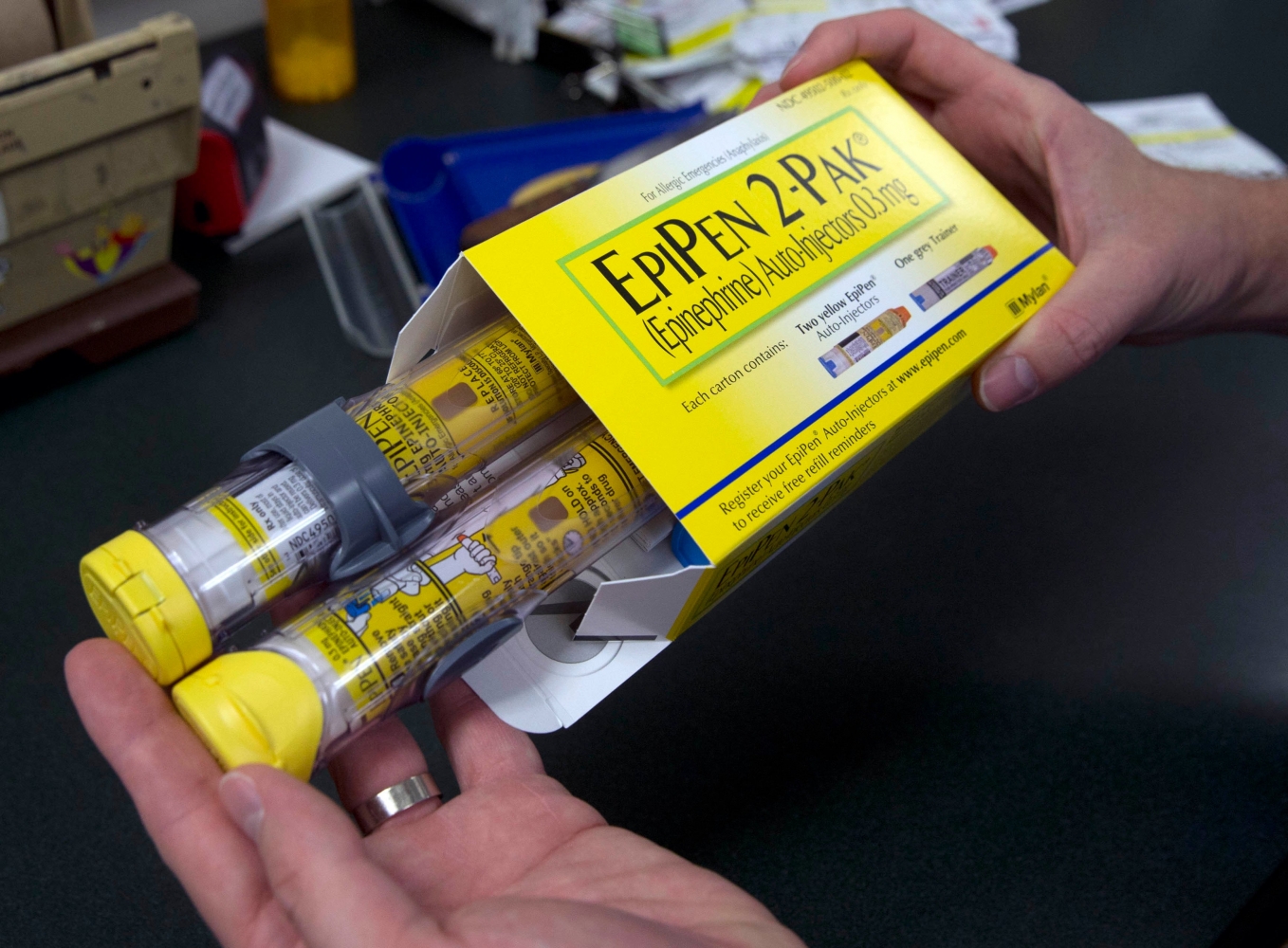
When someone’s throat is swelling shut from an allergic reaction, an epinephrine injector is the first thing you should grab. The injectors are made under different brand names; the most well-known is EpiPen.
“If someone has anaphylaxis, epinephrine is the medication that will save their life,” said Victoria Chadwick, a clinical pharmacist in pediatric and emergency medicine at Swedish First Hill Hospital in Seattle.
Chadwick said when someone’s in shock, people panic.
“No matter how many times you’ve been taught how to use a device, you are freaking out because the person in front of you — or yourself — can’t breathe,” said Chadwick.
When a kid has a life-threatening allergy, their parents keep epinephrine injectors everywhere - home, school, daycare, babysitters. But not everyone is trained to use them.
That’s when an injector like AUVI-Q can make a difference under pressure. It literally talks you through the process of administering the medication — with a calm voice, step by step.
“It might save someone’s life. We can’t rely on everyone always knowing the right thing to do,” said Chadwick.
The instructions could be life-saving, but they have a list price that is eye-watering. AUVI-Q is over ten times that of the generic alternative, Adrenaclick, debuting at a list price of $4,500 for two injectors.
The current version of AUVI-Q has been available for eight years, but it wasn’t commonly on the list of drugs and devices that health insurance pays for.
That changed this year after insurers did the math.
“It’s a lot cheaper to cover even a more expensive device than it is to have someone admitted to the hospital or possibly intubated — or unfortunately pass because they don’t have any device at all or the device they have wasn’t used,” Chadwick said.
Hyunjee Kim, a health economist at the Center for Health Systems Effectiveness at Oregon Health & Sciences University, said insurance companies looked at “downstream” costs when making these decisions.
“It can save a lot of money downstream by reducing emergency room visits or really lengthy hospitalizations,” Kim said.
According to Kim, insurers analyze their own member data and compare two groups: those who received access to the drug or device, and those who didn’t. Then, they compare the total cost of care and mortality.
If insurers don’t have the data to analyze their own patient outcomes, they need good outside evidence that could be “randomized control trials or a really strong, robust retrospective study that shows how the choice of certain drugs or medical devices can affect downstream costs,” said Kim.
That’s part of how AUVI-Q began being covered by insurers. A recent independent retrospective study found there were 50% lower health care costs and fewer emergency visits after anaphylaxis when AUVI-Q was used during a severe allergic reaction, compared to its competitors.
That was one factor in Aetna, the third-largest insurance company in the US, making AUVI-Q its preferred epinephrine device for severe allergies.
Kaiser Northwest, the largest health insurer in Oregon, did the same, partially due to internal pressure from its own clinicians.
“If doctors or hospitals strongly believe in the value of certain devices or drugs, I think that can put really huge pressure on the insurer,” Kim said.
Plus, don’t forget good old-fashioned free-market competition.
“You always have to consider what other players do,” Kim said. “If my competitor does cover it, I better cover it; otherwise, my member will switch.”
In other words, insurers don’t want to lose in a shot-for-shot competition. And higher upfront costs can make sense if they prevent bigger bills later.
News Source : https://www.opb.org/article/2025/12/20/why-insurers-are-covering-an-epipen-alternative-and-calling-it-a-cost-saver/
Other Related News

12/20/2025
Photographer KB Dixon portrays filmmaker Brian Lindstrom novelist Michael Keeffe journalis...

12/20/2025
As the song was adequately states Im dreaming of a white Christmas

12/20/2025
Dear Liz My wife and I are well over 70 and receive Social Security

12/20/2025
A couple of years ago Nolan Adkisson asked his mother Hailey what she would do if James Ma...

12/20/2025
Stand in awe before a towering Douglas fir in an Oregon forest and you might believe youre...

Follow

Download Our App


Copyright 2022 © EPUERTO. All Rights Reserved