

Published on: 03/15/2026
This news was posted by Oregon Today News


Description

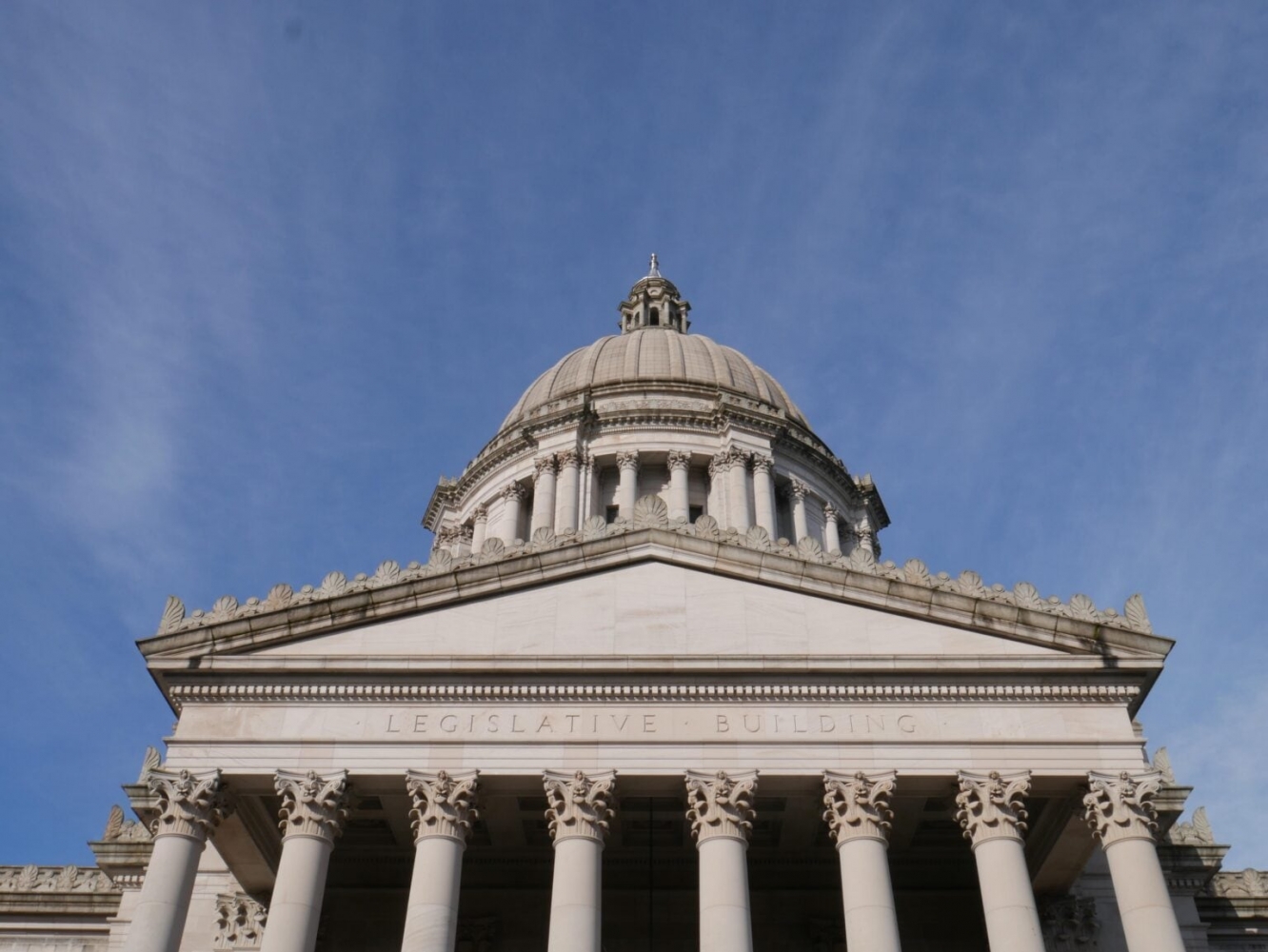
The curtain fell Thursday night on the Washington Legislature’s 60-day session. A lot happened before it did. Passage of Democrats’ income tax on millionaire earners was the big storyline. It followed House debate on the bill that was one of the longest in the state’s legislative history. Here are some highlights, plus who came out ahead and behind.
Progressive breakthroughs and walkbacks
Passage of the income tax is an indisputable win for Democrats eager to see Washington’s tax code rebalanced to tap wealthy residents for more cash, while relieving some of the burden for lower-income households. The question now is whether it holds up in court and on the ballot.
But while there was glee over approval of the “millionaires’ tax,” lawmakers also moved this year to roll back major tax hikes they approved in the last session — including added sales taxes on a range of services and increases in the estate tax. These walkbacks were a tacit acknowledgment that they overreached with policies to tax businesses and the rich last year.
Progressive voices led by Democratic Socialist Rep. Shaun Scott of Seattle prevailed in a notable skirmish within the income tax bill, when a Senate-backed provision calling for the early sunset of a tax surcharge on large corporations was stripped out in the House.

Winners:
- Gov. Bob Ferguson, who gave the income tax his full-throated endorsement early on.
- Sen. Noel Frame, AKA the “Revenue Queen,” a champion of progressive tax policy.
- Senate Majority Leader Jamie Pedersen, House Majority Leader Joe Fitzgibbon, and Speaker Laurie Jinkins, who shepherded the income tax bill.
- Service Employees International Union, Washington State Labor Council and other statewide unions that pushed for the income tax.
- Dead people passing on more than $1 million, whose estates will owe less in taxes.
- Lawyers for whom a court battle on the income tax will make for a hefty payday.
Losers:
- Millionaires who don’t want to pay the income tax.
- Tech industry entrepreneurs who fought the income tax.
- Republican lawmakers, who detest the income tax, with some opposing it on the House floor during a debate that ran nearly 25 hours straight.
- The Wall Street Journal, which editorialized against the income tax before and after its passage.
Bob Ferguson gets his footing
What a difference a year makes. In his first session, Ferguson came off as a frenemy of Democrat and Republican lawmakers alike. Sine Die couldn’t come fast enough for many lawmakers who didn’t know when he was on their side, when he was against them and whether he would support the budget and taxes his party sent him to sign.
This time around, Ferguson and Democratic leaders found themselves on the same page most of the time. There were still some touch-and-go moments, like when lawmakers got bristly about the governor negotiating over the income tax from a press conference podium.
Where lawmakers could find few compliments to throw the governor’s way in Year One, they were almost effusive with praise in Year Two. “It feels like we’re hitting a good stride,” Pedersen said Thursday night. Ferguson called it a “great session.” Republicans know the governor much better as well after two years of watching him sign new and higher taxes.

Winners:
- Progressive House Democrats, who chafed at Ferguson’s centrist-sounding inaugural address last year, but are now feeling more heard and seen by the governor.
- Tribal leaders who secured an executive order giving them greater voice, and representation in state government.
Losers:
- Senate Minority Leader John Braun, who was cozier with Ferguson last year when the governor had more tensions with his own party.
Mixed bag for big business
Debate on data centers forced lobbyists from some of the world’s biggest firms and the state’s larger labor unions to camp out in Olympia. They teamed up to put a dagger in Rep. Beth Doglio’s bill to impose a suite of new regulations on data center operations. It met its end in Senate Ways and Means. But on the final day, Big Tech lost a different battle to preserve a data center tax break it planned to enjoy through 2048. Ferguson wanted it repealed. House Democrats were split. Eventually, 51 voted to nix the exemption.
Electric vehicle makers Rivian and Lucid got a green light to sell their cars directly to Washington motorists at showrooms, a carveout only Tesla enjoys now. The outcome reflects a delicate compromise with auto dealers and averts a pricey ballot battle that Rivian was prepared to throw down some major cash to fight.
Lawmakers began to regulate generative artificial intelligence despite misgivings from the tech industry. They added mental health safeguards for AI chatbots like ChatGPT. And they passed scaled-back legislation to inform users when videos, photos and other content are developed by AI. Other AI bills fizzled out.
For the business community, a proposed statewide tax on the payrolls of Washington’s largest employers was the big kahuna they wanted knocked off stage. It was, with support lacking from Democratic leadership and the governor. But it’s unlikely the fight on this one is finished.

Winners:
- Ferguson, who called for repeal of a tax break on purchases for certain data center equipment.
- Rivian. It got the bill it wanted.
- Small businesses, which would see a fatter exemption from the state’s main business tax and the retail sales taxes on services go away if the income tax survives.
- Business groups that backed policies to encourage housing in underused commercial areas and increased spending on road maintenance, two priorities that won approval.
Losers:
- Rep. Shaun Scott, lead sponsor of the payroll tax.
- The Washington economy that stood to benefit from the $50 million Rivian threatened to spend on a ballot measure to get its way.
- Corporations with more than $250 million in annual revenue, which won’t see a tax surcharge sunset a year early.
Rough ride for Republicans
Around the time the session adjourned Thursday night, a post on Senate Republicans’ X account left no doubt the caucus was feeling salty. “Worst. Legislative Session. Ever,” it read. Rs are operating at a disadvantage of 30-19 in the Senate and 59-39 in the House. A large share of the bills that pass in the Legislature each year are bipartisan. But Democrats have power to easily bulldoze through with priorities of their choosing.
On the House side in particular, Republicans have become adept at bogging down proceedings with amendments. An extreme version of this was on display with the nearly 25 hours of continuous debate on the income tax. Chewing up precious floor time in this fashion ultimately kills bills Democrats care about. Jamming the legislative gears is a far cry from governing. But until Republicans figure out a recipe for attracting more voters, they remain a resistance party, and it’s one of the only tools they have.

Winners:
- House Republican Floor Leader April Connors, who is playing a key role in spearheading the GOP strategy to burn up floor time.
- Rep. Travis Couture, whose profile is rising as the Republicans’ attack dog on fiscal issues and other matters.
- House Democrats, who used their large majority to pass a transportation bond bill without GOP votes, a real rarity.
Losers
- The Washington State Republican Party was mostly silent during the session. Many are looking for signs it can capitalize on Democrats’ income tax to win elections this fall.
- Sen. Leonard Christian, whose insensitive comments got him kicked off a statewide panel.
A paramount punt
One word sums up the 2026 session for education. “Sad.” Ferguson will soon sign a budget that pares spending at every level of instruction. Transition to Kindergarten, a proven program to prepare 4-year-olds for school, will lose thousands of slots. High schoolers won’t be able to earn as many college credits through Running Start.
Rural schools will get a bump in financial assistance, but not as big a one as lawmakers pledged a year ago. Charter schools saw millions of dollars for operations disappear in the session’s final hours. And there are no additional dollars for special education.
Higher education institutions face across-the-board cuts in administrative expenses. Had the Legislature not agreed on a one-time shift of $240 million from the capital budget into their operating accounts, it would have been worse.
Democrats know they made no major new investments in basic education, the state’s paramount duty. They did vow to increase funding for this purpose with money from the income tax, but haven’t said how much or when.
Pedersen acknowledged the obvious to reporters Thursday night: “We’re going to have to do some more work on education funding.”

Winners
- Free school lunches for all students starting in 2029, promised by Ferguson and Democrats. The price tag of $140 million will come from income tax proceeds.
- Washington Public Employees Association members working in community colleges, whose collective bargaining agreement was funded in the budget.
Losers
- Child care providers, who will see less state funding because of changes in attendance and reimbursement policies.
Washington State Standard is part of States Newsroom, a network of news bureaus supported by grants and a coalition of donors as a 501(c)(3) public charity.
This republished story is part of OPB’s broader effort to ensure that everyone in our region has access to quality journalism that informs, entertains and enriches their lives. To learn more, visit opb.org/partnerships.
News Source : https://www.opb.org/article/2026/03/15/washington-legislative-session-winners-losers/
Other Related News

10/24/2026
Former ESPN reporter Britt McHenry has resigned from her State Department job after a conf...
10/24/2026
Charles Barkley says he is ready to walk away from Inside the NBA but the outspoken basket...

10/24/2026
Phillip Lee Sullivan spent his days helping people fight gambling addiction Now the former...
10/24/2026
Five-time Pro Bowl running back Lawrence McCutcheon who became one of the Los Angeles Rams...

10/24/2026
About 13000 Oregonians will find a check in their mailbox this month money they never had...

Follow

Download Our App


Copyright 2022 © EPUERTO. All Rights Reserved