

Published on: 07/11/2026
This news was posted by Oregon Today News


Description

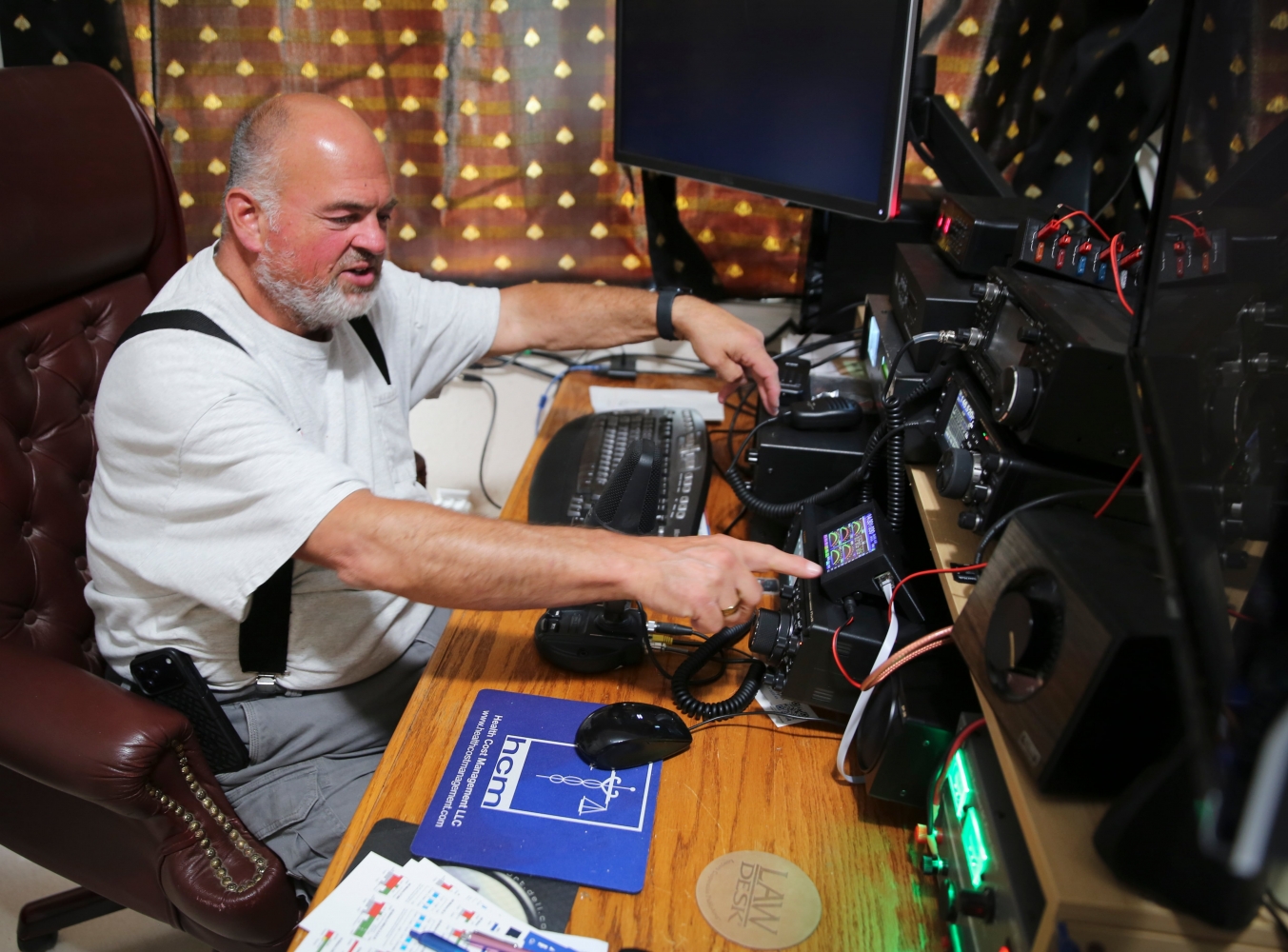
Electrical engineer Tim Kuhlman sits in a makeshift tent, made of blue tarp and white plastic pipe, contacting as many amateur radio stations as he can.
“This is Whiskey Seven Alpha India Alpha calling CQ for field day,” he enunciated into his radio.
A crackly voice responds, “Copy. This is Kilo Seven Foxtrot Delta Foxtrot.”
“Roger that,” says Kuhlman, writing down the new call signal, K7FDF. He then twists the dial to find the next station.
It doesn’t take more than a few seconds. Ham radio enthusiasts from across the country were jamming the airwaves on June 27 for the annual ARRL National Association for Amateur Radio Field Day.
Over 24 hours, Kuhlman and the Clark County Amateur Radio Club contacted more than 1,700 stations.

The national field day illustrates how ARRL’s 31,000 members can set up emergency communications just about anywhere.
It’s proof that if the big one strikes the Pacific Northwest, knocks out the power, shakes bridges into rivers and buckles radio antennas, emergency services can still turn to ham radio for help.
“We think of the public service communication system as being very robust,” said Dave Cherba, with the Clark County Club. “But in times of emergency, sometimes there are vulnerabilities that come out.”
Cherba said their club hasn’t been called up for an emergency in recent history. But nearby clubs have, for example, during the Eagle Creek Fire in 2017.
Retired attorney John Bachofner said it doesn’t even have to be an emergency for the club to step up. Like the time members helped navigate the floats at this year’s Rose Festival in downtown Portland.
“Sometimes we’ll put up a booth or communicate with people,” Bachofner said. “Other times, we’re providing a service where we help coordinate.”

What do amateur radio enthusiasts do?
In exchange for such services, the Federal Communications Commission allows amateur radio to operate at certain wavebands for free. But they can’t start running ads or making money like a commercial broadcaster.
“You’re prohibited under the FCC guidelines,” said Bachofner. “You’re prohibited from playing music on ham radio bands. And you’re prohibited from doing any commercial activity at all.”
Instead, enthusiasts use the free airwaves to talk to each other. Bachofner bounces his signal off the ionosphere to reach around the globe. “I spoke with an Australian a number of years back, and it was a lot of fun,” he said.
The Australian was a teacher and had kids with him. They talked about ham radios and what it was like to live in America.
“I’ve talked to people who say: ‘Yeah, the snow fell last week,’ or ‘My horse slipped and has a bad leg.’ It can be anything.”
Bachofner calls it ‘rag chewing’ and laughs at one school of thought that says amateur radio is called ham radio because enthusiasts like to ham it up on the airwaves.

What’s the field day for?
A half dozen radio antennas were set up for the field day in Clark County last month. Some were as tall as a pine tree. There were portable generators, batteries, and solar panels, plus a handful of broadcasting tents.
In one tent, beginners got to broadcast their voice across the air, just for fun. In another, Morse code was being tapped out. And in yet another tent, retired 911 operator Tracy Liday bounced her signal off a satellite put into orbit by another club.
“As it’s passing, we can talk to people all over the world,” she said.
Liday was also keeping an eye out for the International Space Station as it passed overhead.
“They have ham radios on site, and they’re ham radio operators. So, if you’re lucky, you’ll get to talk to one of those guys.”
While lots is going on during field day, one observation was inescapable: participants skew older. In a time when anyone can instantaneously share a homemade, high-definition movie online, the wonder of broadcasting a crackly voice is not as compelling as it used to be. The worry is that without young people, ham radio stations won’t be able to step in during a future emergency.
“It’s a very legitimate concern because there are so many distractions for young people these days,” said Dave Cherba. “However, we do find a core group of young people who are interested.”
Cherba said many high schools still have amateur radio clubs, and there are still youngsters who appreciate the thrill of manipulating the airwaves.
There’s one other factor that makes ham radio attractive for young people: a cheap broadcasting unit can still be bought for as little as $50.

News Source : https://www.opb.org/article/2026/07/10/youth-needed-to-ensure-future-pn-ham-radio-emergency-coverage/
Other Related News

07/11/2026
Former Pittsburgh Steelers running back Greg Hawthorne who helped the Steelers to a win in...
07/11/2026
South Africa midfielder Jayden Adams who played in three World Cup group games is dead at ...
07/11/2026
A popular hobbit-themed Airbnb is among dozens of structures that were destroyed in a cent...
07/11/2026
With dozens of cruise lines to choose from picking the right one can be tough
07/11/2026
The Real Housewives of Orange County is celebrating 20 years Season 20 Episode 1 premiered...

Follow

Download Our App


Copyright 2022 © EPUERTO. All Rights Reserved