

Published on: 03/13/2026
This news was posted by Oregon Today News


Description

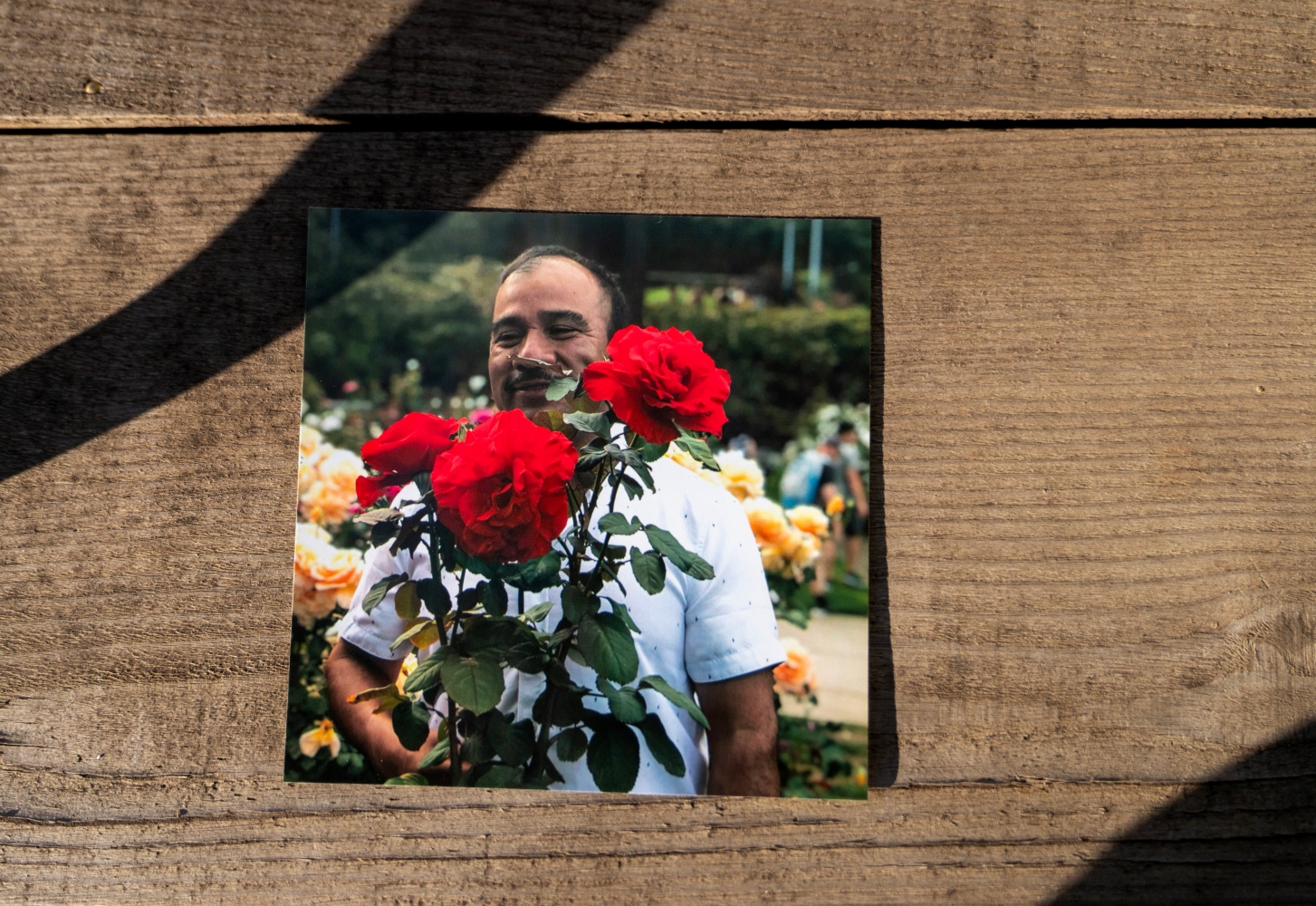
Eric Martin San Juan remembers the anxiety swirling around Washington County last fall. Logging into social media seemed to summon new videos of immigration enforcement officers working nearby, breaking car windows or walking people from strip mall parking lots toward unmarked vans.
His father, Paulino Martin San Pedro, immigrated from the United States in the early 1990s when he was a teenager and didn’t have legal status. Martin San Juan warned him to stay away from places he saw in the videos.
“‘Dad, don’t go here … They’re here today. Watch this road. Be careful,’” Martin San Juan, 31, said. “We talked every day.”

On Nov. 18, Martin San Pedro landed in U.S. Immigration and Customs Enforcement custody. The 53-year-old was detained as he left a window-fixing job in Beaverton.
He was one of many people detained in the Pacific Northwest as part of an immigration surge in the region in late 2025.
New data, obtained by the University of Washington’s Center for Human Rights, shows a significant spike in apprehensions in Oregon, starting in mid-October.
Between July and September, ICE apprehended about 14 people total in Washington County. That single day in November, Martin San Pedro was one of 13 people detained.
UW researchers obtained the data as part of an ongoing lawsuit against the U.S. Department of Homeland Security that seeks greater insight into its deportation efforts. The center released the data publicly on Wednesday.
DHS did not respond to OPB’s request for comment about the data.
In Multnomah County, where the embattled ICE facility drew President Trump’s attention over ongoing protests, there were 34 ICE apprehensions in September. That number jumped fivefold — to 164 — in the four weeks immediately after he called Portland “war-ravaged.”
Accounting for population sizes, no county in the Pacific Northwest was hit harder than Multnomah County last fall. It saw about 575 apprehensions in the fall, or 72 arrests per 100,000 residents. That’s roughly a 600% spike.
Washington County, the metro county with the largest concentration of Latino residents, was hit second hardest last fall. Immigration enforcement officers made roughly 315 arrests, or 52 per capita. That was a 2,100% jump.
Internally, immigration enforcement officers referred to this crackdown as “Operation Black Rose,” according to court documents.
Portland-based attorney Stephen Manning, who helped spearhead litigation against some unlawful apprehensions, said some officers deposed in those cases also called the surge “Operation Portland Sweep,” “Operation Portland Clean,” and other names.
Manning criticized federal officers’ tactics at the time as running roughshod over civil rights.
During one Washington County woman’s arrest by ICE on Nov. 21 — three days after Martin San Pedro — immigration enforcement officers walked up to her car with a stack of pre-signed arrest warrants.

“Before they left, they had some officer sign a bunch of blank arrest warrants. It’s like a bunch of blank checks,” Manning said. “Then when they go out into the field, they shatter someone’s window, arrest them and fill in the arrest warrant.”
Ordinarily, an arrest warrant is signed and issued based on allegations against a specific person. A DHS officer corroborated in court filings that the officers who arrested the woman had a stack of “pre-signed” forms that they completed with the woman’s details.
“That is the complete opposite of the way the process is supposed to work, right?” Manning added.
That woman was ultimately freed from detention.
After his father’s arrest, Eric Martin San Juan recalled poring over the government’s online detainee locator system, fearful that his dad would be flown far away before the family could visit him. Under the Trump administration, detainees are being shuttled farther and more frequently than before.
They eventually found him at the Northwest ICE Processing Center in Tacoma, Washington. But he spent the ensuing days re-checking if his father had been transferred or deported. He described checking “every morning, every hour.”
Paulino Martin San Pedro was deported back to Mexico within days. He died in February after complications from pneumonia.
He told OPB in March that he was still struck by his dad’s last words before being arrested after leaving the construction site. Rather than saying goodbye to his wife, who was still in the car, he told her that the window-fixing job wasn’t finished.
“‘Go finish the job,’” he recalled his dad saying. “A country that doesn’t want my dad there. My dad’s given it all to finish his job under every circumstance.”
About the data:
The data stems from a batch of I-213 forms, which are filled out about an individual when immigration enforcement officers begin the deportation process. Put another way: a person apprehended and deemed deportable is logged in an I-213 form.
The batch received by the University of Washington shows I-213 forms collected by Homeland Security’s Seattle office, which oversees immigration enforcement throughout the Pacific Northwest. OPB mostly focused its analysis of the data on Oregon and Washington state.
OPB reporter Tony Schick contributed data analysis to this report.
News Source : https://www.opb.org/article/2026/03/13/oregon-portland-ice-apprehensions-multnomah-washington-marion/
Other Related News

03/13/2026
NASA said asteroid 2026 EG1 passed about 198000 miles from Earth at more than 21500 mph as...
03/13/2026
SEOUL South Korea AP All six crew members of a KC-135 refueling aircraft supporting opera...
03/13/2026
Theres nothing like Friday the 13th to get you thinking about reasons to stay home for the...
03/13/2026
Green-clad and possibly damp runners will queue up early Sunday March 15 for the annual Sh...
03/13/2026
Fierce rivals clash in the Big Ten Tournament quarterfinals today as the Ohio State Buckey...

Follow

Download Our App


Copyright 2022 © EPUERTO. All Rights Reserved