

Published on: 01/16/2026
This news was posted by Oregon Today News


Description

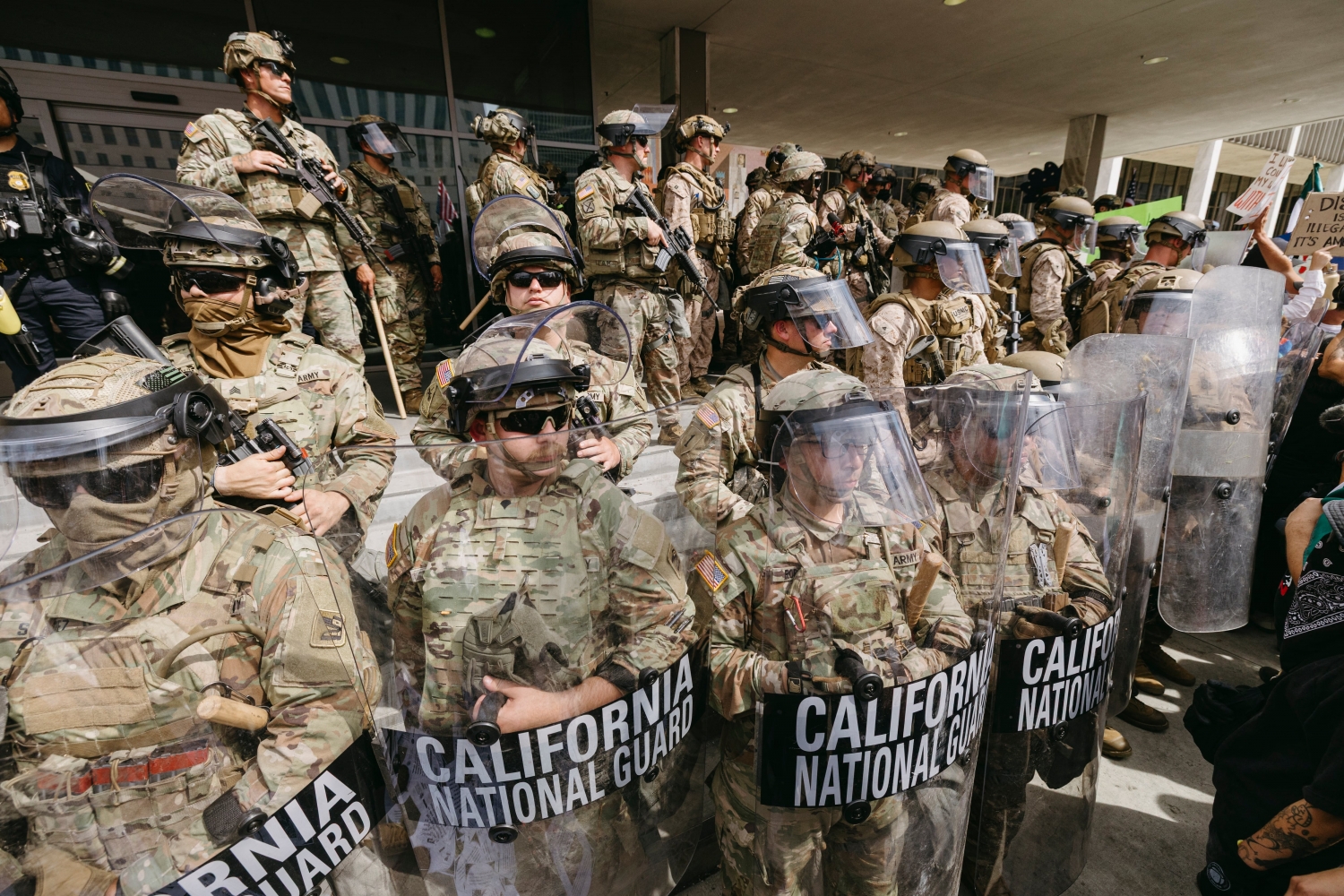
Costumed protesters and President Trump’s brash social media posts grabbed headlines during the administration’s push to deploy National Guard troops to California, Illinois and Oregon. But ultimately, the deployments ended because of esoteric case law and round-the-clock legal preparation and wrangling, according to the Democratic attorneys general from those states.
Earlier this month, President Trump pulled hundreds of National Guard troops from California, Oregon and Illinois after the Supreme Court ruled against the administration in the Illinois case.
It was a major win for the Democratic states that had been fighting against the deployments, after troops had been federalized against the wishes of those states’ governors. It required nearly constant coordination and communication between states as they worked to understand and define the archaic and rarely used legal mechanism that the Trump administration used to justify the deployments.
“We were in uncharted territories. This had never happened before,” remembers California Attorney General Rob Bonta. “And California was on the front lines from day one.”

In June of last year, in a bold and unprecedented move, Trump seized control of California’s National Guard — against Gov. Gavin Newsom’s wishes — and deployed more than 4,000 troops, along with the Marines, to the streets of downtown Los Angeles to protect federal immigration officers and facilities as protests broke out against them.
It was the first of what would become a pattern in the following months, as Trump deployed the National Guard to several Democratic-led cities around the country, claiming that the deployments were necessary because of violence and rampant crime — a claim that data contradicted and several local and federal judges called into question.
NPR reached out to the White House for comment on this story. Spokeswoman Abigail Jackson said that “if Democratic leaders had spent half as much time addressing crime, their communities would be much safer,” reiterating that Trump is committed to safety and security.
Even before Trump’s re-election, several Democratic attorneys general had been prepping for the likelihood that he would deploy the military to U.S. cities if he won a second term. It’s something that he and some of his closest advisors had talked openly about on the campaign trail as an option to assist with immigration enforcement efforts.
“We had done a lot of homework for this exact issue,” says Oregon Attorney General Dan Rayfield.

Once Trump deployed Guard troops to Los Angeles, the legal mechanism the administration would likely use became clearer. Deployments to California – and eventually Oregon and Illinois – were all done citing a 19th century law called 10 U.S.C. 12406, which had very little precedent around it.
The law hinges on vague terms that can be open for interpretation, like “rebellion” and “invasion.”
“Since this law has been used so rarely in our history, we had very little sense of what any of these terms meant, because none of them are defined by the statute,” says Chris Mirasola, a national security law professor at the University of Houston Law Center.
That meant that the court battles against these deployments could help define the law.
“Case law and litigation becomes a really important mechanism by which we kind of give these terms meaning,” Mirasola says.
Bonta in California says that’s one reason he and his team felt so much pressure to get their legal response right.
“Our case was first. So if we stumbled, or if there was bad precedent set, or if there was a broad, expansive view of Trump’s authority and that allowed him to do what he did in L.A. and then repeat it or escalate it into more cities, there was a lot at stake,” Bonta says.
Meanwhile, other Democratic states were watching California, hoping to learn from their legal fight.
“We were definitely in touch (with Bonta’s office) right when it happened, not knowing when the hammer would drop for us,” remembers Illinois Attorney General Kwame Raoul.

Bonta encouraged his team to share as much as they could with other states.
“I basically said, ‘Tell them everything,’” he said.
California reached out to other states, other states reached out to each other.
Over the course of several months, Trump threatened deployments to Baltimore and Oakland, Calif. He deployed troops to Washington, D.C. — a unique situation where the president controls the National Guard. And then, later in August and into September, Chicago and Portland, Ore. became the clear focus.
“We were on high alert,” remembers Rayfield, of Oregon, who says he told his team that the goal was to block the deployment before troops could be on the streets of Portland, which is different from what happened in Los Angeles. “It was a unique approach. And frankly, I don’t think that was universal among all attorneys that that was the right approach, but that was the approach we were going to take in Oregon.”
The office in California went full force, sharing as much legal insight with Oregon and Illinois as possible.
The coordination came in handy in the first weekend of October, when all three states found themselves involved in lawsuits surrounding the deployments.
Rayfield remembers the attorneys and staff in his office working to file a lawsuit against the deployment in Portland within 12 hours. And it worked — by Saturday, a federal judge had issued a temporary restraining order.
“We’re thinking, ‘Shoot, we got a win.’ And then we were able to have a little bit of a sigh of relief. But only for a few hours,” Rayfield said.
The next morning, on Sunday, Trump said he was deploying California’s National Guard — which were still federalized and under his control — to Oregon.
Bonta remembers he was out celebrating his mother’s 88th birthday when he started getting calls and texts. He eventually stepped away and got on the phone with Rayfield, while both of their staffs were in near-constant communication. That evening, the same federal judge issued a second temporary restraining order, blocking any other states’ National Guard from the streets of Portland as well.
At almost the exact same time, Raoul in Illinois was facing a similar situation. Trump had federalized the Illinois National Guard to deploy troops to Chicago. When that deployment hit legal roadblocks, Texas Gov. Greg Abbott offered to send troops from his state.
Raoul and his staff were also working round the clock, calling their counterparts in Oregon and California for guidance and insight.
“Fortunately, we’ve gotten to a point where we’ve got each other on speed dial,” Raoul says. “There’s no inappropriate time to call one another, and communication had to happen that weekend, or you know, whenever.”
A few days later, a federal judge in Illinois also issued a temporary restraining order, blocking troops from the streets of Chicago.
Raoul says it was an emotional time for him and his staff; the situation and its implications felt so heavy.
“I remember, I went down and did a press availability afterwards, and I started cracking a little bit, you know, my voice. And I was like, I’m okay if some tears come down my eye, because this is some real serious s—,” he says.
In every case, the Trump administration appealed any ruling not in their favor. In Illinois that appeal went all the way to the Supreme Court. In all three states, troops remained at the ready for months as the Trump administration waited.
And then, in the final weeks of 2025, there were two major wins for those three states.
Right before Christmas, the Supreme Court ruled against Trump, upholding the block on troops in Chicago. That ruling only applied to Illinois, but it was a decision that helped define the law, making it harder for the administration to use that same legal pathway in the future. And on New Year’s Eve, Trump announced he would pull troops out of all three states, for now.
But there are still other legal mechanisms the administration could use to deploy the military in U.S. cities, including invoking the Insurrection Act, which Trump has frequently mentioned – including as recently as Thursday, in response to protests in Minneapolis against a surge of federal immigration activity.
That’s one reason the democratic attorneys general say they’re still busy preparing.
“This is kind of a round that we’ve won. We’re grateful for that. But now we’re ready for round two,” says Bonta.
News Source : https://www.opb.org/article/2026/01/16/behind-the-front-lines-of-the-legal-battle-against-trumps-national-guard-deployments/
Other Related News

01/16/2026
The newly named CEOs of the Portland Japanese Garden and its Japan Institute are longtime ...
01/16/2026
Oregon homeowners who take steps to protect their homes from wildfire could pay less for p...
01/16/2026
The average long-term US mortgage rate is now down to its lowest level in more than three ...

01/16/2026
Late last fall as it became clear that Keith Wilson would likely achieve his ambitious ple...

Follow

Download Our App


Copyright 2022 © EPUERTO. All Rights Reserved