

For the best experienceDownload the Mobile App
App Store Play Store
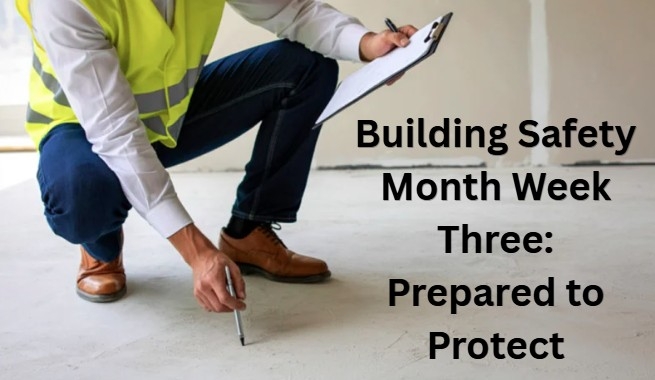
BUILDING SAFETY MONTH WEEK THREE: PREPARED TO PROTECT  
  
Resilient buildings and disaster plans save lives. Week 3 of Building Safety Month focuses on how smart design, strong codes and community preparedness work together to reduce the impact of disasters. From earthquakes and floods to hurricanes and wildfires, the built environment plays a critical role in protecting people and property.  
  
Emergency Planning   
Disaster preparedness is a shared responsibility, and when communities plan together, they respond more effectively and recover more quickly. Review these simple, life-saving tips in the resources below, and check out https://www.ready.gov/ for specific tips on dealing with earthquakes, extreme heat, floods, home fires, hurricanes, tornados, wildfires and more.  
Keep it simple:  
•Have an emergency kit on hand with basic necessities, and place all items in a sturdy, closed container outside your home where it can be easily located (restock food and water twice a year)  
•Establish a “safety destination” (like a friend’s or relative’s house some distance away), plan several different routes to get there so you can drive around roadblocks or hazards and practice your plan  
•Long before storm season approaches, prepare your house to withstand the effects of a natural disaster. Called “mitigation”, this can keep natural hazards from having catastrophic impacts.  
•You may need to turn off your gas, water and electricity before you evacuate, so each member of the household should learn when and how to do this  
  
Designing and Retrofitting for Disaster Resilience  
Modern building codes paired with modern construction practices (and upgrades to existing buildings) can dramatically improve a structure’s ability to withstand natural hazards. These preventative measures help protect occupants, reduce damage, speed recovery and keep communities functioning after disaster strikes.  
•Seismic retrofits that strengthen foundations and structural connections  
•Flood resistant design including elevated utilities, flood vents and water resistant materials  
•Hurricane ready features like impact rated windows, reinforced roofs and wind resistant doors  
•Wildfire resistant construction using ember resistant vents, defensible space and non combustible materials  
  
Demand Building Safety   
Are the homes, schools and buildings in your community built (or retrofitted) to the latest building codes? These codes are crucial in preventing disasters such as structural collapse or fires and mitigating the potential damage caused by events such as hurricanes or floods. Sharing the importance of adopting modern building codes and standards with public officials and encouraging them to take action helps make our communities safer.  
•Visit the Federal Alliance for Safe Homes (FLASH) Inspect to Protect website to find the model code status of your home based on available data (you'll also learn about the potential threats to your home based on community disaster history, and what upgrades may increase your home’s resilience) https://inspecttoprotect.org/  
•Visit ICC’s code adoption map: https://www.iccsafe.org/adoptions/global-codes and Codes Save: https://www.iccsafe.org/codessave/ to determine if your state or community has adopted up-to-date codes for new construction  
•If your state or community hasn't adopted the latest model code, find the names and contact information for the elected officials who represent you and ask for change (include details on why adopting and enforcing modern building codes is important)  
  
Additional Resources:  
•12 Ways to Prepare Checklist: https://www.coosbayor.gov/home/showdocument?id=4144&isPublished=False&t=639149555612166833  
•Tips for Your Home and Family: https://www.coosbayor.gov/home/showdocument?id=4142&isPublished=False&t=639149555608518853  
•Tips for Disaster Safety and Mitigation: https://www.coosbayor.gov/home/showdocument?id=4140&isPublished=False&t=639149555604639988
BUILDING SAFETY MONTH WEEK THREE: PREPARED TO PROTECT  
  
Resilient buildings and disaster plans save lives. Week 3 of Building Safety Month focuses on how smart design, strong codes and community preparedness work together to reduce the impact of disasters. From earthquakes and floods to hurricanes and wildfires, the built environment plays a critical role in protecting people and property.  
  
Emergency Planning   
Disaster preparedness is a shared responsibility, and when communities plan together, they respond more effectively and recover more quickly. Review these simple, life-saving tips in the resources below, and check out https://www.ready.gov/ for specific tips on dealing with earthquakes, extreme heat, floods, home fires, hurricanes, tornados, wildfires and more.  
Keep it simple:  
•Have an emergency kit on hand with basic necessities, and place all items in a sturdy, closed container outside your home where it can be easily located (restock food and water twice a year)  
•Establish a “safety destination” (like a friend’s or relative’s house some distance away), plan several different routes to get there so you can drive around roadblocks or hazards and practice your plan  
•Long before storm season approaches, prepare your house to withstand the effects of a natural disaster. Called “mitigation”, this can keep natural hazards from having catastrophic impacts.  
•You may need to turn off your gas, water and electricity before you evacuate, so each member of the household should learn when and how to do this  
  
Designing and Retrofitting for Disaster Resilience  
Modern building codes paired with modern construction practices (and upgrades to existing buildings) can dramatically improve a structure’s ability to withstand natural hazards. These preventative measures help protect occupants, reduce damage, speed recovery and keep communities functioning after disaster strikes.  
•Seismic retrofits that strengthen foundations and structural connections  
•Flood resistant design including elevated utilities, flood vents and water resistant materials  
•Hurricane ready features like impact rated windows, reinforced roofs and wind resistant doors  
•Wildfire resistant construction using ember resistant vents, defensible space and non combustible materials  
  
Demand Building Safety   
Are the homes, schools and buildings in your community built (or retrofitted) to the latest building codes? These codes are crucial in preventing disasters such as structural collapse or fires and mitigating the potential damage caused by events such as hurricanes or floods. Sharing the importance of adopting modern building codes and standards with public officials and encouraging them to take action helps make our communities safer.  
•Visit the Federal Alliance for Safe Homes (FLASH) Inspect to Protect website to find the model code status of your home based on available data (you'll also learn about the potential threats to your home based on community disaster history, and what upgrades may increase your home’s resilience) https://inspecttoprotect.org/  
•Visit ICC’s code adoption map: https://www.iccsafe.org/adoptions/global-codes and Codes Save: https://www.iccsafe.org/codessave/ to determine if your state or community has adopted up-to-date codes for new construction  
•If your state or community hasn't adopted the latest model code, find the names and contact information for the elected officials who represent you and ask for change (include details on why adopting and enforcing modern building codes is important)  
  
Additional Resources:  
•12 Ways to Prepare Checklist: https://www.coosbayor.gov/home/showdocument?id=4144&isPublished=False&t=639149555612166833  
•Tips for Your Home and Family: https://www.coosbayor.gov/home/showdocument?id=4142&isPublished=False&t=639149555608518853  
•Tips for Disaster Safety and Mitigation: https://www.coosbayor.gov/home/showdocument?id=4140&isPublished=False&t=639149555604639988
BUILDING SAFETY MONTH WEEK THREE: PREPARED TO PROTECT Resilient buildings and disaster plans save lives. Week 3 of Building Safety Month focuses on how smart design, strong codes and community preparedness work together to reduce the impact of disasters. From earthquakes and floods to hurricanes and wildfires, the built environment plays a critical role in protecting people and property. Emergency Planning Disaster preparedness is a shared responsibility, and when communities plan together, they respond more effectively and recover more quickly. Review these simple, life-saving tips in the resources below, and check out https://www.ready.gov/ for specific tips on dealing with earthquakes, extreme heat, floods, home fires, hurricanes, tornados, wildfires and more. Keep it simple: •Have an emergency kit on hand with basic necessities, and place all items in a sturdy, closed container outside your home where it can be easily located (restock food and water twice a year) •Establish a “safety destination” (like a friend’s or relative’s house some distance away), plan several different routes to get there so you can drive around roadblocks or hazards and practice your plan •Long before storm season approaches, prepare your house to withstand the effects of a natural disaster. Called “mitigation”, this can keep natural hazards from having catastrophic impacts. •You may need to turn off your gas, water and electricity before you evacuate, so each member of the household should learn when and how to do this Designing and Retrofitting for Disaster Resilience Modern building codes paired with modern construction practices (and upgrades to existing buildings) can dramatically improve a structure’s ability to withstand natural hazards. These preventative measures help protect occupants, reduce damage, speed recovery and keep communities functioning after disaster strikes. •Seismic retrofits that strengthen foundations and structural connections •Flood resistant design including elevated utilities, flood vents and water resistant materials •Hurricane ready features like impact rated windows, reinforced roofs and wind resistant doors •Wildfire resistant construction using ember resistant vents, defensible space and non combustible materials Demand Building Safety Are the homes, schools and buildings in your community built (or retrofitted) to the latest building codes? These codes are crucial in preventing disasters such as structural collapse or fires and mitigating the potential damage caused by events such as hurricanes or floods. Sharing the importance of adopting modern building codes and standards with public officials and encouraging them to take action helps make our communities safer. •Visit the Federal Alliance for Safe Homes (FLASH) Inspect to Protect website to find the model code status of your home based on available data (you'll also learn about the potential threats to your home based on community disaster history, and what upgrades may increase your home’s resilience) https://inspecttoprotect.org/ •Visit ICC’s code adoption map: https://www.iccsafe.org/adoptions/global-codes and Codes Save: https://www.iccsafe.org/codessave/ to determine if your state or community has adopted up-to-date codes for new construction •If your state or community hasn't adopted the latest model code, find the names and contact information for the elected officials who represent you and ask for change (include details on why adopting and enforcing modern building codes is important) Additional Resources: •12 Ways to Prepare Checklist: https://www.coosbayor.gov/home/showdocument?id=4144&isPublished=False&t=639149555612166833 •Tips for Your Home and Family: https://www.coosbayor.gov/home/showdocument?id=4142&isPublished=False&t=639149555608518853 •Tips for Disaster Safety and Mitigation: https://www.coosbayor.gov/home/showdocument?id=4140&isPublished=False&t=639149555604639988

Published on: 05/22/2026

This news was posted by City of Coos Bay

Go To Business Place

Description

BUILDING SAFETY MONTH WEEK THREE: PREPARED TO PROTECT

Resilient buildings and disaster plans save lives. Week 3 of Building Safety Month focuses on how smart design, strong codes and community preparedness work together to reduce the impact of disasters. From earthquakes and floods to hurricanes and wildfires, the built environment plays a critical role in protecting people and property.

Emergency Planning
Disaster preparedness is a shared responsibility, and when communities plan together, they respond more effectively and recover more quickly. Review these simple, life-saving tips in the resources below, and check out https://www.ready.gov/ for specific tips on dealing with earthquakes, extreme heat, floods, home fires, hurricanes, tornados, wildfires and more.
Keep it simple:
•Have an emergency kit on hand with basic necessities, and place all items in a sturdy, closed container outside your home where it can be easily located (restock food and water twice a year)
•Establish a “safety destination” (like a friend’s or relative’s house some distance away), plan several different routes to get there so you can drive around roadblocks or hazards and practice your plan
•Long before storm season approaches, prepare your house to withstand the effects of a natural disaster. Called “mitigation”, this can keep natural hazards from having catastrophic impacts.
•You may need to turn off your gas, water and electricity before you evacuate, so each member of the household should learn when and how to do this

Designing and Retrofitting for Disaster Resilience
Modern building codes paired with modern construction practices (and upgrades to existing buildings) can dramatically improve a structure’s ability to withstand natural hazards. These preventative measures help protect occupants, reduce damage, speed recovery and keep communities functioning after disaster strikes.
•Seismic retrofits that strengthen foundations and structural connections
•Flood resistant design including elevated utilities, flood vents and water resistant materials
•Hurricane ready features like impact rated windows, reinforced roofs and wind resistant doors
•Wildfire resistant construction using ember resistant vents, defensible space and non combustible materials

Demand Building Safety
Are the homes, schools and buildings in your community built (or retrofitted) to the latest building codes? These codes are crucial in preventing disasters such as structural collapse or fires and mitigating the potential damage caused by events such as hurricanes or floods. Sharing the importance of adopting modern building codes and standards with public officials and encouraging them to take action helps make our communities safer.
•Visit the Federal Alliance for Safe Homes (FLASH) Inspect to Protect website to find the model code status of your home based on available data (you'll also learn about the potential threats to your home based on community disaster history, and what upgrades may increase your home’s resilience) https://inspecttoprotect.org/
•Visit ICC’s code adoption map: https://www.iccsafe.org/adoptions/global-codes and Codes Save: https://www.iccsafe.org/codessave/ to determine if your state or community has adopted up-to-date codes for new construction
•If your state or community hasn't adopted the latest model code, find the names and contact information for the elected officials who represent you and ask for change (include details on why adopting and enforcing modern building codes is important)

Additional Resources:
•12 Ways to Prepare Checklist: https://www.coosbayor.gov/home/showdocument?id=4144&isPublished=False&t=639149555612166833
•Tips for Your Home and Family: https://www.coosbayor.gov/home/showdocument?id=4142&isPublished=False&t=639149555608518853
•Tips for Disaster Safety and Mitigation: https://www.coosbayor.gov/home/showdocument?id=4140&isPublished=False&t=639149555604639988

704147924_1298952202393612_1385553707569

News Source : https://www.facebook.com/672903211665184/posts/1299713708984128

Other Related News
05/22/2026

BHHS Counseling Last night we celebrated the hard work perseverance and dedication of our ...

Trail Blazers coaching search: Stackhouse, Williams and Lashbrook among new finalists

05/22/2026

The reported list of Blazers head coaching finalists has grown to six Jeff Van Gundy Tiago...

Tulsi Gabbard resigns as Trump's director of national intelligence

05/22/2026

Gabbard is the fourth Trump cabinet departure in recent months

Dear Abby: Stepmom feels locked out of husband’s family struggles. ‘He just shuts down’

05/22/2026

DEAR ABBY My husband Evan and I have been together five years and were married 2 12 years ...

Historic Oregon coast blimp hangar, ripped apart by storm, will not be repaired

05/22/2026

A historic storm-damaged blimp hangar on the Oregon coast will not get the repairs it sore...

ShoutoutGive Shoutout
500/500