

Published on: 03/16/2026
This news was posted by Oregon Today News


Description

Portland leaders have been working for years to eliminate traffic deaths to meet the goal of Vision Zero, a road and pedestrian safety initiative adopted by more than 60 U.S. cities.
In 2025, 39 motorists, pedestrians and cyclists in Portland were killed in crashes. Traffic deaths in Portland are now down for the second year in a row, but the city hasn’t hit its target of zero fatalities.
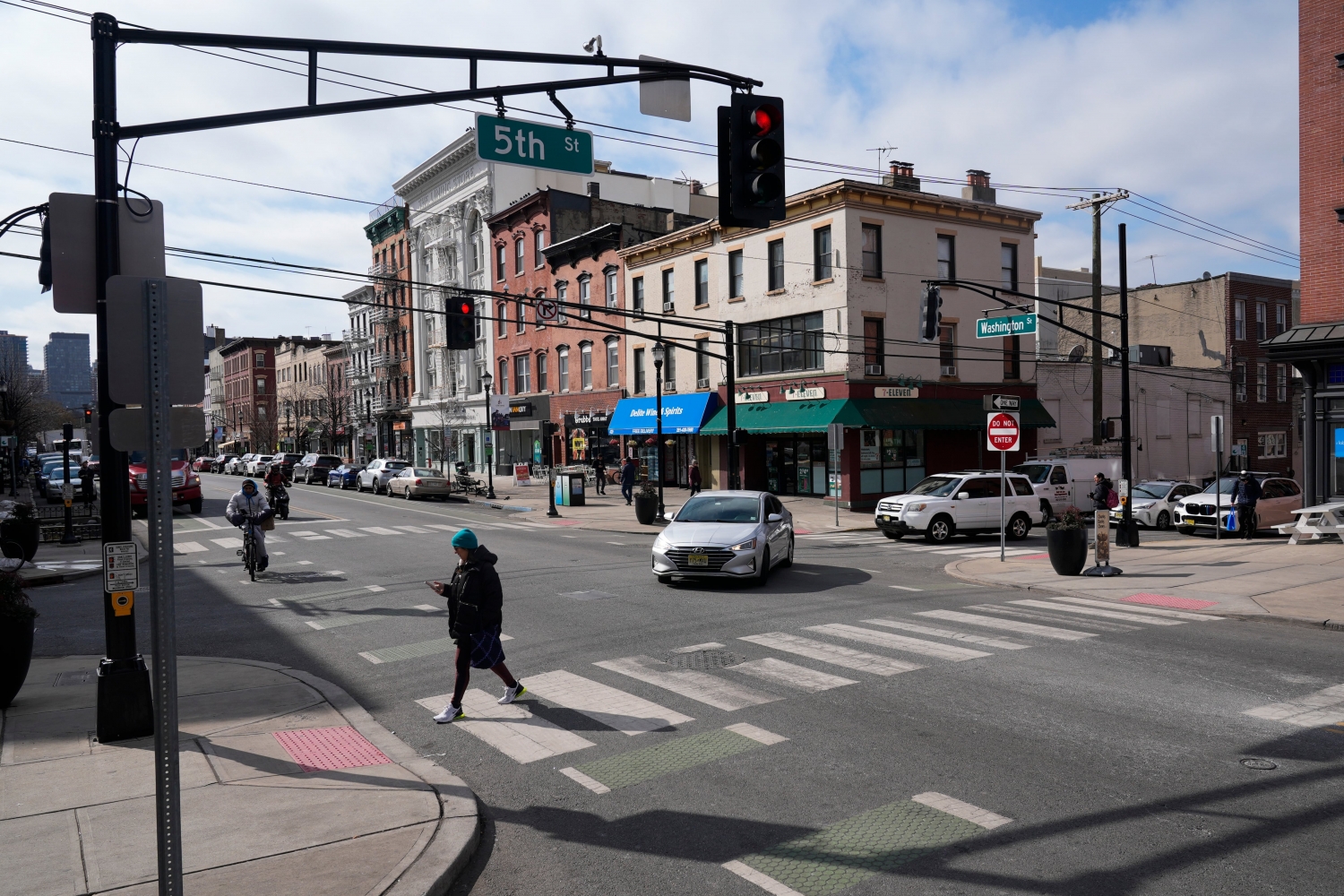
According to Lake McTighe, the principal transportation planner for the Metro regional government, the city of Hoboken could be a model for the Portland area: For the last nine years, the New Jersey city, part of the New York metropolitan area, hasn’t logged a single traffic death.
McTighe joined OPB’s “Think Out Loud” to explain the East Coast city’s success as well as how Portland, and perhaps other Oregon cities, could get there.
During the conversation, McTighe emphasized that there’s ample research both on what causes traffic injuries and fatalities, as well as what cities can do to mitigate them.
A key part of Hoboken’s success, she said, has been reducing speed limits, which research shows is one effective way to lower the likelihood of fatal crashes.
“They [Hoboken] are doing everything right,” McTighe said. “They are focusing on safe speeds, so they have a 20-mile-per-hour speed limit in the entire city, which is a survivable speed.”
The city of Portland has cited speed as one of the top contributing factors to traffic deaths. McTighe said Portland has been trying to reduce speed limits, but the city’s size makes it a challenge to scale up improvements.
“Portland is moving in that direction,” McTighe said. “They’ve been … proactively reducing speeds on city streets,” she said. “But you know, Hoboken is two square miles. Portland is 145 square miles, 620,000 people versus 60,000 people: different contexts.”
McTighe also pointed out that cities with high public transit use tend to have lower traffic death rates.
Portland traffic deaths on track to drop to lowest level in years, city says
Hoboken is well-served by public transit, as well as the metropolitan areas of New York City and Boston, all of which see few traffic deaths, according to McTighe. Portland, she noted, is doing well on that front.
According to McTighe, cities can also use data to find where traffic injuries are happening the most. For example, Hoboken found intersections accounted for nearly half of all serious crashes — a finding consistent with data from the Federal Highway Administration.
“[Hoboken] focused in on intersections, making them safer for people walking,” McTighe said. “So if you make it safe for people walking, safe for people biking, you make it safe for everyone. That’s a very important approach.”
That includes separating people and vehicles as much as possible, in time and space.
“A very effective intervention is called a leading pedestrian interval: You just turn on the walk sign [at a crosswalk] a little bit sooner so that people can get out into the intersection and be visible,” McTighe said.
Cities can also use infrastructure, like extended curbs and medians, to physically protect pedestrians from vehicles.
And McTighe said looming cuts for pedestrian and traffic safety programs — like Safe Routes to School and Community Paths — could affect progress.
“It’s really hard to see those cuts, and I think we just need to continue to focus on the tools that we do have and continue to do what we can with what we have right now,” she said.
McTighe also acknowledged that some solutions aren’t expensive — but they do require getting communities on board with changes. She cited several examples, from prohibiting right–on-red turning to increasing visibility at intersections by removing parking.
“These are things that may not cost a lot of money but that do take, you know, a lot of conversations with neighborhoods,” McTighe said.
As Portland recommits to ending traffic deaths, a key tool is unplugged
Still, she remains optimistic about working with communities to improve safety.
“I think most people do really care about traffic safety … And so I think always starting there is really important,” McTighe said.
“I do feel that traffic safety is a reflection of the sort of well-being of our society overall, and so the more that we can just express our care for each other and can make change, I really do believe that. It’s not easy in this day and age, but I think it’s imperative.”
Lake McTighe spoke with “Think Out Loud” host Dave Miller. Click below to listen to the full conversation.
News Source : https://www.opb.org/article/2026/03/16/portland-traffic-deaths-hoboken/
Other Related News
03/16/2026
As of Monday the average national retail price for a gallon of gas in the US is around 372...

03/16/2026
When the NBAs Board of Governors meet on March 24-25 the NBA will be voting to right make ...
03/16/2026
Even when The OregonianOregonLive Editorial Board scolds Salem for its dysfunctional legis...
03/16/2026
Nearly half a decade since business owners raised the issue a neglected piece of three Por...
03/16/2026
MIAMI On a night when All-Stars and future Hall of Famers thrilled fans and each other un...

Follow

Download Our App


Copyright 2022 © EPUERTO. All Rights Reserved