

Published on: 10/17/2026
This news was posted by Oregon Today News


Description
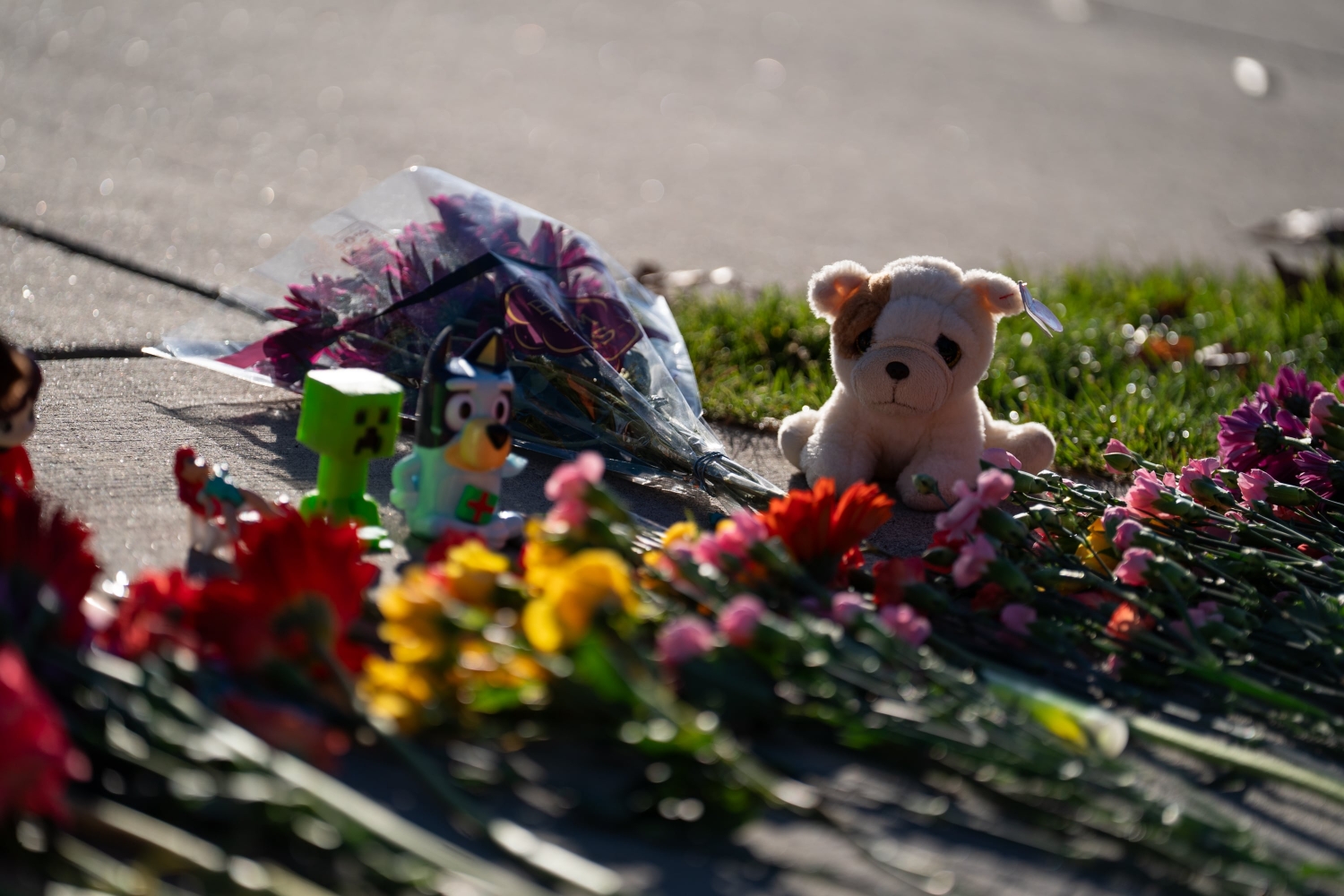
In the aftermath of the deadly school shooting at Silver Rail Elementary School in Bend this week, families near and far are navigating how to talk about the tragedy with their children.
A big takeaway from mental health and trauma experts is that everyone processes and grieves in their own way, in their own time. But opening the door to that conversation, especially right after an incident, is key.

Here’s how local experts, including counselors with Oregon’s nationally renowned Dougy Center for Grieving Children and Families, recommend working through these challenging times together.
Regulate yourself before having these conversations
Olivia Gordon equated this to an airplane mask: “You put your own mask on before you help your kiddo.”
Gordon is a licensed marriage and family therapist. She also directs the residential services program at Stronger Oregon, which provides in-person and remote mental health services statewide, including in schools in Central Oregon.
A parent herself, Gordon knows the idea of caring for yourself first can feel wrong. But she said it’s important to take what time you can to process your own emotions before starting the conversations with your kids so it’s not too overwhelming.
That doesn’t mean you can’t show emotion.
As Donna Schuurman with Dougy Center explained it: “We can model for children that feeling sad, scared and upset is normal after tragedies. But we don’t want to overwhelm them with our emotions, or put them in the position of having to ‘parent,’ or take care of, the adults around them.
“Make sure you also model taking care of yourself, by sharing with trusted and supportive adult friends, eating (and drinking) healthfully,” she writes.
Stepping outside, drinking water and taking a few deep breaths can help you feel more grounded and prepared for the moment.
Start with a question. Then listen
Start by asking: “What have you heard? What are you thinking or feeling?”
Adults sometimes know more details and conceptualize them much more deeply, Gordon said. But for a kid, they might have a more surface-level understanding. Simply opening the door to talk about the incident might be enough.
“Getting their perspective before we give them a perspective gives you a good starting point,” she said.
Alysha Lacey, Dougy Center’s chief program officer, said they ultimately want kids to lead the conversation. Hear what the kids know, then invite them to ask questions.
“Some kids might not want to talk about it, and that’s OK too,” she said. “If it’s not the time right now, you’re not … forcing them or coaxing them into having a conversation they’re not quite ready for.”
Acknowledge that the tragedy happened
Oregon had not experienced a school shooting in over a decade before the attack at Silver Rail Elementary School on Thursday. In the timeline below, hover over the dots to expand the information on recorded school shootings in the state.

Research shows that early intervention after a traumatic event is most helpful because it reduces the risk of things like post-traumatic stress disorder, Gordon explained.
That’s why she says parents should validate that the event happened, and not try to say, “Nope. We’re just going to ignore it and pretend like it didn’t happen.”
For older kids, especially those with their own phones or access to social media, she said they may have more detailed information. Like adults, they might have heard more details in the news or rumors circulating online.
If you hear embellishments or details you know are not true, she said, it’s OK to correct the information.
Consider your kids’ ages when deciding what details are appropriate to share about the incidents. Generally, Lacey said, parents might keep it shorter and simpler for younger kids, and have more in-depth conversations with older kids.
For older kids, Lacey says it’s worth a conversation about whether limiting how much news they see would be helpful. It’s not about controlling their feeds, but collaborating with them to create a healthy environment.
And for all kids, answer questions honestly — even if that means the answer is “I don’t know.”
Kent McIntosh, a University of Oregon professor who specializes in school violence, added that adults shouldn’t assign blame, but should share the facts they know.
“Talk about what is likely versus possible,” McIntosh said, “and gosh, you know, giving them big hugs and making sure you let them know that you love them.”
Validate the emotions they’re feeling
From sadness and fear to anger or withdrawal, Gordon said reactions will look different child to child, teen to teen.
“Especially in younger kids, it’s not necessarily going to sit at the forefront of their mind, especially those on the periphery or who are in different schools, and maybe not understanding the full context of what happened,” she said. “Just offer that space to process as it comes up.”
Some younger children might revert to earlier developmental behaviors, she said, like clinging to a parent or being less willing to go out in public.
They may want to carry a comfort object, like a stuffed animal or blanket. They may become hypervigilant, have nightmares or become afraid of the dark again. They may become more attached to a certain piece of clothing. They may do more “safe space” check-ins, like when a kid runs off on the playground but comes back for a hug or hand squeeze to make sure the parent is still there.
“I don’t want to pathologize somebody suddenly having a favorite sweater or something, but just to kind of monitor for, like, ‘That’s a little unusual,’ or ‘That’s a little more than normal,’” Gordon said.
Experts are looking for changes and persistence. Reassuring kids that you’re there to support them through those responses is key.
“Not every little change means this huge trauma or this huge concern,” Gordon added. “It’s just something to watch for, and it’s normal.”
Remain truthful and neutral. Do not make promises of safety
Some children, especially those who attend the school where a tragedy has taken place, may be scared to go back. Gordon said parents are likely to get a lot of “what if” questions. What if that happens at my school? What if that happens to my friends or me?
Her biggest piece of advice is not to promise safety.
“As we’re learning with each of these events, nothing is guaranteed, unfortunately,” she said.
Instead, Gordon said to remain as truthful and neutral as possible. Parents can say something like, “Everyone at your school is doing everything they can to keep you safe.”
She said this offers reassurance without a potentially false promise.
Dougy Center counselors also recommend talking with kids about what safety plans you and the school have in place.
“Being able to articulate … what adults are doing to keep them safe can be reassuring,” Lacey said. “Sometimes it’s, ‘We might find this out together,’ or ‘That’s something I’m going to look into.’ But it’s OK to not always have the answer for everything.”
McIntosh said that most of the time, in the first 24 or 48 hours, schools focus on physical safety. Then districts focus on welcoming students back and reestablishing familiar routines, which he said can also reassure members of a school community.
“Many of our students and our educators can find comfort in returning to established routines and continuing with schooling,” he said. “And obviously, some are going to need a little bit more, and so that’s always something important to pay attention to.”
Don’t stop finding moments of joy
Gordon said it’s important to keep doing enjoyable activities through times of trauma.
“As adults, I think we get kind of sucked into that feeling, and that it’s so emotional, and we just want to stay in that place,” she explained, adding that while kids are sad and upset, they don’t always show those feelings for long.
Kids are still going to want to be kids. Much like McIntosh points out the value of resuming routines at school, Gordon says familiar patterns can help kids at home, too.
“[We] need to make it OK for them to have fun and to laugh and to run and be silly with them because that’s going to be one of the most healing things: to have some level of normalcy in there,” she said.
Still, it’s possible in the middle of that enjoyable activity, a child might get upset or start crying.
It can feel like whiplash to adults, Gordon said, but “that’s kids.” Her advice is to roll with those emotions and mood shifts as they happen. They will come and go, and kids need support throughout.
Lacey added that adults should model how humans can hold both sadness and happiness at once.
“It is important to find joy and beauty and connection in the small things in life,” she said, “and be able to hold on to those things to kind of keep pulling us through the tough moments as well.”
News Source : https://www.opb.org/article/2026/10/17/how-parents-talk-about-bend-school-shooting/
Other Related News

10/17/2026
An 11-foot metallic object found in a western Minnesota cornfield is being investigated by...

10/17/2026
A ranked SEC matchup kicks off the day as the No 22 LSU Tigers host the No 16 Mississippi ...

10/17/2026
The Rotary Club of Redmond was honored to host six Rotarians from Kentucky participating i...

10/17/2026
The No 24 ranked SMU Mustangs 4-1 host the Virginia Cavaliers 4-2 today hoping to notch a ...

10/17/2026
The Clemson Tigers look to build some momentum when they host the Charleston Southern Bucc...

Follow

Download Our App


Copyright 2022 © EPUERTO. All Rights Reserved